Trallehylde Explained: Meaning, Uses, Hanging Tips and Care Guide
If you have spent any time looking at Scandinavian interiors lately, you may have come across a word that looks like a typo: trallehylde. It shows up in shop listings, in home decor blogs, and in search results that do not always agree with each other. Some pages describe a chunky wooden wall shelf. Others talk about a shelf on a trolley. Both are using the same word, and that is where most of the confusion starts.
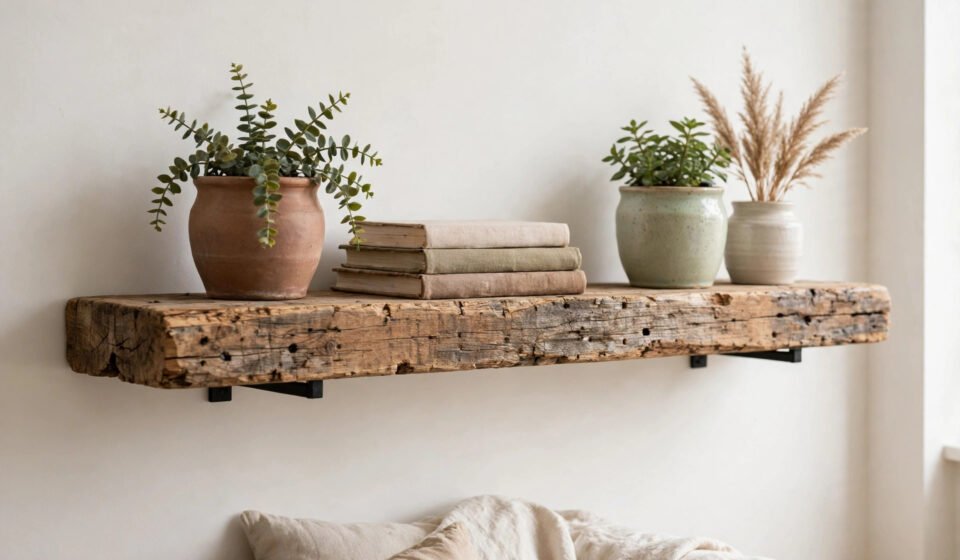
This guide sorts that out. A trallehylde is a Danish word for a shelf, and in most of the shops and guides that use it today, it means a rustic wooden wall shelf made from reclaimed scaffold boards. It is a simple idea done well: a thick plank of old wood, cleaned up and fixed to the wall, holding books, plants, or whatever a room needs within reach. There is nothing complicated about it, which is part of the appeal.
What Does Trallehylde Mean?
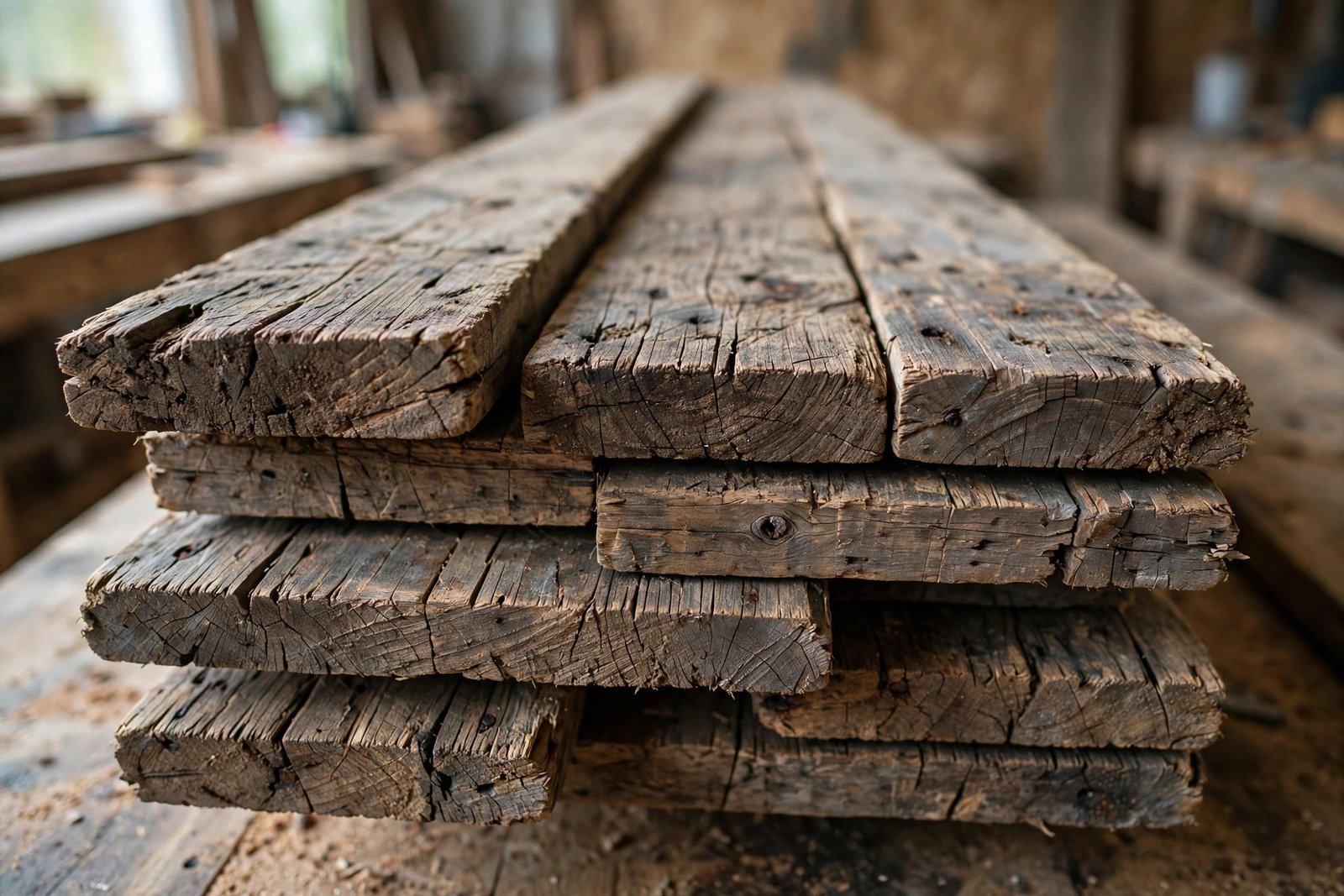
Trallehylde is a compound word from Danish. The second half, hylde, means shelf. The first half, tralle, refers to a plank-style board of the kind used on building scaffolds. In Danish, wooden traller have traditionally served as the walking platforms on scaffolding, long boards laid side by side so workers can stand and move at height.
Put the two halves together and the literal reading is something like a scaffold-plank shelf. In Danish shops, that is exactly how the word is used: a wall shelf cut from a thick reclaimed scaffold board, with the marks of its earlier life still visible in the wood.
The Two Meanings You Will Come Across
The second reading comes from a different split of the word. Some guides read tralle as trolley, and describe a trallehylde as a shelf for a trolley, or a complete shelving unit on wheels. In that reading, the thing being sold might be a mobile storage cart with several levels, or a removable shelf that fits one.
Neither reading is made up. The confusion comes from the fact that Danish compound words can be read more than one way, and that online guides often copy each other without checking. If you are shopping, the listing photos will tell you which meaning the seller has in mind far faster than the word itself will.
| Reading | What it describes | Where you usually see it |
|---|---|---|
| Scaffold-board shelf | A thick rustic wall shelf made from reclaimed scaffold planks | Danish home decor shops and interior design guides |
| Trolley shelf | A shelf for a trolley, or a wheeled multi-level storage unit | Storage and furniture listings that stress mobility |
| Slatted platform shelf | A shelf built from several parallel wooden slats | Some design blogs describing the scaffold-board look |
For the rest of this article, trallehylde means the first of these: the rustic scaffold-board wall shelf. That is the meaning most Danish shops use, and it is the one behind most of the photos and guides you will find. If a listing shows wheels, it is selling the trolley version, and the advice below about wall fixings will not apply.
What a Trallehylde Looks Like
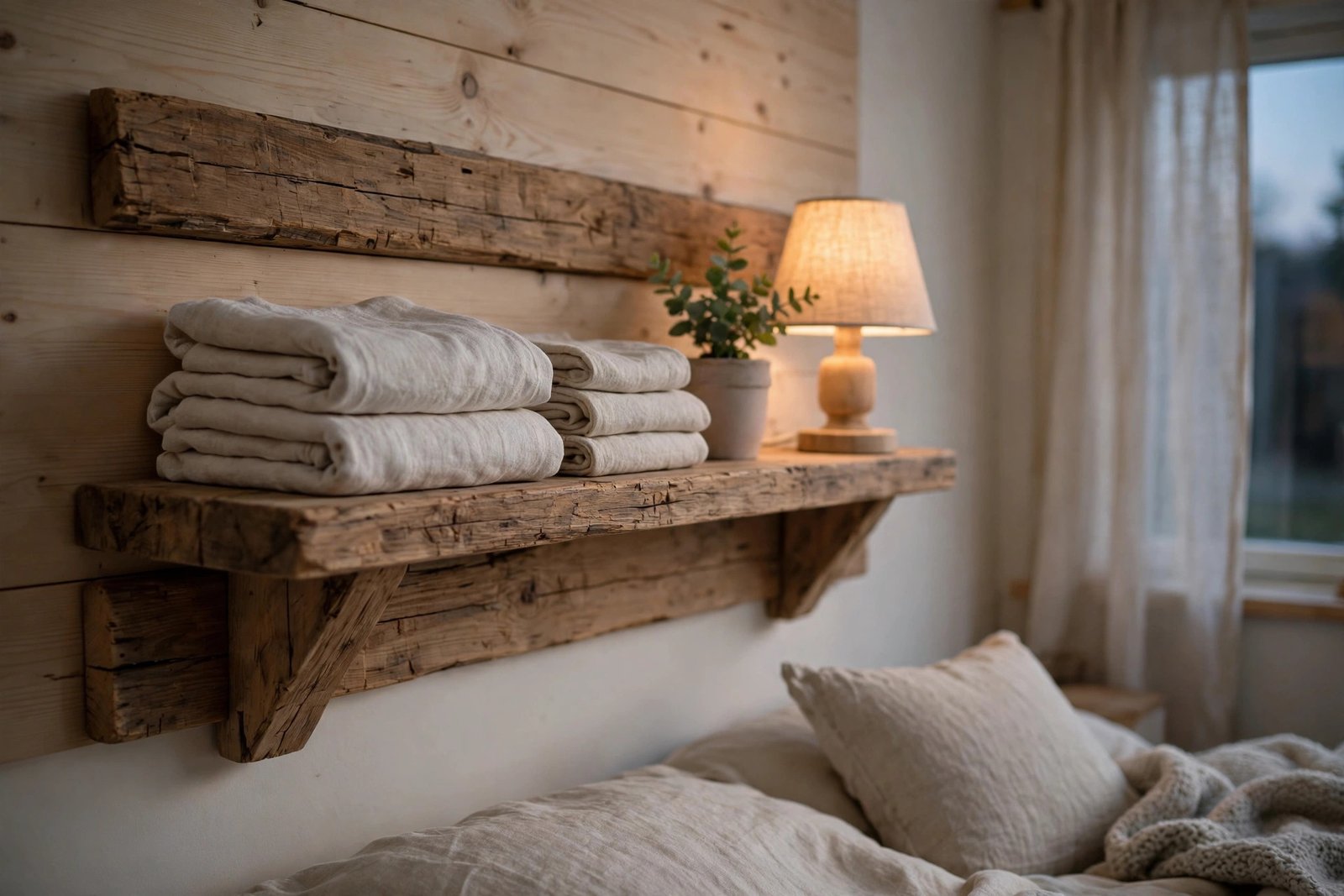
A typical trallehylde is a single thick plank, often around four to five centimetres deep, fixed to the wall with visible brackets or hidden supports. The wood is usually pine or a similar softwood, because that is what scaffold boards were made from. The surface keeps its saw marks, knots, and small dents.
The colour varies a lot. Boards that spent years outdoors weather to a grey-brown, while boards kept under cover stay a warmer honey colour. Many sellers oil or wax the wood, which deepens the tone and brings out the grain. A few paint them, but paint hides the very thing people buy the shelf for, so most are left natural.
Lengths vary from short shelves of half a metre, good for a single plant or a row of spice jars, to long runs of two metres or more that can carry a whole row of books. Depth is usually modest, somewhere between fifteen and thirty centimetres, enough for books and jars but not so deep that the shelf crowds the room.
Why Reclaimed Scaffold Boards?
The obvious question is why anyone would want a shelf made from old building timber. Part of the answer is looks. New pine is pale and even, and it can take years to develop any character. A scaffold board arrives with character already in it: nail holes, weather marks, and a grain that has been opened up by years of use.
Part of the answer is practical. Scaffold boards were built to carry weight. They are thick, and the timber is dense from slow growth. A shelf cut from one is not going to sag under a row of hardbacks the way a thin chipboard shelf might.
There is a trade-off, and it is worth knowing before you buy. Reclaimed wood is not uniform. One shelf may have a knot exactly where you wanted to drill a bracket hole, and the board may not be perfectly straight. A seller who is honest about that is doing you a favour. If a listing promises a flawless board, it is probably selling new wood made to look old.
Where People Use One
The living room is the most common home for a trallehylde. A long shelf above a sofa holds books and framed pictures without the bulk of a bookcase, and a short one beside a chair becomes a place for a lamp and a cup.
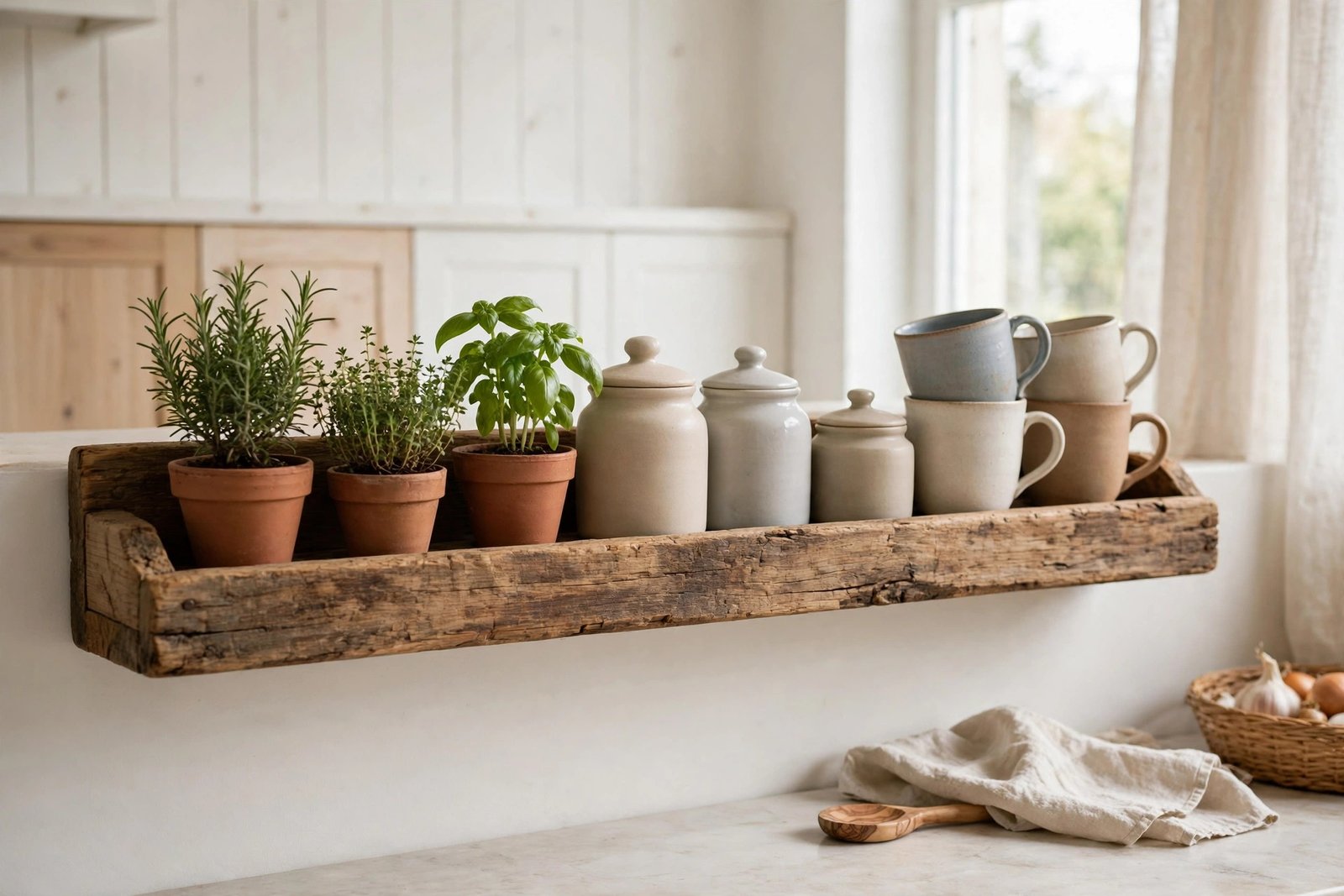
In the kitchen, a trallehylde is a practical piece of storage. Jars, mugs, and potted herbs sit within reach, and the wood warms up a room that is otherwise full of tile and steel. The one thing to watch is steam and splashes. An oiled board handles them better than a raw one, and a shelf hung away from the hob will last longer than one hung right above it.
Bedrooms and hallways are the quiet successes. A shelf by the bed replaces a bedside table in a room where there is no space for one, and a shelf in a hallway holds keys, a small plant, and the post.
How to Hang One Safely
A trallehylde is heavy before you put anything on it. A thick plank of solid wood can weigh several kilos, and a row of books adds much more. The fixings are not a detail to rush.
Start with the wall. A solid brick or concrete wall will hold almost anything with the right plugs and screws. A plasterboard wall needs proper fixings, the kind that spread the load behind the board, and you should find the studs if you can. If you are not sure what your wall is made of, tap it and drill a small test hole first.
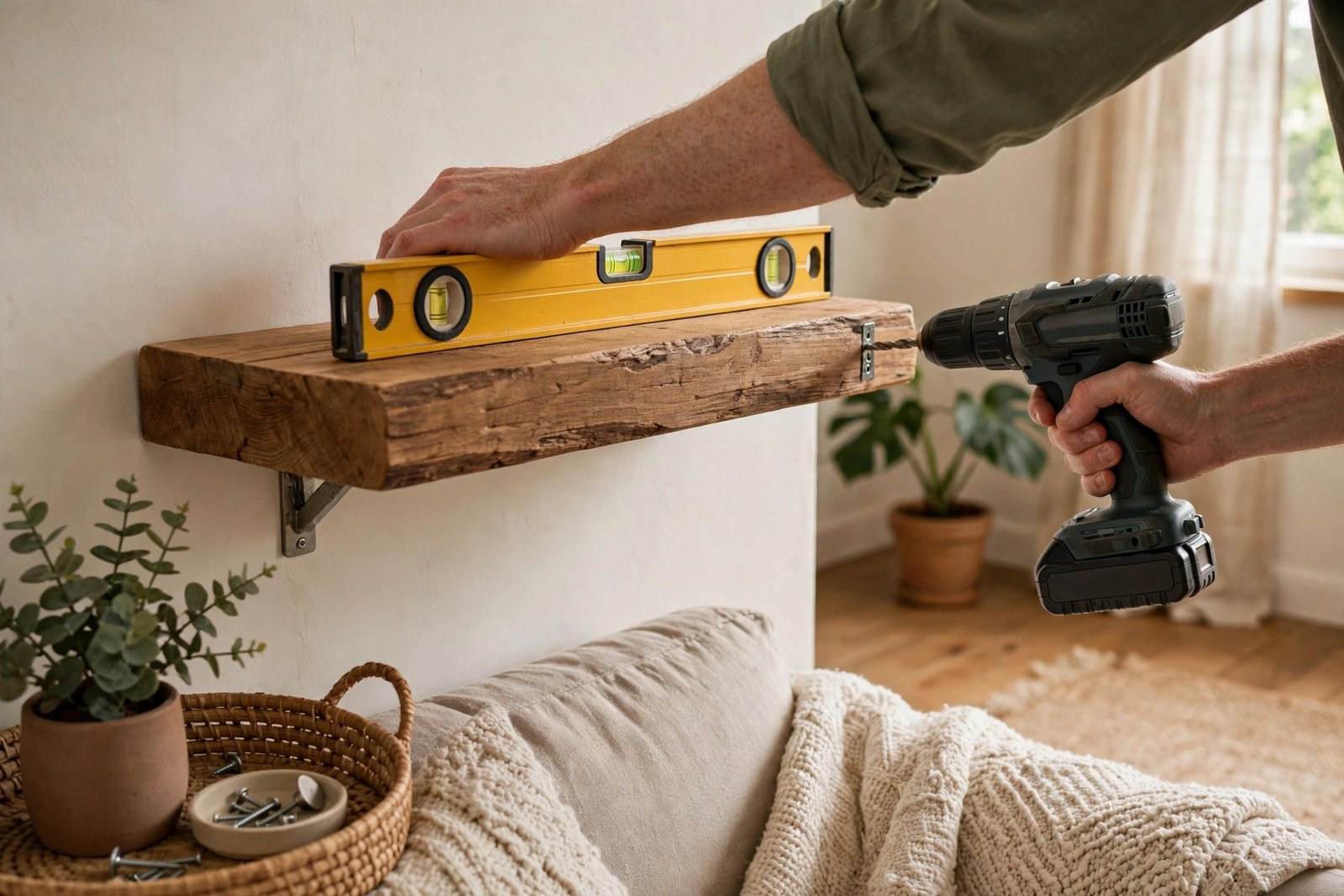
Use a spirit level, and mark both bracket positions before you drill anything. Measure the distance between the brackets twice. A shelf that looks level from across the room and is not will annoy you every time you walk past it. Drill the holes, fit the plugs, and tighten the screws firmly, but do not force them so hard that the plug turns in the hole.
Once the brackets are up, set the plank on them and check the level again before you fix the plank down. Some shelves rest on the brackets and are held by small screws from underneath. Others slide onto hidden rods. Either way, give the finished shelf a firm pull before you load it. If it moves, take it down and find out why.
Styling Ideas That Actually Work
The easiest mistake with a rustic shelf is to fill it. A trallehylde looks best when it is not crowded. Leave gaps between groups of objects so the wood itself is part of the display.
Mix materials. The warm wood sits well next to glass, ceramic, and black metal, and badly next to too much of itself. A row of wooden boxes on a wooden shelf blurs into one brown mass. A ceramic jug, a glass jar, and a metal frame break it up.
Think about height. Objects of different heights look natural together; a row of identical jars looks like a shop display. A tall vase at one end and a low stack of books at the other gives the eye somewhere to travel.
Plants suit these shelves, and trailing plants suit them best. A plant that spills over the front edge softens the straight line of the board. Just remember that watering a plant on a wooden shelf means water on wood, so use a saucer, or take the plant down to water it.
Care and Cleaning
A trallehylde does not need much looking after. Dust it with a dry cloth, or a slightly damp one for marks, and dry it straight away. Avoid soaking the wood and avoid harsh cleaners, which strip the oil or wax finish. If the board was oiled, re-oil it once or twice a year with a thin coat rubbed in with a cloth. Sunlight will change the colour over time, fading it towards silver, which some people like and some do not.
What to Check Before You Buy
Not every shelf sold as a trallehylde is the same. A few checks before you pay will save you disappointment.
| Check | Why it matters |
|---|---|
| Is it really reclaimed wood? | Some shelves are new wood distressed to look old. Ask the seller where the boards came from. |
| How thick is the board? | Thin boards sag under books. A thick plank, around four centimetres or more, holds its shape. |
| Are brackets included? | Some listings sell the plank alone. Check before you order, so you are not left with a shelf and nothing to hang it on. |
| What is the weight limit? | A seller who states one has tested the shelf. A seller who does not may not have thought about it. |
| How was it finished? | Raw wood stains easily. Oiled or waxed wood is easier to live with, especially in a kitchen. |
| What are the exact measurements? | Rustic shelves vary. Measure your wall first and compare it with the listing, not with the photo. |
Price varies a lot, and no single figure would be honest here, because it depends on the length, the wood, the brackets, and where you buy it. Compare like with like: same length, same thickness, same fixings.
FAQs
What does trallehylde mean?
It is a Danish word that combines tralle, a scaffold-style plank, with hylde, meaning shelf. In Danish shops it describes a rustic wooden wall shelf, usually made from reclaimed scaffold boards.
Is a trallehylde a trolley shelf?
Some guides read the word that way and describe a shelf for a trolley or a wheeled storage unit. That reading exists, but most Danish shops use trallehylde for the scaffold-board wall shelf, so check the photos in any listing before you buy.
Can a trallehylde hold heavy books?
Yes, if it is a thick board fixed properly. The plank itself is strong, but the fixings do the real work. Use the right plugs for your wall, put brackets near the ends and one in the middle for long shelves, and keep the heaviest books near the brackets.
How do you clean a trallehylde?
Dust it with a dry cloth and wipe marks with a slightly damp cloth, drying it straight away. Re-oil or re-wax the wood once or twice a year, and keep it out of standing water and harsh cleaners.
Is a trallehylde suitable for a bathroom?
It can work, but a bathroom is damp and untreated wood will not last well there. Choose a board finished with a hard oil or wax, keep it away from direct splashes, and be ready to re-oil it more often than you would in a dry room.
Useful links: ClockToday | Google