Cargo Blue Metal Full Bed: A Buyer’s Guide to Sizes, Features and Care
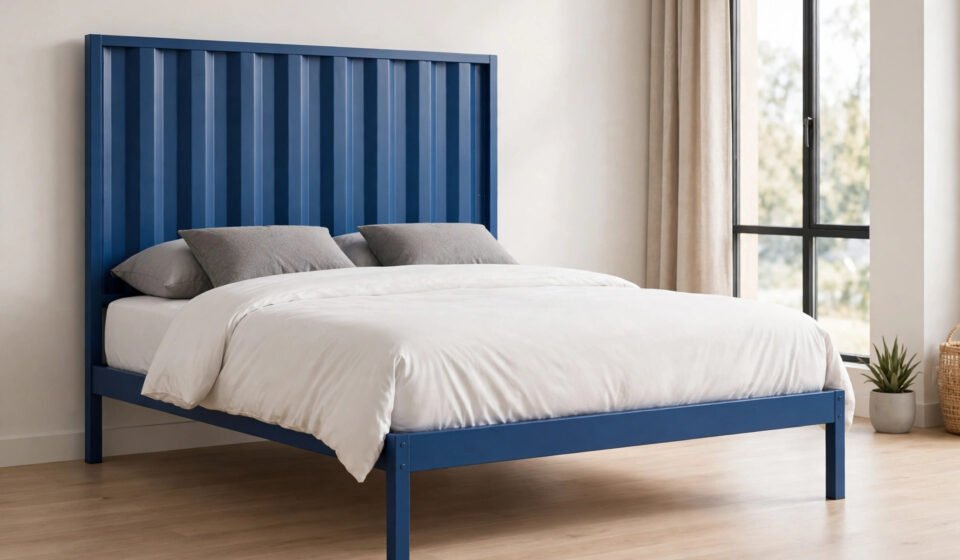
A cargo blue metal full bed is one of those pieces of furniture that looks like it belongs in a teenager’s room and yet works just as well in a guest room or a first apartment. It takes its look from shipping containers — flat steel panels, recessed sections, a long locking bar running down the side — and turns that industrial styling into a sturdy bed frame. The blue finish is the part people remember: a strong, flat blue, closer to the paint on a cargo container than to a soft bedroom pastel.
The details here come from retailer listings for the Acme Furniture Cargo collection, which is the bed most listings under this name describe. Other sellers may use similar names for similar beds, so match the measurements below against the exact listing you are looking at.
What Is a Cargo Blue Metal Full Bed?
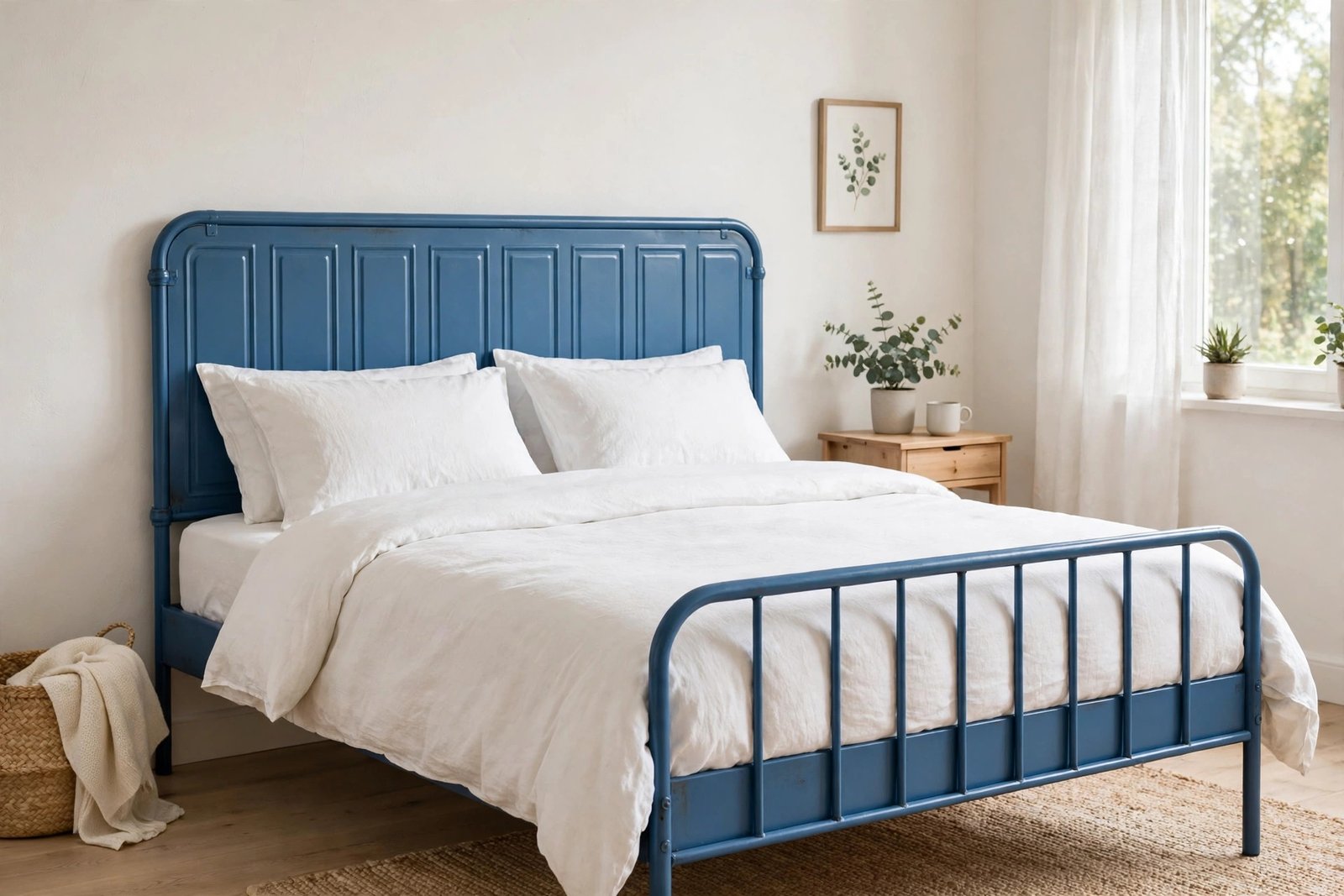
The name breaks down into four parts, and each one tells you something useful. “Cargo” refers to the design: the headboard and footboard are flat panels styled after the corrugated doors of a shipping container, with recessed sections and a full-length container lock detail. “Blue” is the finish. The same bed is also sold in white, red, and gunmetal, so the blue version is one colour option in a wider collection rather than a separate model. “Metal” is the material — the frame is built from iron plate, and the legs are straight metal rather than turned wood. “Full” is the size: it takes a standard full-size mattress, 54 by 75 inches.
The bed is a panel bed with a rectangular headboard and a low-profile footboard. That low footboard matters more than it sounds: a tall footboard can make a small room feel boxed in, and it gets in the way when you sit on the edge of the bed to put shoes on. The low footboard keeps the sightline open, so the room looks bigger. The headboard is tall enough to lean against with a pillow behind you if you read in bed.
Many listings call it a youth bed, which mostly means it was designed with a teenager’s room in mind. In practice, adults use it too — the full size sleeps one adult very comfortably and two adults snugly — and the styling is playful rather than childish, so it still looks right once a teenager grows up.
Key Features at a Glance
The table below pulls together the specifications that appear consistently across retailer listings for the blue full version. A few numbers differ slightly between sellers — one listing gives 56 by 79 by 44 inches, another 57.67 by 77.08 by 43.24 inches — so treat the figures as close guides and measure your room against the larger set.
| Feature | Detail |
|---|---|
| Bed size | Full — fits a standard 54″ x 75″ mattress |
| Assembled dimensions | About 56″ wide x 79″ long x 44″ high |
| Frame material | Metal — iron plate frame, about 25 x 50 mm |
| Colour options | Blue, white, red, gunmetal |
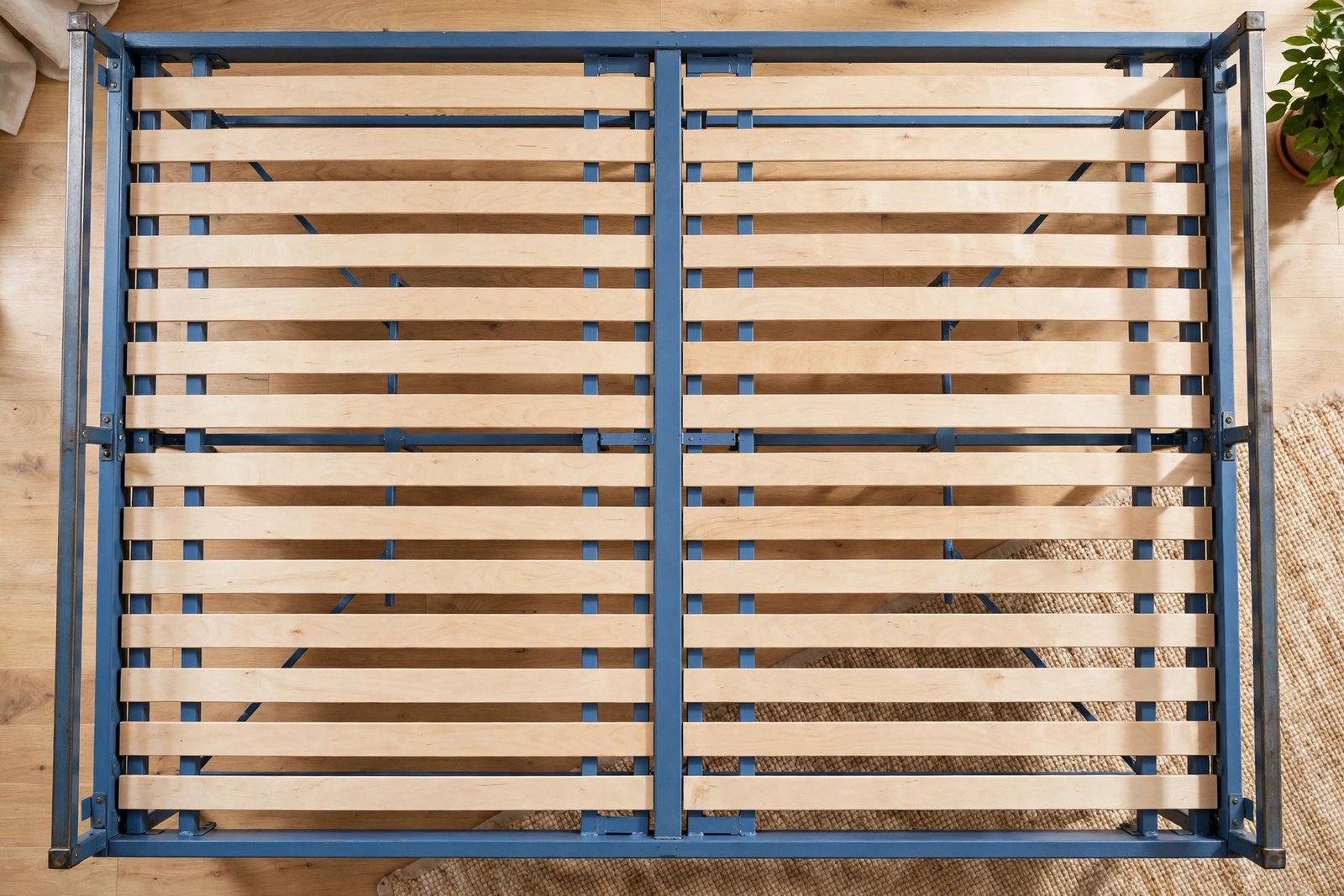
| Support | 21 slats included; no box spring required |
| Weight capacity | Up to 330 lbs, according to retailer listings |
| Product weight | About 75–76 lbs |
| Headboard and footboard | Rectangular panel headboard; low-profile footboard |
| Design details | Recessed panels, full-length container lock, straight metal legs |
| Assembly | Required; ships in one box |
| Warranty | 1-year limited warranty, according to one retailer listing |
The 21 slats are worth a closer look because they change what you need to buy. Many older frames need a box spring, which adds cost and height. This bed does not: the slats carry the mattress directly, so you buy the frame and a mattress and you are done. That also keeps the sleeping surface lower, which suits the industrial look. If the gaps between slats are wide, a thin mattress can sag between them over time; a thin bunkie board solves that, though most people never need one.
The listed weight capacity is 330 lbs. Two adults plus a heavy mattress can approach that number, so if the bed is for two adults, confirm the capacity on the exact listing you buy from. For one adult or a teenager, it is comfortably within range.

Full vs Twin: Which Size Fits Your Room?
The Cargo bed comes in twin and full. The twin measures about 41 inches wide, 79 inches long, and 44 inches high; the full is about 56 inches wide with the same length and height. The length does not change, so the decision is really about width — fifteen extra inches of sleeping space — and how much floor the bed takes up.
| Twin | Full | |
|---|---|---|
| Width | About 41 inches | About 56 inches |
| Length | About 79 inches | About 79 inches |
| Height | About 44 inches | About 44 inches |
| Weight | About 56 lbs | About 76 lbs |
| Mattress | Standard twin, 38″ x 75″ | Standard full, 54″ x 75″ |
| Best for | One child or teen; a small room | One adult, a teen who sprawls, or two people |
Measure before you order. A full bed needs roughly 56 inches of width plus walking space on at least one side — ideally 24 to 30 inches so you can get in and out and change the sheets without climbing over the bed. In a 10 by 10 foot room, a full bed still leaves room for a nightstand and a small chest of drawers. In a much smaller room, the twin is the safer choice.
Also measure the doorways and the route to the bedroom. The bed ships in one box, but it is large — about 57 inches long, 29 wide, and 5 high, weighing around 80 to 84 lbs. If your staircase turns sharply or your bedroom door is narrow, check the box can get through before delivery day.
What to Check Before You Buy
First, confirm which listing you are buying. The Cargo name covers a whole collection: a standard bed, a bunk bed, and a trundle version, in twin and full sizes. The bunk bed is a different product — taller, heavier, and sleeping two — and the photos look similar, so check the model number and the words “panel bed” or “platform bed” rather than “bunk bed”.
Second, look at the colour carefully. The shade can look different on a screen than in a room, and retailers warn that it may vary slightly with lighting. The blue here is strong and saturated. It pairs well with white bedding, grey walls, and light wood, and it clashes with very warm reds and oranges — so pick bedding after the bed arrives, so you can match the actual shade.
Third, think about the mattress. One under about 6 inches can feel hard on a slatted base, while a very thick mattress, 12 inches or more, will sit high and hide the low footboard. Most people find an 8 to 10 inch mattress works well. Memory foam, hybrid, and innerspring mattresses all work on slats, but a heavy all-foam mattress can sink slightly between widely spaced slats, so check the slat spacing when you assemble the bed.
Fourth, check what the price includes. Prices vary a good deal between retailers and over time, and some listings show the bed out of stock or on backorder, so no price is given here — it would be out of date quickly. What matters is whether the price covers the bed alone or a set: the base price on several retailer pages covers one bed only, with matching pieces costing extra. Also confirm the return policy before ordering, because returning a bed is rarely free.
Finally, be honest about who will assemble it. Assembly is required, and while it is described as minimal, it is still a metal frame with a fair number of bolts. One person can usually manage it in an hour or so, but a second pair of hands helps when holding the headboard upright while fitting the side rails. Lay the parts out on a rug or blanket so the metal does not scratch your floor, and do not fully tighten the bolts until the whole frame is loosely together.
Assembly and Everyday Care
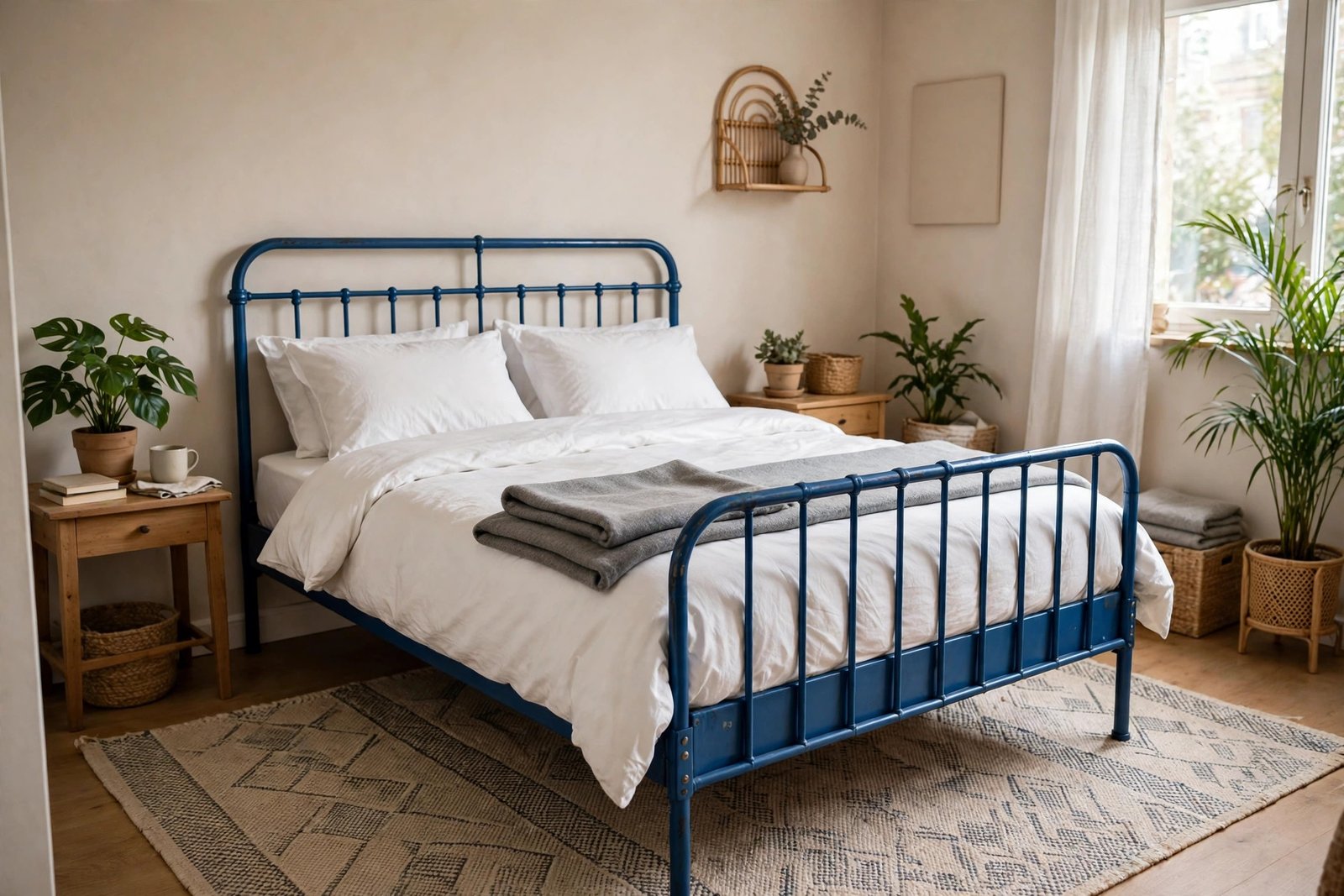
When the box arrives, check every part against the instruction sheet before you start, and count the slats — there should be 21. If a part is missing or bent, contact the seller straight away. Keep the packaging until you have slept on the bed for a night or two, in case anything needs to go back.
Care is simple. Dust the frame with a dry or slightly damp cloth, and wipe up spills quickly so water does not sit on the finish. Avoid harsh cleaners and scouring pads, which can dull the paint or scratch through to bare metal. If the paint chips, touch it up promptly with a matching paint pen so the bare metal underneath does not rust. Check the bolts every few months and tighten any that have worked loose; a bed that starts to creak is usually just a bolt that needs a quarter turn.
One practical note: metal frames can transfer noise — the slats can creak if they shift, and the frame can squeak where metal meets metal. A thin felt pad where the slats meet the frame usually quiets that, and a rug under the bed protects the floor from the straight metal legs.
Who This Bed Suits — and Who Should Look Elsewhere
This bed suits a teenager who wants a room that looks different from a standard wooden bed, an adult furnishing a spare room, or anyone who likes industrial styling and wants a frame that does not need a box spring. It also suits a household that moves now and then: at around 76 lbs, it is light for a full bed, and it comes apart into flat pieces.
It is less suited to someone who wants a tall, upholstered headboard, or a bed with built-in storage. There are no drawers under this frame, and the space beneath is open — useful for flat boxes, but not a substitute for a storage bed. It is also not the best choice if you want a very quiet bed, since metal frames are noisier than solid wood. And if you dislike bold colour, the blue version will dominate the room; the gunmetal or white version gives the same shape in a quieter finish.
In the end, the cargo blue metal full bed is a simple idea done well: a steel frame with a distinctive container look, sized for a standard full mattress, with no box spring needed. Buy it for the style and the straightforward build, measure your room first, and check the exact listing for size, colour, and what is included.
FAQs
What size mattress does a cargo blue metal full bed take?
A standard full mattress, 54 inches wide by 75 inches long. An 8 to 10 inch thick mattress usually works best on the slatted base.
Do I need a box spring with this bed?
No. The bed comes with 21 slats that support the mattress directly, so no box spring is required. If the slats are widely spaced and your mattress is thin, a bunkie board can add extra support.
What are the dimensions of the blue full version?
About 56 inches wide, 79 long, and 44 high. A few sellers give slightly different figures, so allow a couple of inches either way when measuring your room.
How much weight can a cargo blue metal full bed hold?
Retailer listings give a weight capacity of up to 330 lbs for this model. Confirm the figure on the exact listing you buy from, since it can vary between sellers and production runs.
Is the cargo blue metal full bed hard to assemble?
Assembly is required but is generally described as minimal. One person can usually finish it in about an hour; a second person helps with the headboard and side rails. Do not fully tighten the bolts until the frame is loosely assembled.
Useful links: ClockToday | Google