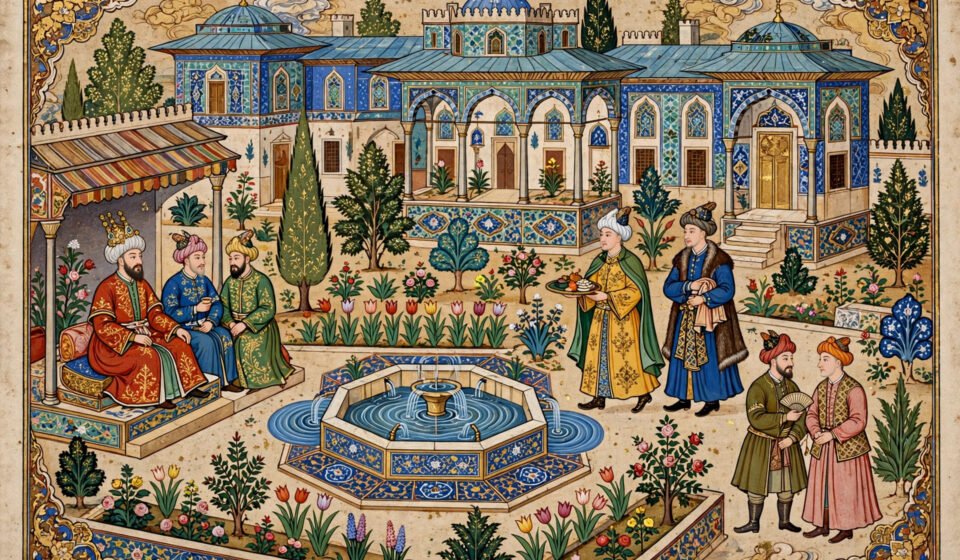
Shani Levni Explained: The Ottoman Miniaturist and the Modern Artist
Search for the name Shani Levni and you will find two very different people, separated by about three hundred years. One is a celebrated miniaturist of the Ottoman court, known to history as Levni. The other is a contemporary Israeli artist who works in painting, installation, and performance. They share a name, but they are not the same person, and most of the confusion around the name comes from pages that mix the two together.
This article untangles them. It starts with the older figure, because he is the one the historical record actually supports, then looks at the contemporary artist, where the honest thing to say is that the details circulating online come from a small number of similar-looking profiles and have not been independently verified. A third use of the name, in astrology, gets a short mention at the end, because it shows up in search results too.
The Name Itself
Levni is not a family name in the usual sense. It is a pen name, taken from the Arabic root levn, meaning colour. The Ottoman painter who used it was born Abdülcelil, and he adopted Levni as a mark of his mastery of colour and pigment. His miniatures are famous for it: warm reds and golds, deep blues, and greens laid down with a control that still impresses people who study them today.
The modern artist carries Levni as a surname, and Shani as a first name. Shani is a Hebrew name, and in the astrology pages that turn up alongside these results, Shani is also the name of Saturn in Vedic tradition. That overlap is a coincidence of language, not a connection between the people. It does, however, explain why a single search pulls in art history, contemporary art profiles, and astrology all at once.
Levni, the Ottoman Miniaturist
Abdülcelil Levni, usually known simply as Levni, was one of the most celebrated miniaturists of the Ottoman court in the late seventeenth and early eighteenth centuries. He was born in Edirne, the old Ottoman capital, in the late seventeenth century, with the 1680s often given as an approximate date. The exact year is not firmly established, and honest accounts say so rather than picking a date and presenting it as fact.
At some point he moved to Istanbul, the heart of Ottoman power, and joined the palace painting workshop, the Nakışhane. His talent earned him a position there, and he rose in influence, at times leading the workshop under Sultans Mustafa II and Ahmed III. That is a matter of record, not legend. Court workshops kept careful track of who worked in them, and Levni’s name appears in that world as a senior figure.
His working life fell in a period often called the Tulip Period, a time of flourishing court culture, literature, and art in the early eighteenth century. It was a period of confidence and display, and Levni’s work fits it: court ceremonies, fine clothes, gardens, and the daily life of the palace, painted with an attention to detail that makes his miniatures useful to historians as well as beautiful to look at.
What Made His Painting Different
Ottoman miniature painting has a reputation for flatness: figures shown in profile, with little shading and no attempt at Western perspective. Levni worked inside that tradition, but he pushed at its edges. His figures are often shown in three-quarter view rather than strict profile, which gives them a sense of volume and presence that earlier miniatures do not have.
He also painted movement. In his festival scenes, people dance, wrestle, ride, and gesture. The compositions feel busy and alive rather than arranged like a formal portrait. That energy is one reason his work is still reproduced so often. You can tell a Levni miniature from across a room, not because it is louder than the rest, but because it seems to be happening rather than posing.
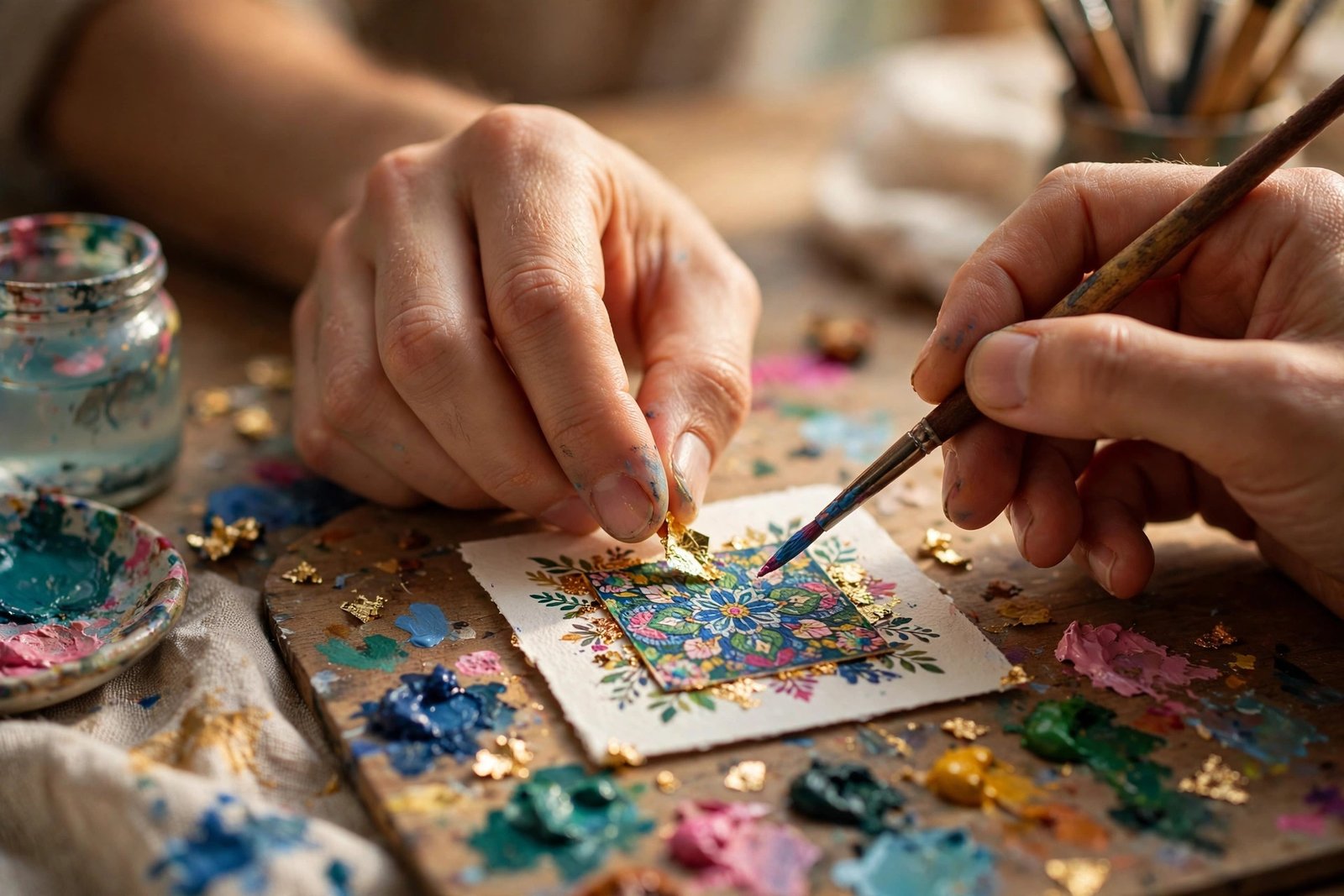
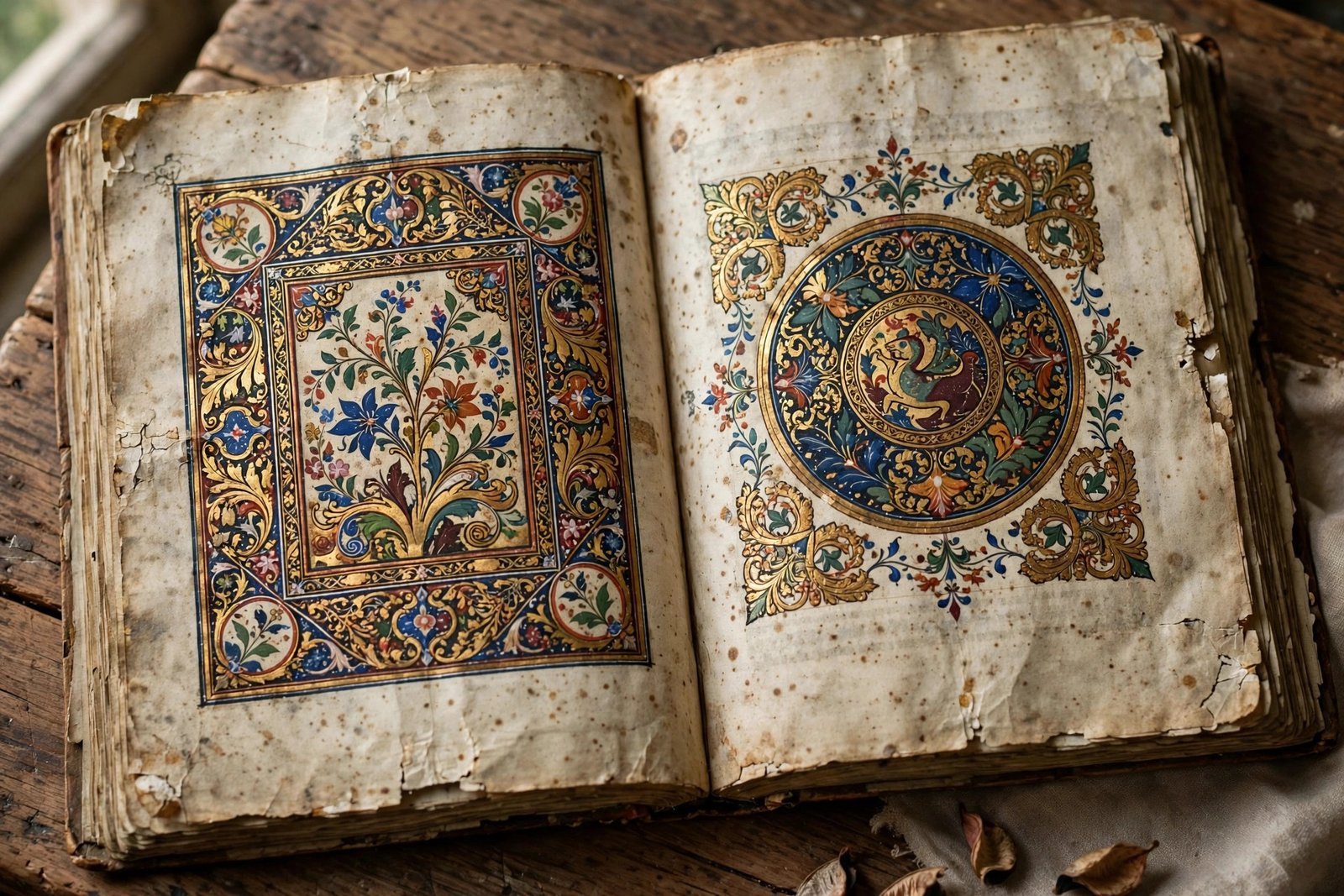
His materials were the standard tools of the miniature painter: gouache, pigments, gold, and ink on paper. The skill was in the handling. Fine lines, steady hands, and layer upon layer of thin colour built up the rich surfaces his work is known for.
His Best-Known Work: The Surname-i Vehbi
Levni’s signature project is the Surname-i Vehbi, an illustrated manuscript commissioned in 1720 to record the circumcision festival held for four of Sultan Ahmed III’s sons. The manuscript contains 137 richly coloured miniatures, showing the processions, feasts, entertainments, and ceremonies of the festival in sequence.
It is the kind of book that does two jobs at once. For the court, it was a record of a grand occasion, proof that the sultan could stage a celebration on that scale. For us, it is a window into how the Ottoman court looked and behaved: what people wore, how they sat, what they ate, and how a public festival was organised.
Levni also worked on the Kebir Musavver Silsilename, a genealogical album of Ottoman sultans, and on costume albums and miniatures for poetic works. An album known as H.2164, believed to date from between 1710 and 1720, includes depictions of women, some in reclining or intimate postures, that are more sensual than the court scenes. They show a painter who was not limited to ceremony.
Levni is often described as one of the last great court miniaturists before Westernising trends reshaped Ottoman painting. That is a fair summary, though it is worth remembering that artistic change is rarely a single moment. Levni’s own work already shows the first signs of it, in the three-quarter faces and the sense of movement. He was not standing still while the world changed around him. He was part of the change.
Shani Levni, the Contemporary Artist
The second person behind this name is a contemporary Israeli multidisciplinary artist. According to profiles published online, she was born in Tel Aviv and works across painting, mixed media, installation, performance, and photography, with themes of identity, memory, belonging, and displacement running through the work.
Those same profiles describe her education at the Bezalel Academy of Arts and Design in Jerusalem, followed by further study in art theory in Berlin, and exhibitions at venues including the Tel Aviv Museum of Art, the Jerusalem Biennale, and Rosenfeld Gallery. Named works that appear in these profiles include Whispers of the Olive Tree, Letters Never Sent, and Between Earth and Sky. She is also described as the founder of a nonprofit called The Root Collective, working with refugees and immigrant youth through art.
Here is the honest caveat, and it matters. These details come from a small cluster of similar online profiles and a personal website, not from major newspapers, museum records, or other independent sources that could be checked against them. Specific claims in those profiles, such as an exact birth date, a named partner, and particular exhibition dates, have not been independently verified. A careful reader should treat them as reported, not confirmed.
Two Artists, One Shared Thread
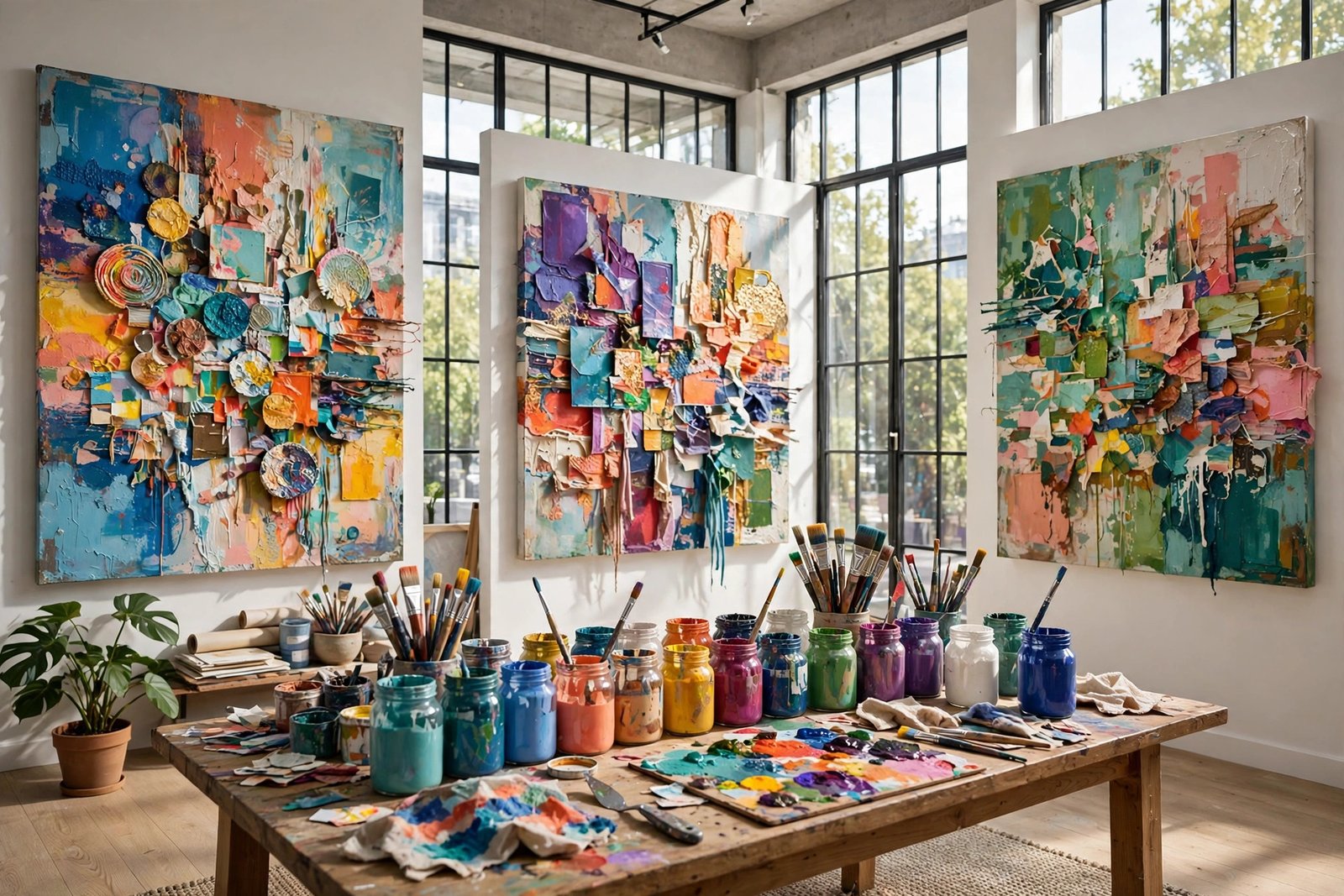
Put side by side, the two figures have one real thing in common: colour and memory. Levni took his name from colour, and his miniatures are remembered for it. The contemporary Shani Levni, as described in her profiles, builds layered work about memory and identity, using paint, fabric, found objects, and handwritten text to show how history sits in layers rather than in a single clean story.
There is a neat symmetry in that, and it is tempting to make more of it than it deserves. The two artists did not influence each other. They lived in different centuries, in different worlds, and worked in different traditions. The shared name is a coincidence, and the shared interest in colour is the kind of coincidence that happens when you compare any two painters.
What the pairing does usefully show is how a name travels. A pen name taken from an Arabic word for colour, in an Ottoman court workshop, and a modern surname carried by an artist in Tel Aviv, end up side by side in a search box. Anyone writing about either of them has to say which one they mean, or the reader will be misled within a paragraph.
| Levni (Abdülcelil Levni) | Shani Levni (contemporary artist) | |
|---|---|---|
| Period | Late 17th to early 18th century | Active from the 2010s to the present, as described in online profiles |
| Place | Edirne and Istanbul, Ottoman Empire | Tel Aviv, Jerusalem, and Berlin, as described in online profiles |
| Medium | Miniature painting: gouache, pigments, gold, and ink on paper | Mixed media, painting, installation, performance, photography |
| Best-known work | Surname-i Vehbi (1720), 137 miniatures | Whispers of the Olive Tree, Letters Never Sent, Between Earth and Sky (as reported) |
| How well documented | Well documented in art history and museum collections | Known mainly through online profiles; details not independently verified |
A Third Meaning: Shani Levni in Astrology
A third use of the phrase turns up in search results, and it deserves a brief mention so it does not confuse the picture. Some astrology pages use “Shani Levni” to describe the influence of Saturn, called Shani in Vedic tradition, on a person’s life. In those pages, Shani stands for discipline, patience, and karmic lessons, while Levni is read as a flow or influence.
This is not a standard term in classical astrology. It appears in a small number of recent web pages, and it reads like a phrase coined for search results rather than a concept with a long history. There is no harm in knowing it exists, but it should not be treated as an established astrological idea, and it has nothing to do with either of the two artists above.
How to Tell Which One a Page Means
If you land on a page about Shani Levni and you are not sure which person it means, a few clues will settle it quickly. Mentions of the Ottoman court, the Tulip Period, the Surname-i Vehbi, or the year 1720 mean the miniaturist. Mentions of Tel Aviv, Bezalel, mixed media, or the Jerusalem Biennale mean the contemporary artist. Mentions of Saturn, karma, and discipline mean the astrology pages.
The date is the fastest check of all. Anything before 1800 is Levni the miniaturist. Anything in the present day is the contemporary artist. If a page gives no dates at all, treat it with caution.
FAQs
Who was Shani Levni?
The name points to two different people. Levni, born Abdülcelil, was an Ottoman court miniaturist of the late seventeenth and early eighteenth centuries. Shani Levni is also the name of a contemporary Israeli multidisciplinary artist, described in online profiles as working in painting, installation, and performance.
What is Levni best known for?
His best-known work is the Surname-i Vehbi, an illustrated manuscript commissioned in 1720 to record the circumcision festival of four of Sultan Ahmed III’s sons. It contains 137 miniatures showing the ceremonies, processions, and entertainments of the festival.
Why is he called Levni?
Levni is a pen name taken from the Arabic root levn, meaning colour. He adopted it in place of his birth name Abdülcelil, as a mark of his mastery of colour and pigment in miniature painting.
Is the contemporary Shani Levni’s biography confirmed?
Not independently. Details such as her birth date, education, exhibitions, and named works come from a small number of online profiles and a personal website. They are reported here as claims from those sources, because no major independent source could be found to confirm them.
What does Shani Levni mean in astrology?
Some recent astrology pages use the phrase for the influence of Saturn, called Shani in Vedic tradition, describing discipline, patience, and karmic lessons. It is not a standard term in classical astrology and has no connection to either of the two artists.
Useful links: ClockToday | Google