
Hart Explained: The Deer, the Surname, and Hart vs Heart
Type the word “hart” into a search box and you will not get one simple answer. It can be an animal, a family name, a first name, part of a place name, or a spelling mistake for something else entirely. That is what makes this short word worth a closer look. It is only four letters long, yet it carries a long history, from old English hunting grounds to modern film credits.
This article takes the word at face value and explains it plainly. Our reading is this: “Hart” is mainly two things — a male deer, and a surname that comes from that deer. It is also the exact sound-alike of “heart”, the organ in the chest, which is where most of the confusion comes from. If you came here looking for one of those meanings, you will find it below, along with the other ways the word turns up.
What Does Hart Mean?
In its oldest and most literal sense, a hart is a male deer. More precisely, it is a male red deer, and in older hunting language it often meant a stag that was more than five years old, with a full set of antlers. The female of the species is called a hind. Today the word “stag” is far more common in everyday speech, and “hart” survives mostly in older books, poetry, heraldry, and names. When you meet it in a modern sentence, it is usually a surname or part of a place name rather than a description of an animal standing in a field.
The word comes from Middle English “hert”, which came from Old English “heorot”, meaning stag. That root is related to words for deer in several other Germanic languages, including Dutch “hert”, German “Hirsch”, and Danish and Swedish “hjort”. The Old English hall in the epic poem Beowulf is called Heorot, a name built on the same word.
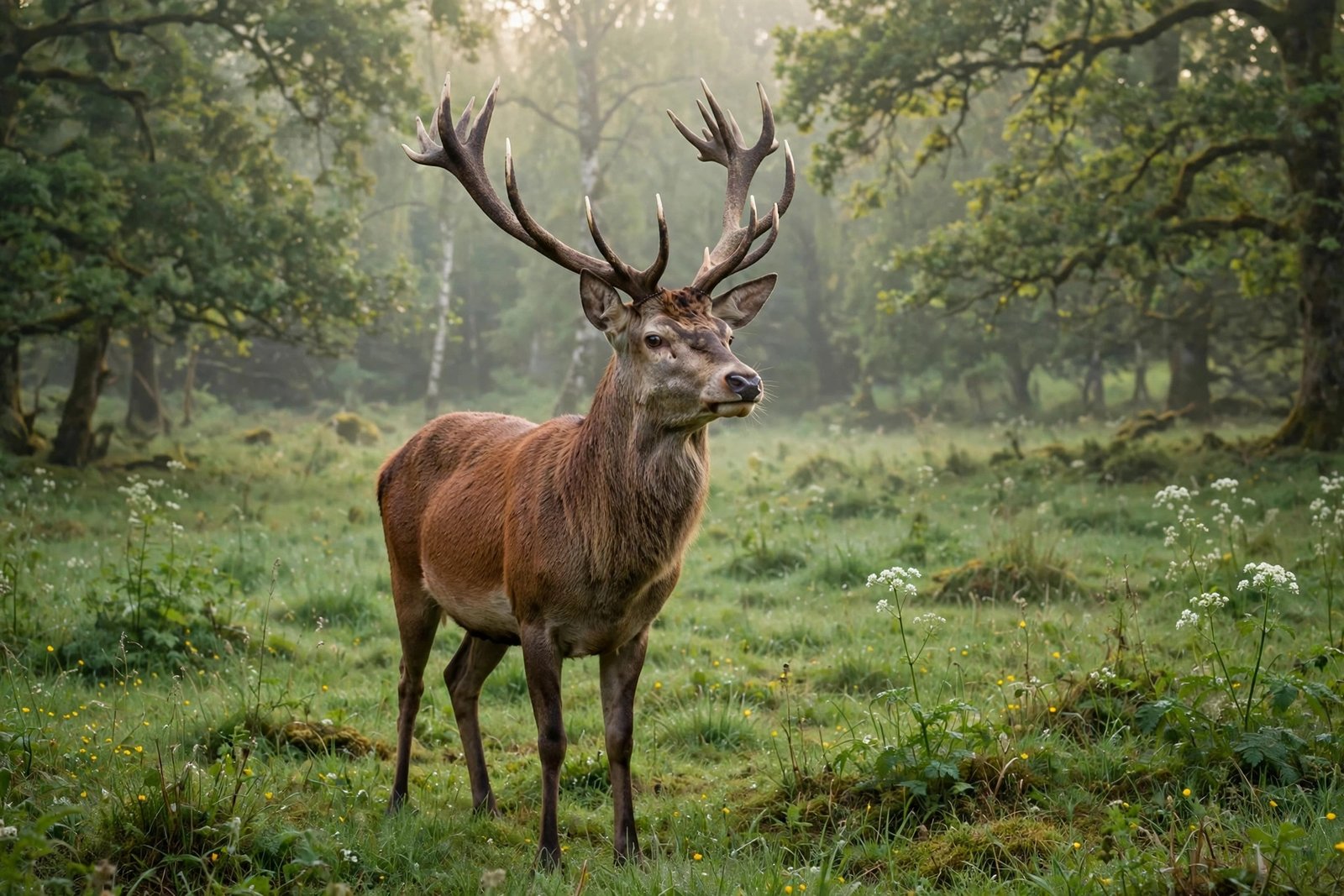
The Animal: A Male Red Deer
A hart is not just any deer. In medieval hunting terms, deer were sorted by age and sex, and each stage had its own name. A young stag went through several names as it grew, and “hart” was the name for a mature animal, one that had reached its full size and grown its crown antlers. That mattered to hunters of the time because a mature stag carried more meat and fat, and hunting one carried more prestige than taking a younger animal.
Red deer are large animals, and a mature male is an impressive sight. In the autumn rut, stags compete for mates, roaring and clashing antlers. A hart in its prime would have been a prized animal in a medieval forest, where hunting was both a source of food and a marker of rank.
Hart as a Surname
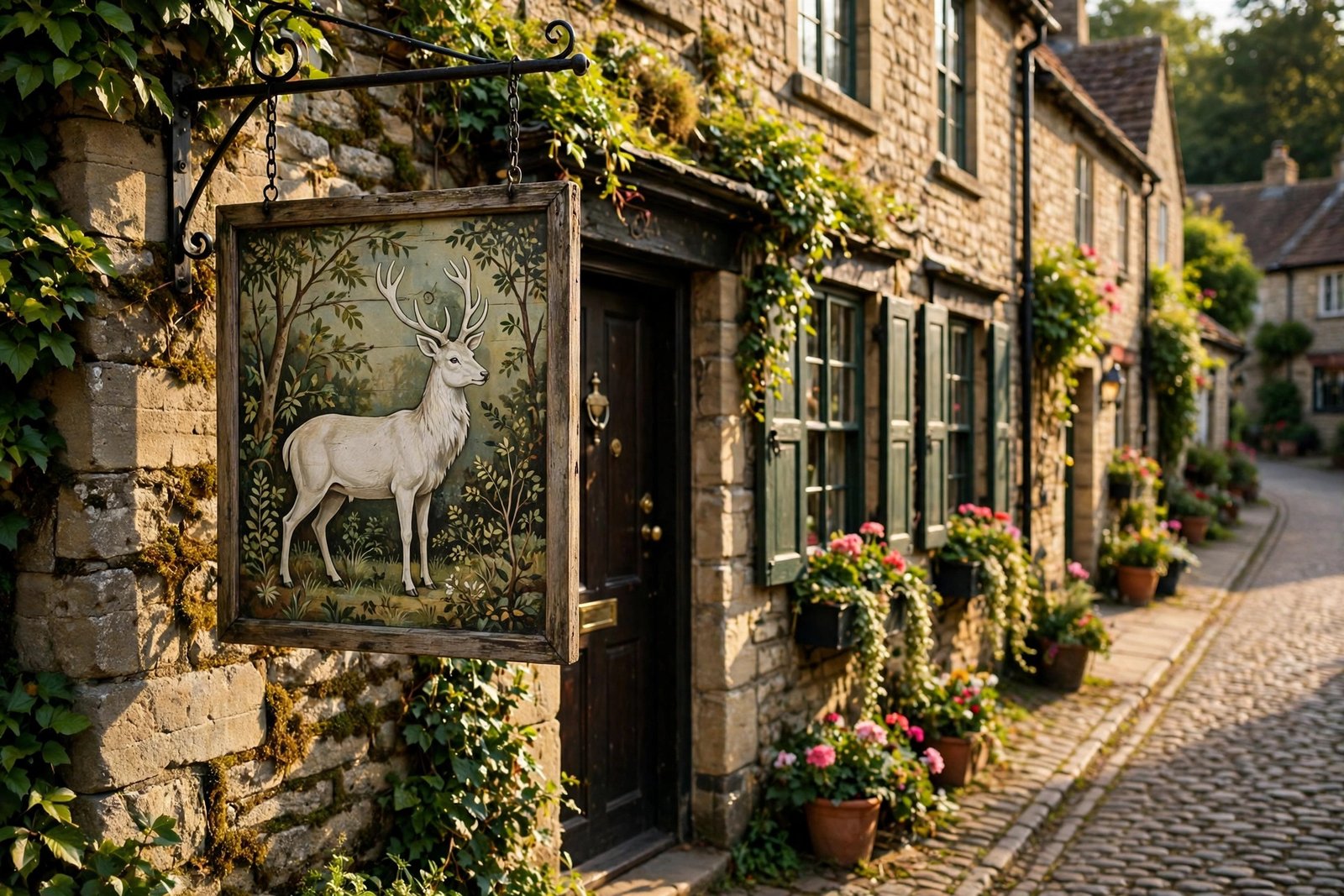
Hart is a common English surname, and it comes, in most cases, from the animal. In medieval England, surnames were still forming, and people picked up names from nicknames, from where they lived, or from the sign outside their house. A man who was quick on his feet, or who reminded his neighbours of a stag in some way, might be called Hart. A family living near a place where deer gathered, or near a landmark connected with deer, might take the name for the same reason. A household living at the sign of the Hart — the painted stag hung outside an inn or a house, a very common sign at the time — could also take its name from that sign.
That is why the name does not trace back to a single family or founder. It arose in several places at once, from the same word. One of the earliest recorded forms appears in the Pipe Rolls of Norfolk from 1166, which list a Roger Hert. By the later Middle Ages, William Hart is recorded as a member of parliament between 1388 and 1417, and Walter Hart was Bishop of Norwich in the fifteenth century.
The name also has other strands that share the spelling without sharing the deer. In Ireland, Hart is often an anglicised form of Ó hAirt, a Gaelic name meaning descendant of Art, where Art was a byname meaning bear or hero. Some Jewish families adopted Hart as a translation of surnames connected with the deer, which was the symbol of the tribe of Naphtali, or as a form of the name Hertz. In German, the word “hart” means hard or strong, and some families with that background carry the name for that reason. So two people called Hart today may have ancestors who arrived at the same spelling by quite different routes.
| Origin | How Hart arose | Where it is found |
|---|---|---|
| English, from Old English “heorot” | Nickname for a swift or stag-like person, or a name taken from a place or inn sign showing a hart | England, then the United States, Canada, and Australia |
| Irish, from Ó hAirt | Anglicised form of a Gaelic name meaning descendant of Art, “bear” or “hero” | Ireland, especially Sligo, and the Irish diaspora |
| Jewish (Ashkenazic) | Translation of deer-related surnames, or a form of Hertz | Families who anglicised their names in English-speaking countries |
| German and Dutch | From the word for “hard” or “strong”, or from deer-related names | Germany, the Netherlands, and emigrant communities |
Well-Known People Named Hart
Because the name is old and widespread, it turns up in many fields. A few bearers are widely known, and they show how far the name has travelled from its medieval English roots.
Kevin Hart is an American comedian and actor known for his energetic stand-up and for a long run of film roles. Melissa Joan Hart is an American actress known for television roles including the title role in “Sabrina the Teenage Witch”. Bret Hart is a Canadian-American professional wrestler, one of the best-known figures in his sport, and a member of the Hart wrestling family, which also included his father Stu Hart, a wrestler and trainer. Corey Hart is a Canadian singer and songwriter known for his hit song “Sunglasses at Night”.
Older bearers include Hart Crane, an American poet of the early twentieth century, and John Hart of New Jersey, one of the signers of the United States Declaration of Independence. The military historian B. H. Liddell Hart, who lived from 1895 to 1970, wrote widely on strategy and military history. Aaron Hart, who lived from 1670 to 1756, was the first chief rabbi of Great Britain.
Hart and Heart: The Homophone Problem
The most common confusion around this word has nothing to do with deer. “Hart” and “heart” are homophones: they are pronounced the same in most English dialects, but they mean different things and are spelled differently. “Heart” is the organ in the chest that pumps blood around the body, and by extension it means feelings, love, courage, and the centre of something. “Hart” is a deer, or a name.
The mix-up is easy to make and easy to spot. If the sentence involves blood, the chest, a pulse, love, sorrow, or a familiar phrase such as “heart of the matter”, the word is “heart”. If it involves hunting, stags, medieval writing, heraldry, or a family or place name, the word is “hart”. A useful test is to swap in “stag”: if “stag” fits the sentence, “hart” is right; if it sounds absurd, you almost certainly want “heart”. In older English, “hart” was also used as a spelling of “heart”, which explains why the two words look so close, but in modern spelling the distinction is firm.
Writers have played on the pair for centuries. Shakespeare puns on “hart” and “heart” in his plays, including Twelfth Night, and the joke only works because the audience hears the same sound and has to hold two meanings at once. That wordplay is one reason the deer meaning has stayed in the language at all, long after “stag” took over in everyday use.
| Word | Meaning | Use it when… |
|---|---|---|
| Hart | A male deer, especially a mature red deer stag; also a surname | You mean the animal, or a person’s or place’s name |
| Heart | The organ that pumps blood; feelings, love, courage, the centre of something | You mean the body, emotions, or a familiar phrase like “heart of the matter” |
Hart in Literature, Heraldry, and Place Names
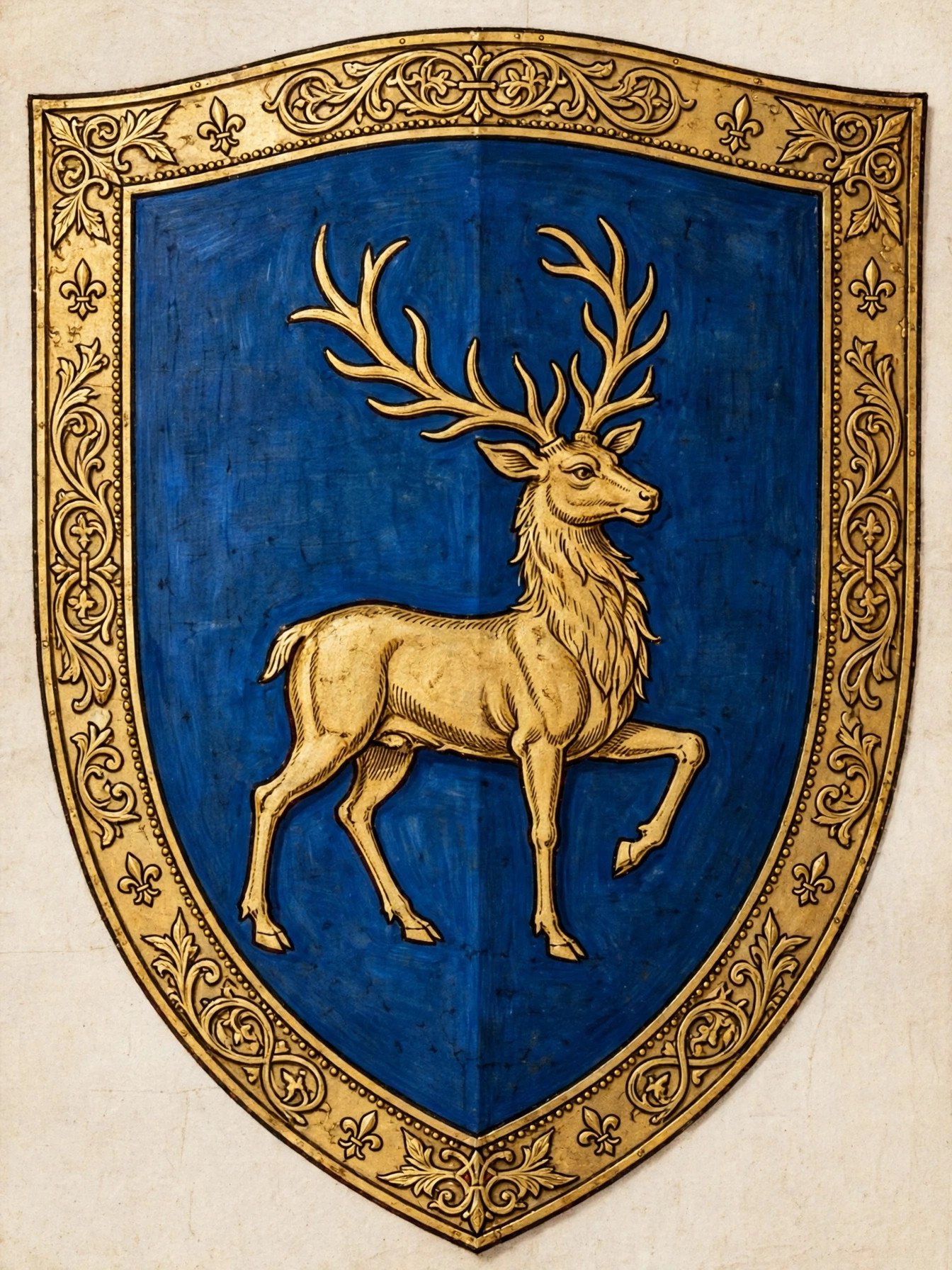
The hart has a long afterlife in books and on signs. In J. R. R. Tolkien’s The Hobbit, the word is used several times as Bilbo Baggins and his companions pass through Mirkwood Forest. The first line of Psalm 42 in the King James Version begins with a hart longing for water. In heraldry, the stag is a common charge on coats of arms, standing for grace, swiftness, and vigilance.
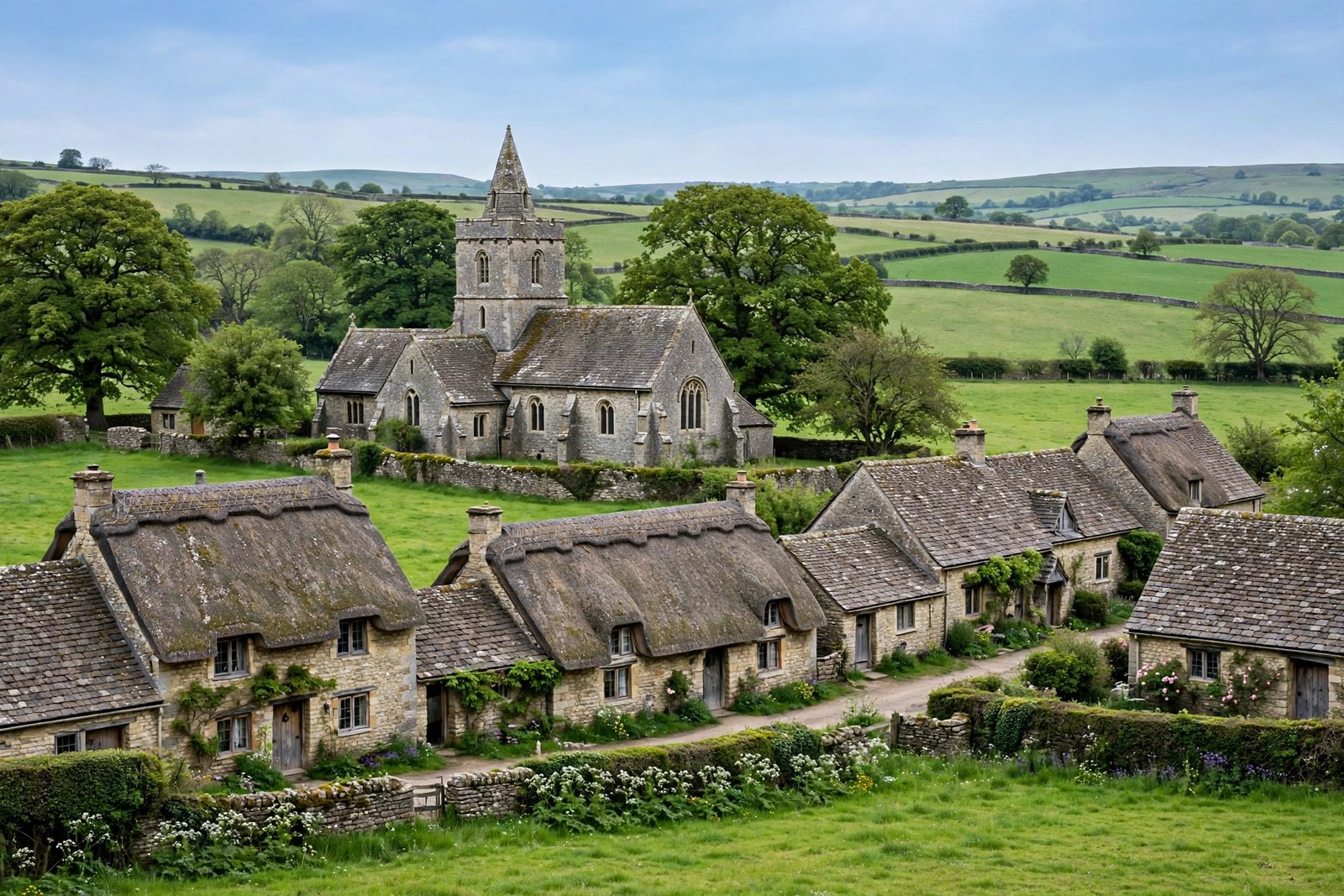
Place names carry the word further. Hartlepool, in County Durham, takes its name from Hart, a village whose name means the hart’s pool. Hartford, in both England and the United States — including Hartford, Connecticut — comes from “hart” plus “ford”, a crossing place associated with deer. Hertford and Hertfordshire in England are built on the same root, from an older spelling of the word. Hartley, Hartfield, and similar names combine “hart” with a word for a wood, clearing, or field. If you see “Hart” at the start of an English place name, a deer is usually somewhere in its history.
The word also lives on in the names of inns and pubs. The White Hart is one of the most common pub names in England, and it is an old one: the white hart was a badge associated with King Richard II, and the sign spread widely from there. A pub called the White Hart is, in most cases, not named after a local deer at all, but after that heraldic badge and the long tradition of inn signs that followed it.
Why a Short Word Still Matters
Hart is a small example of how English works. One short word holds an animal, a family history, a spelling trap, and a set of place names, all at once. It shows how surnames formed in medieval England, how a word can fade from everyday speech while surviving in names and books, and how two words that sound identical can lead completely different lives.
For anyone researching a family called Hart, the lesson is to check which strand the name comes from. An English Hart, an Irish Hart, and a Jewish Hart may share a spelling and nothing else. For anyone writing the word, the lesson is simpler: if you mean a deer, write “hart”; if you mean the organ, or love, or courage, write “heart”.
FAQs
What does “hart” mean?
A hart is a male deer, especially a male red deer, and in older hunting language it often meant a stag more than five years old. As a surname, Hart usually comes from that same Old English word, “heorot”.
Is “hart” the same as “heart”?
No. They sound the same, but “hart” is a deer or a name, while “heart” is the organ in the chest and, by extension, feelings, love, and courage. If the sentence is about the body or emotions, the word is “heart”.
Where does the surname Hart come from?
Most often from Old English “heorot”, meaning stag, taken as a nickname, a place name, or the sign of an inn. It can also be an anglicised form of the Irish Ó hAirt, or a translation of deer-related Jewish surnames, so not all Harts share one origin.
Who are some famous people named Hart?
They include comedian and actor Kevin Hart, actress Melissa Joan Hart, wrestler Bret Hart, singer Corey Hart, poet Hart Crane, and John Hart, a signer of the United States Declaration of Independence.
What places are named after the hart?
Hartlepool takes its name from Hart, meaning the hart’s pool, and Hartford comes from “hart” plus “ford”. Hertford and Hertfordshire in England are built on the same root, as are Hartley and Hartfield.
Useful links: ClockToday | Google