
Sports Harmonicode: What It Means, What It Doesn’t, and What to Check
Search for “sports harmonicode” and you will find confident articles about a revolution in athletic training, full of harmonic frequencies, biometric codes, and personalised programmes built on rhythm and data. The promises sound large: faster recovery, sharper focus, fewer injuries, better performance.
There is a problem with that picture, and it is worth stating plainly. Sports harmonicode has no single agreed definition, no governing body, no named founder, and no product or clinic that can be checked against an independent record. The pages that use the term describe it in different ways. This article explains what the phrase usually means, what is genuinely useful in the ideas behind it, and which claims you should not take at face value.
What Does Sports Harmonicode Mean?
The word blends “harmony” and “code”: harmony points to rhythm and coordination, code to rules, patterns, and the computer systems used to record and analyse information. Together, the phrase suggests training in which an athlete’s movements are measured, turned into patterns, and adjusted so the body works more smoothly.
Most articles agree on that broad idea. Beyond it, agreement ends. Some describe it as sound or vibration therapy, with particular frequencies played to the body to help it recover. Others describe it as software: sensors and motion capture feeding data into algorithms that spot inefficient movement. Still others mean something much simpler — the rhythmic signals, calls, and beats that athletes and coaches use to stay in time with each other.
The Honest Starting Point: There Is No Single Definition
Two questions often get mixed together here. The first is whether rhythm, timing, and measurement matter in sport. They plainly do, and sports science has studied them for decades. The second is whether “sports harmonicode” names a specific, tested system that delivers those benefits. On the evidence in public sources, it does not — or at least, no such system has been documented in a way anyone can verify.
No company, device, or organisation operates under this name in the public record, and the word does not appear in PubMed, the large medical research index run by the United States National Library of Medicine. That does not prove nothing useful could ever be built under the name. It does mean that anyone presenting it as an established discipline with settled methods and proven results is going further than the evidence allows.
There is also no reliable public information about who coined the term or when it first appeared. No prices, membership numbers, or sales figures can be quoted, because none have been published in a checkable source.

Three Different Ways the Term Is Used Online
Reading the pages that use the phrase, three distinct meanings keep appearing. The table below sets them out, so you can tell which one you are looking at when you meet the term again.
| Meaning | What it describes | What supports it |
|---|---|---|
| Sound and frequency therapy | Tones or vibrations played to the body to aid recovery or focus | Research on music and relaxation exists, but no study under this name |
| Movement data and sensors | Sensors and motion capture measuring how an athlete moves | Biomechanics and motion analysis are real, established fields |
| Rhythmic signals in play | Calls, claps, and beats that keep a team in time | Everyday coaching practice in rowing, running, and team sports |
The first meaning is the most dramatic and the least supported. Sound can affect how relaxed or alert a person feels, and music is widely used in warm-ups. But the step from that to “a specific frequency retunes muscles and speeds healing” is a large one, and no study testing it is cited.
The second meaning rests on firmer ground. Measuring movement is a genuine part of modern sports science: motion capture, force plates, and wearable sensors help teams study running gait, jumping, and throwing. But none of that depends on the word “harmonicode” — it is biomechanics, and it existed long before this term appeared.
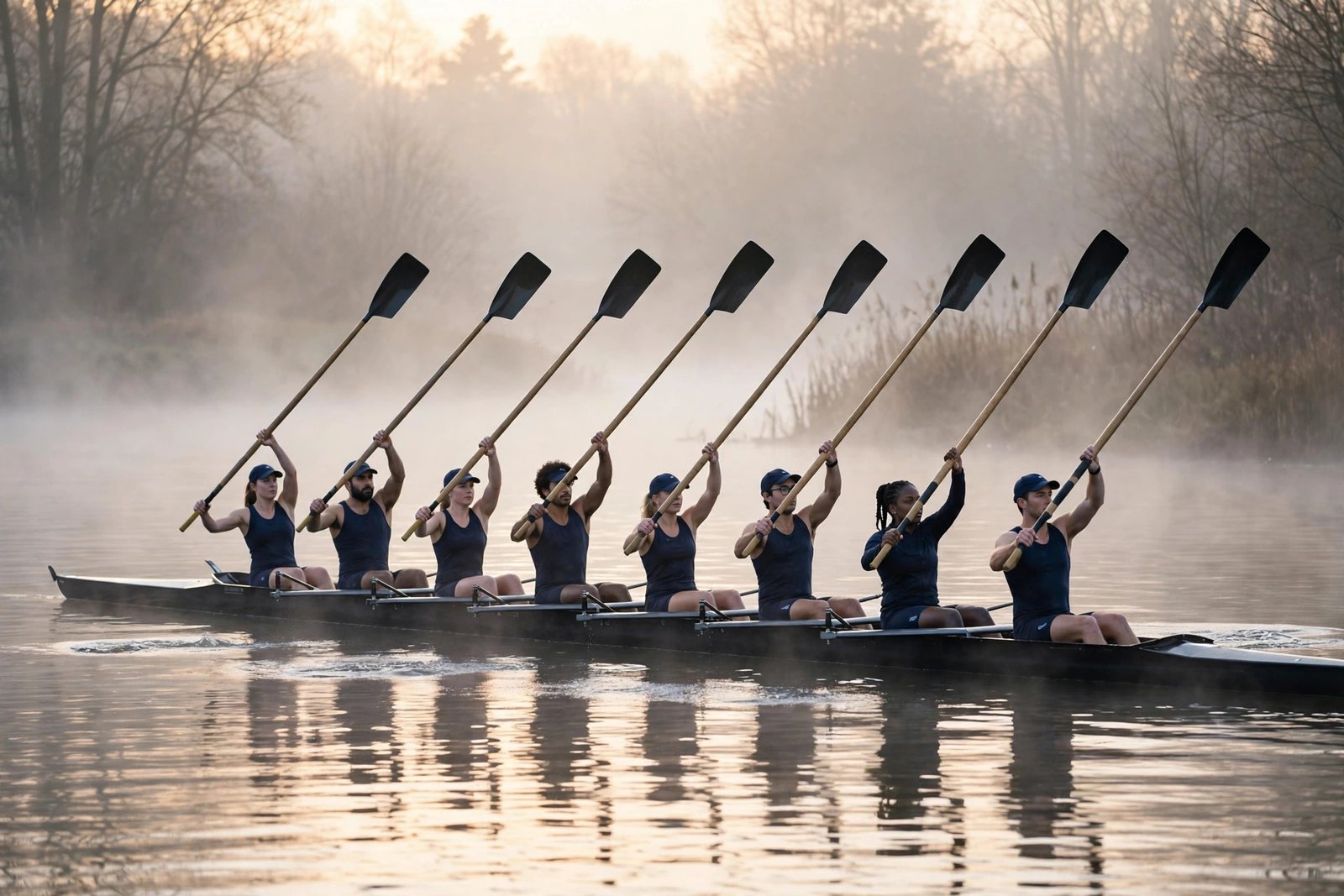
The third meaning is the oldest and most ordinary. Rowers match strokes to a call or a drum, sprinters train to a starting gun, boxers skip rope to a count, and teams use shouted calls to switch plays. A shared sound pattern carries information faster than a conversation, and practice turns the response into habit.
Rhythm and Timing in Real Training
Whatever the label, rhythm does genuine work in sport. Walking, running, swimming, and rowing all repeat in cycles, and small changes in the timing of a cycle change how much energy it costs. A runner whose foot lands slightly late wastes effort with every step; a swimmer whose breathing falls out of step with the stroke tires sooner. Coaches have always known this.
Music and metronomes are the simplest tools for working on timing. A runner can hold a chosen number of steps per minute by matching footfalls to a beat; a rower can hold a stroke rate by listening to a regular click. None of this needs special equipment — a phone, a metronome app, and a little patience will do.
Timing also matters between players. A team that moves together defends better and attacks faster, because each player can predict what the others will do. Set plays, line-out calls, and stroke calls all depend on shared signals everyone recognises at once. When the signal is missed, the play breaks down, which is why coaches drill calls until the response is automatic.
Where Technology Fits — and Where It Does Not
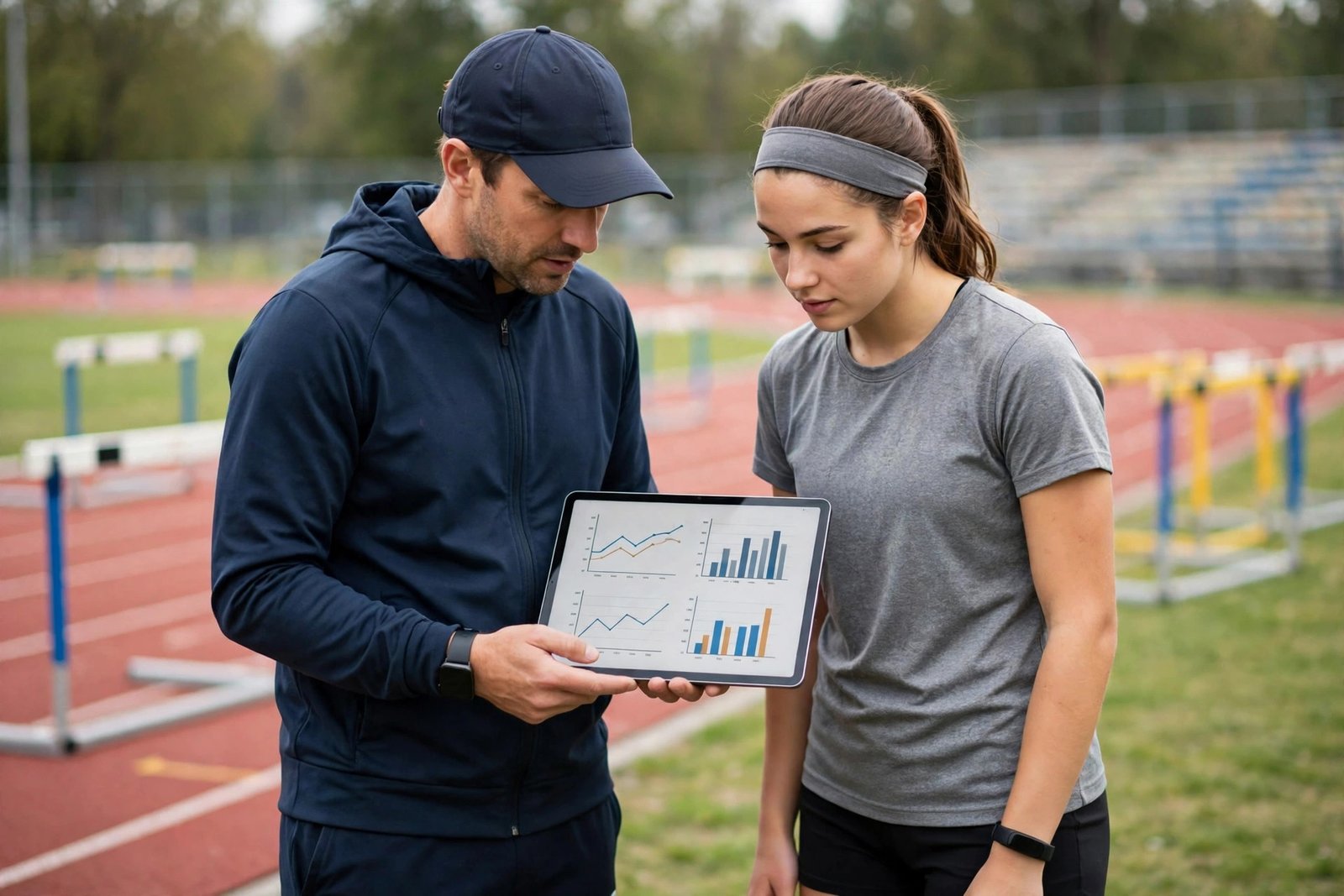
Modern training does involve a great deal of technology. A GPS watch records pace, heart rate, and distance; a sensor in a shoe measures how hard each foot strikes the ground; video analysis breaks a jump or a throw into frame-by-frame stages. Used well, these tools give a coach information the eye alone cannot catch.
But their value depends on what is measured and what is done with it. A number is only useful if it is accurate, if the coach understands it, and if a training change follows from it. A heart-rate monitor that tells a runner they are working too hard is useful. A dashboard full of scores with no clear meaning is not.
Wearables also vary in accuracy. Independent testing has repeatedly found that readings differ between devices and conditions, especially for heart rate during intense exercise. Treat them as rough guides rather than exact measurements, and leave decisions about injury to a qualified professional rather than an app.
Claims Worth Checking Before You Believe Them
When reading about any new training method, ask what would count as proof, then look for it.
| Common claim | What to ask |
|---|---|
| Recovery is much faster | Faster than what, measured how, and in a study with a comparison group? |
| Injuries fall sharply | Over how many athletes, over how long, and was it repeated? |
| Performance improves by a set percentage | Which athletes, in which sport, and who measured it? |
| Used by elite teams | Which teams, named where, and in their own words? |
| Backed by published research | Which paper, in which journal, and can it be read online? |
If those questions have no clear answers, the claim is not necessarily false — it is unproven, and should be treated as a suggestion to investigate, not a fact to build a training plan on. That matters most when money is involved: judge anything sold under this name like any other purchase.
Simple Ways to Use Rhythm in Your Own Training
The useful core of the idea needs no special product. You can work on rhythm and timing with tools you already have, and judge the results yourself over a few weeks.
Pick one movement and one measure: steps per minute for a runner, strokes per length for a swimmer, or the lowering phase of a lift. Record the number, train with a steady beat for two or three weeks, then measure again under the same conditions. If the number improves and the movement feels easier, something is working.
Agree on signals with your training partners. In a team sport, learn the calls and practise them until nobody has to think. In a pair or small group, agree on a clap or a word meaning “go”, “slow down”, or “switch”. Everyone must mean the same thing by the same sound, every time.
Use music deliberately. A playlist with a steady tempo can hold your pace on a long run; a slower track can help you wind down afterwards. Match the tempo to the job, and try the same session with and without music to see which leaves you feeling steadier.
Keep the basics in view. Sleep, food, rest days, and gradual increases in training load do more for performance than any new method. A rhythmic drill is a small addition to a sound programme, not a replacement for one.

How to Judge a Product or Page That Uses the Name
If you come across a website, app, or course calling itself sports harmonicode, a few minutes of checking will tell you a great deal. Look for a real organisation behind the name: a company registration, a street address, named people with verifiable backgrounds, and a way to contact them. A page with no names and no address is asking for trust it has not earned.
Read the claims and look for the evidence behind them. A genuine product names the studies it relies on, explains what its device actually measures, and says plainly what it cannot do. A page that leans on grand words — revolutionary, groundbreaking, scientifically proven — while giving no references is selling a feeling, not a method.
Search for independent opinions, not reviews on the seller’s own site, and be wary of pressure: countdown timers and large discounts for immediate payment are sales techniques, not signs of quality.
FAQs
What is sports harmonicode in simple terms?
It is an online term for the idea that rhythm, timing, and measured movement patterns can improve athletic training. It blends harmony, meaning coordination and rhythm, with code, meaning patterns and data. It has no single official definition, and different articles use it to mean different things.
Is sports harmonicode a recognised sport or a proven training system?
No. There is no recognised sport by this name, and no system under this name has been validated in published research that can be checked. Rhythm training and biomechanics are real fields — but they are not the same thing as a proven product called sports harmonicode.
Can sound frequencies really speed up recovery?
Music and relaxation can help athletes feel calmer and more focused, and rest and sleep are central to recovery. But there is no reliable public evidence that particular frequencies, played to the body under this name, speed healing or repair muscle. Large percentage claims should be checked against named studies first.
Do athletes actually use rhythm in training?
Yes, and they have done so for a long time. Rowers, runners, swimmers, boxers, and team-sport players all use beats, calls, and counts to keep time, coordinate with teammates, and build consistent movement. It is ordinary, effective coaching practice that needs no new label to work.
Should I pay for a sports harmonicode programme or device?
Only after checking it carefully: a real company behind the name, named evidence for its claims, and independent reviews from people with no connection to the seller. If those are missing, work on rhythm with simple tools — a metronome, a steady playlist, agreed signals — and spend your money on coaching and rest instead.
Useful links: ClockToday | Google