Artificial Zoo: What It Is, How It Works and Where to See One
Walk into a dark tunnel, put on a pair of 3D glasses, and suddenly an elephant is standing right in front of you. It moves, it turns its head, and light seems to pass through it — because it is not really there at all. There is no cage, no fence, and no live animal. That is the promise of an artificial zoo: animals made of light, code, and clever engineering, instead of living creatures.
Interest in these attractions has grown quickly. Families want a fun day out, teachers want a memorable way to show children animals they may never see in the wild, and many visitors like seeing a whale or a dinosaur without worrying about whether a live animal should be kept in an enclosure. An artificial zoo tries to offer that experience, and it does so in more than one way.
What Is an Artificial Zoo?
First, one thing to understand: “artificial zoo” has no single official definition. It is not the name of one company, one attraction, or one kind of technology. It is a loose term for any zoo-like experience that shows animals without keeping live animals.
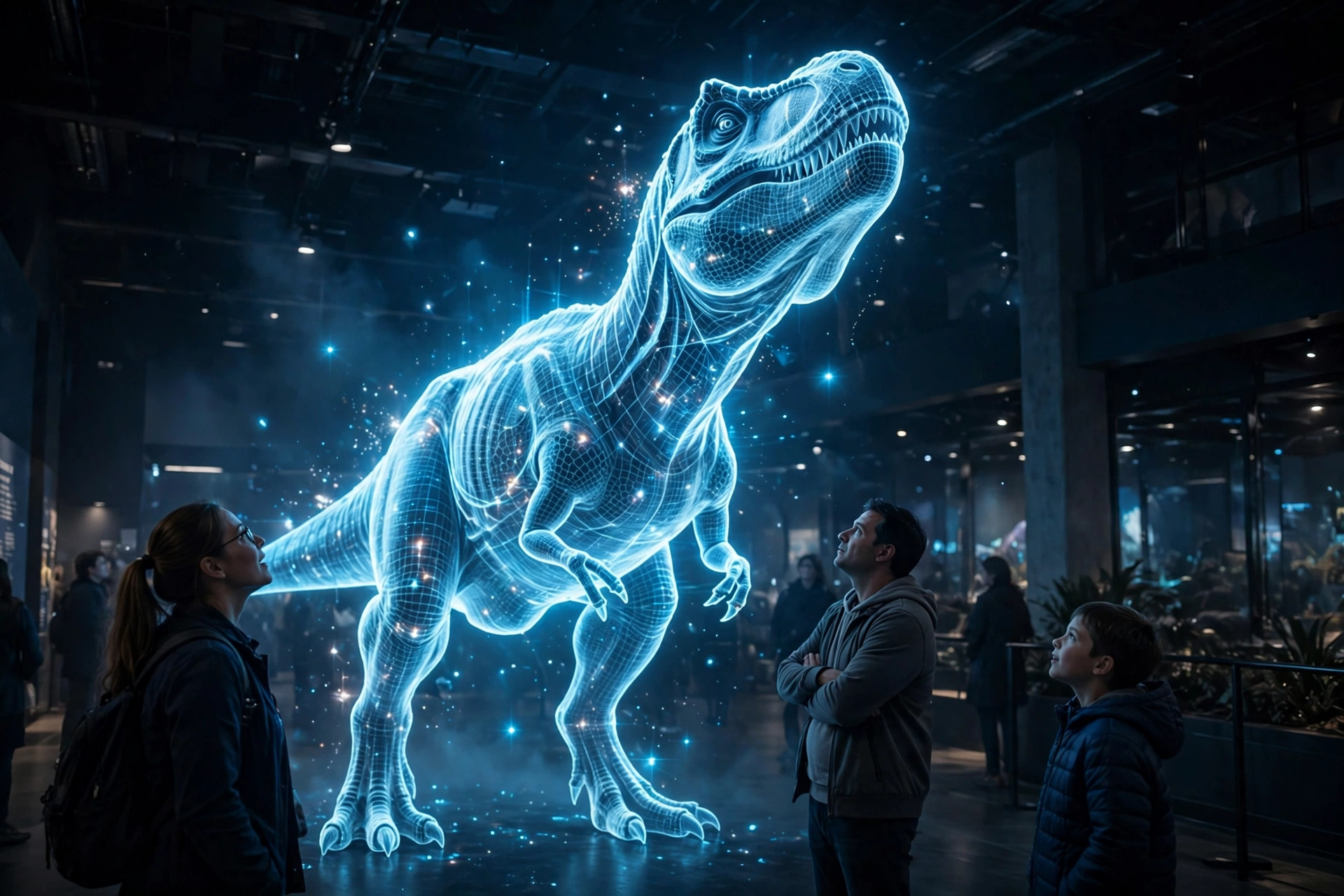
Most of the time, when people say “artificial zoo”, they mean a hologram zoo. That is the best-known version. It is an indoor attraction where life-size animals appear as holograms and projections. You might walk through a tunnel while a giraffe bends down beside you, watch a lion stride across a dark room, or stand in front of a dinosaur towering over the crowd. Nothing is alive, but the effect can feel surprisingly real.
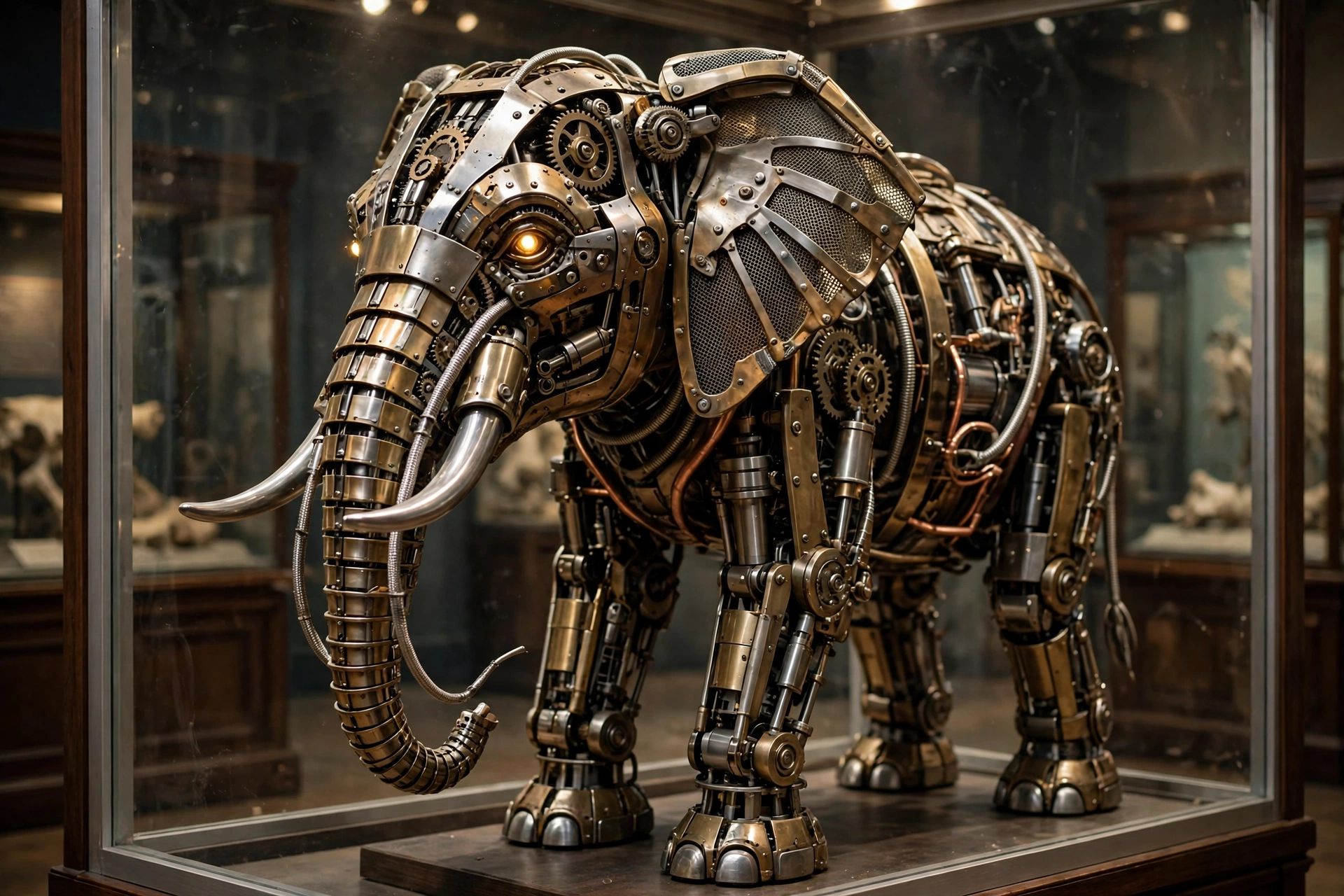
The term can cover other formats too. Some artificial zoos use virtual reality headsets, some use augmented reality visors, some use robotic animals, and some are little more than carefully made statues arranged like a park. They share one idea — animals without a traditional zoo — but the experience can be very different from place to place. Two attractions using the same label may have almost nothing in common, so it is worth knowing which kind you are booking.
How Does a Hologram Zoo Work?
A hologram zoo looks like magic, but the technology is a practical mix of projection, tracking, and a trick played on your eyes. The exact setup varies by venue, but the general idea is similar in most places.
Visitors usually wear polarised or position-tracked 3D glasses. Laser projectors and screens line the tunnels or rooms. Position tracking follows where you are standing and draws a slightly different image for each eye, and your brain puts those two images together into a single three-dimensional scene. The result is depth: an animal can seem to stand in front of a wall rather than flat on it, and it can appear to move toward you as you walk.
The animals are digital models, built in detail and then animated. A whale can swim overhead, elephants can cross a savanna scene, and a long-extinct dinosaur can walk through the room. Because nothing is alive, the attraction can show animals that would be impossible or unfair to keep in captivity — deep-sea creatures, polar animals in a warm climate, or species that no longer exist.
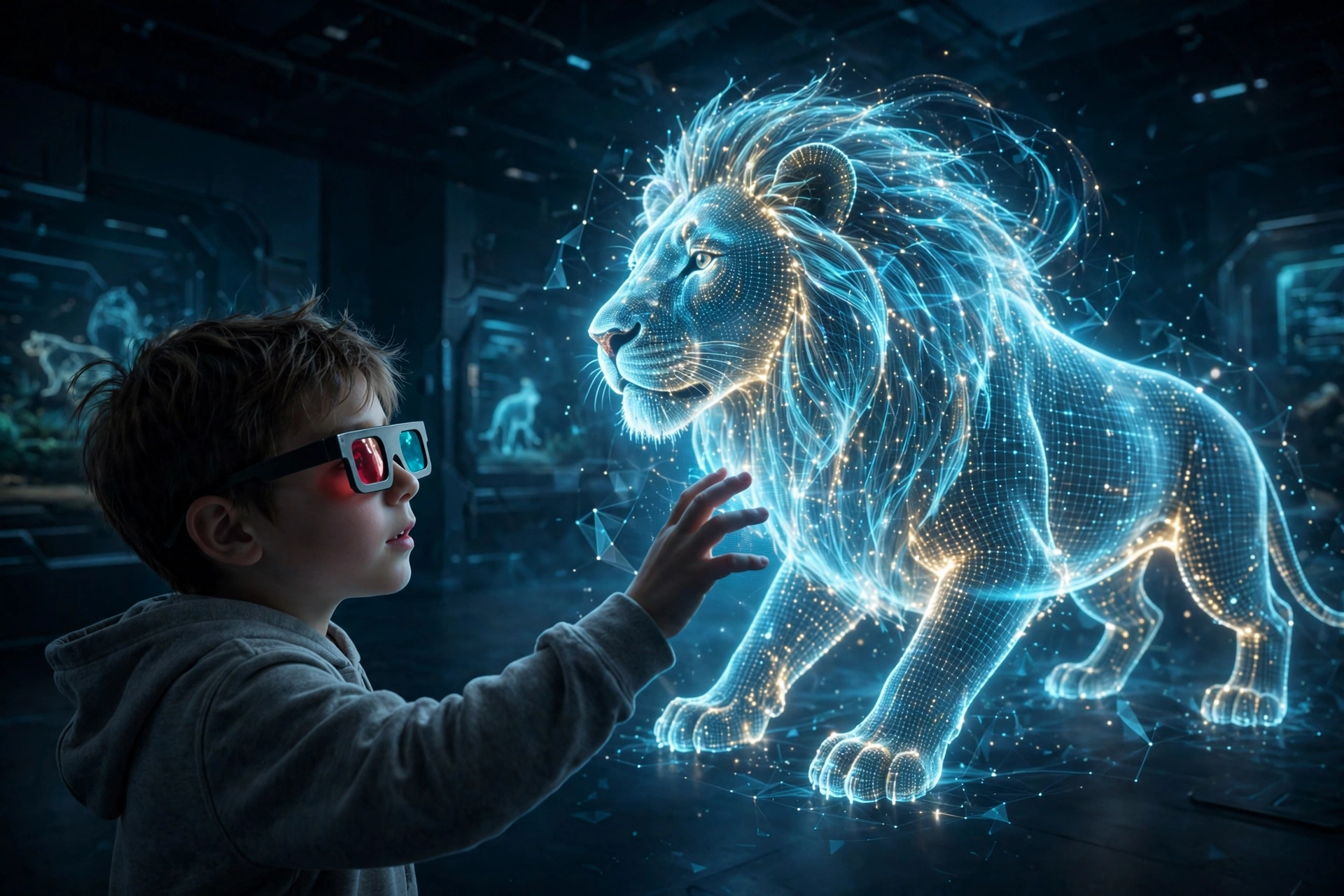
The visit itself is usually short. Many hologram zoos are designed as a walk-through lasting around 30 minutes, moving from one scene to the next. That is part of the appeal for families with young children: it is immersive without being a long, tiring day, and it works in any weather because it is indoors.
Where Can You See One?
The first major hologram zoo is widely credited to Axiom Holographics in Brisbane, Australia. It opened in 2023 inside the Cannon Hill shopping centre, and Time Magazine named the technology one of the best inventions of 2023. That put the idea on the map and encouraged similar attractions elsewhere.
Since then, hologram zoos have appeared in several cities. Zoocade in Austin, Texas, is described as the first major hologram zoo in the US, offering a 30-minute walk through its scenes. There is also a Hologram Zoo at Niagara Falls, and hologram zoo experiences have been reported in Copenhagen and in Istanbul, where the attraction is known as DigiZoo. In India, Indore has a virtual zoo at Kamla Nehru Zoological Garden, with a 14-D cinema, a digital jungle safari, and hologram displays.
The Different Formats of Artificial Zoo
Hologram zoos get most of the attention, but they are only one branch of the idea. The table below compares the main formats.
| Format | What you experience | Example |
|---|---|---|
| Hologram zoo | Life-size animals as holograms in dark rooms and tunnels; 3D glasses | Axiom Holographics, Brisbane; Zoocade, Austin |
| Virtual reality zoo | A headset places you inside a digital habitat | Leipzig Zoo’s Gorilla Trek |
| Augmented reality zoo | A visor adds digital animals to the real world around you | Verse Immersive |
| Animatronic zoo | Robotic animals that move and react | Robotic dolphin by Edge Innovations |
| Statue park | Life-size animal statues arranged outdoors | Singrauli, India |
| Robotic petting zoo | Interactive robotic animals you can engage with | Electronic Petting Zoo at ZKM Karlsruhe, Germany |
The Electronic Petting Zoo at ZKM Karlsruhe in Germany shows how playful the idea can get. It features 10 interactive robotic guinea pigs called the Booboos. It opened on 30 November 2025 and was scheduled to run until 2 August 2026, according to reports — dates worth checking, because exhibitions like this are often temporary.
Artificial Zoo vs Traditional Zoo
An artificial zoo is not simply a modern version of a traditional zoo. It is a different kind of day out, with different strengths and different gaps.
| Artificial zoo | Traditional zoo | |
|---|---|---|
| Animals | Digital, robotic, or model animals; no live animals kept | Live animals in enclosures and habitats |
| Species | Almost anything, including extinct and deep-sea animals | Limited to animals the zoo can keep and care for |
| Visit length | Often around 30 minutes | Usually several hours |
| Setting | Mostly indoors; works in any weather | Mostly outdoors; weather affects the visit |
| Animal welfare | No live animals in captivity for the show | Depends on the zoo’s standards and enclosures |
| Learning | Visual and dramatic; good for sparking curiosity | Real behaviour, sounds, and scale; good for observation |
Ticket prices for artificial zoos are often reported around $20-25 for a 30-minute experience, but that figure varies by venue, city, and what is included. Treat any price you see online as reported, and check the venue’s own listing before booking.
Who Is an Artificial Zoo For?
Families are the most obvious audience. Young children often love the sense of wonder — a whale swimming overhead is hard to forget — and parents like that the visit is short, indoor, and easy to plan. The dark rooms and bright projections can be a lot for very small children or for anyone sensitive to flashing light, so check a venue’s guidance if that is a concern.
Education is another strong fit. A hologram zoo can show a class animals they would never see together in real life, including extinct animals at full size. A teacher can talk about habitats, evolution, or conservation while the animal stands right there in light. It is not the same as seeing a real animal, but as a starting point for curiosity it can be very effective.
Then there is the animal-welfare angle. An artificial zoo keeps no live animals for display, so there is no question about enclosure size or captivity. For people who are uncomfortable with traditional zoos, that alone can make the experience appealing. It also means a venue can show a polar bear in a hot city or a whale in a shopping centre without keeping a real animal in conditions that would not suit it.
What an Artificial Zoo Cannot Replace
For all of that, an artificial zoo is not a replacement for a real zoo, and it is honest to say so. A hologram can show you what an elephant looks like, but it cannot show you how a real elephant behaves when it is choosing what to eat or interacting with its herd. Real animals are unpredictable in a way no program can fully copy, and that unpredictability is part of what makes watching them interesting.
There is also conservation. Traditional zoos, at their best, do more than display animals. They fund breeding programmes, support field conservation, rescue injured wildlife, and carry out research. An artificial zoo can raise awareness and inspire visitors to care, but it does not directly keep a species alive or protect a habitat. A light projection of a rhino does not help a real rhino.
Smell, sound, and scale are different too. A hologram can be life-size, but you know it is light. You cannot hear a real lion’s roar, smell the rainforest house, or watch an animal make a choice you did not expect. The experience is impressive, but it is a show, and part of its charm is that you know it is a show.
If you are planning a visit, check which format the venue actually offers, look at the running time — many take around 30 minutes, so plan the rest of your day around that — and check ticket prices and age guidance on the venue’s own site. Go in with curiosity rather than expecting a real zoo. An artificial zoo is still a young idea, and it is changing fast. For now, the idea is simple: animals made of light, code, and craft, in a place where no live animal has to be kept.
FAQs
What is an artificial zoo?
An artificial zoo is a loose term for a zoo-like attraction that shows animals without keeping live animals, most often as holograms and projections, but also through VR, AR, animatronic animals, or statues.
How does a hologram zoo work?
Visitors wear polarised or position-tracked 3D glasses while laser projectors and screens show a slightly different image to each eye, so the brain sees a three-dimensional scene.
Where was the first major hologram zoo?
The first major hologram zoo is credited to Axiom Holographics in Brisbane, Australia, which opened in 2023 inside the Cannon Hill shopping centre, and its technology was named one of the best inventions of 2023 by Time Magazine.
How much does an artificial zoo cost?
Ticket prices are often reported around $20-25 for a 30-minute experience, but prices vary by venue, so check the venue’s own listing before booking.
Can an artificial zoo replace a traditional zoo?
No, not fully. It can inspire curiosity and avoid keeping live animals in captivity, but it cannot show real animal behaviour or directly support conservation and breeding programmes in the way a traditional zoo can.
Useful links: ClockToday | Google