Ruschek: Meaning, Origin, Family History, and How to Research the Name
The name Ruschek may seem unusual at first, especially to someone encountering it while researching a family name, exploring ancestry, or looking for information about a person. Unlike common surnames that appear in thousands of biographies and historical documents, Ruschek is relatively uncommon, which can make its background more difficult to understand. A search for this name may lead to discussions of European surnames, genealogy, historical records, and possible linguistic origins.
Understanding an uncommon surname requires more than finding a short definition. Family names often develop over many generations, and their spelling, pronunciation, and geographical associations can change as families move between regions and countries. Old documents may also contain spelling variations that make it difficult to connect one generation with another.
Ruschek is associated with German and Central European surname traditions. Some surname references offer a geographical interpretation connecting the name with a person who lived near a reed-covered area. However, this explanation should be treated as a possible surname interpretation rather than a proven account of every family’s history. The origin of an individual family must be investigated through relevant historical evidence.
This guide explores the possible meaning of Ruschek, its surname background, the importance of family records, and practical ways to investigate its history. It also explains why different search results can appear for the same name and how readers can distinguish reliable information from assumptions.
What Does Ruschek Mean?
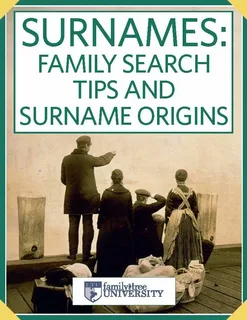
Ruschek is primarily encountered as a family surname. A surname is a hereditary name that identifies a family or distinguishes an individual from other people with the same given name. Across Europe, surnames developed through several naming traditions, including geographical descriptions, occupations, personal names, nicknames, and relationships between family members.
The meaning of a surname is not always straightforward. Some names can be traced to a specific occupation or geographical feature, while others have developed through linguistic changes that are difficult to reconstruct. In some cases, a name has several possible explanations because similar forms appeared independently in different locations.
For Ruschek, a surname interpretation associated with German naming traditions connects the name with a reed bed or a place where reeds grow. Such an interpretation fits a broader historical pattern in which people were identified by the landscape surrounding their homes.
Before modern addresses, identification documents, and formal recordkeeping became widespread, local communities often relied on descriptive names to distinguish individuals. A person might be known by the village where they lived, the land they worked, the occupation they practised, or a physical feature near their home. Over time, a descriptive identifier could become a hereditary surname.
Nevertheless, a proposed meaning does not establish the exact history of a particular Ruschek family. A family might have adopted its surname in a different geographical setting, and the name could have changed spelling as generations passed. Establishing a particular family’s background requires evidence from historical documents.
How Surnames Developed in European Communities
European surnames did not emerge everywhere at the same time or follow one universal system. In some communities, hereditary family names became established relatively early. In others, the process developed gradually as populations grew and administrative systems required more consistent identification.
A person might initially be identified through a parent’s name, a village, an occupation, or a descriptive nickname. When that identifier began passing from parents to children, it could become a permanent family surname.
Geographical surnames were especially useful in communities where local surroundings helped distinguish people. Rivers, hills, forests, fields, and wetlands provided familiar reference points. A name associated with a particular landscape could remain attached to a family even after its members moved elsewhere.
Occupational surnames developed in a similar way. A person known for a particular trade could become associated with that occupation, and the designation might eventually pass to descendants who worked in entirely different fields.
Personal names also contributed to surname development. A family could become identified through an ancestor’s given name, nickname, or relationship to another individual. These naming patterns often differed according to regional languages and cultural practices.
The history of Ruschek should be considered within this wider context. General European naming traditions help explain how surnames can develop, but they do not independently prove the precise circumstances under which any particular family adopted the name.
The Possible Historical Origins of Ruschek
Researching the origin of Ruschek involves examining linguistic clues, geographical associations, and historical records. These sources can contribute different kinds of information, and the strongest conclusions usually come from considering them together.
The spelling of a name can suggest possible linguistic connections, but spelling alone is rarely sufficient to establish a definitive origin. Historical languages contained regional variations, and written forms were not always standardised. The same individual might even appear under slightly different spellings in separate documents.
German and Central European Connections

Ruschek is associated with German and Central European surname traditions. This association provides a useful starting point for research, particularly when investigating historical records from regions where German-language documents were commonly produced.
Central Europe has experienced centuries of migration, political change, and shifting administrative boundaries. Communities that once belonged to one state may later have become part of another. As a result, a family history that appears geographically confusing on a modern map may make sense when viewed in its historical context.
Language is another important consideration. A record might have been written in German even if the person concerned lived in a multilingual community. Later records could use a different language or spelling convention. These changes do not necessarily indicate that the family itself changed its name deliberately.
Researchers should also avoid assuming that a surname establishes a person’s nationality. A surname can preserve traces of an older linguistic tradition, but it cannot independently establish citizenship, ethnicity, birthplace, or personal identity.
For example, a contemporary individual with the surname Ruschek might have been born in North America, Europe, Australia, or another part of the world. Their ancestors may have moved between countries over several generations. The surname alone cannot reveal that complete history.
Could Ruschek Be Connected to a Place?
One possible avenue of investigation is the relationship between a surname and a geographical feature. Historically, people were sometimes identified by the landscape surrounding their homes or by the settlements in which they lived.
The reed-bed interpretation associated with Ruschek falls into this general category. Wetlands and areas containing reeds were familiar landscape features in many parts of Europe. Such environments could influence local livelihoods, agricultural practices, and descriptions of residential areas.
However, a geographical interpretation should not be confused with evidence that every family bearing the surname lived beside a particular wetland. It is also not enough to identify a specific village or region as the family’s birthplace.
To establish a geographical connection, researchers would need historical documents identifying individuals with the surname and placing them in a particular location. Church registers, civil records, property documents, and other archival materials can help establish where a family lived during a given period.
When these records are available across multiple generations, they may reveal a more detailed pattern of settlement and movement.
Why the Exact Origin May Remain Uncertain
The historical development of an uncommon surname may be difficult to reconstruct because surviving records are incomplete. Some documents were never created, while others may have been lost, damaged, or kept in archives that are difficult to access.
Spelling differences can create another challenge. A clerk recording a birth, marriage, immigration event, or property transaction might have written a name according to local pronunciation. Later officials could have used a different spelling.
Researchers should therefore distinguish between three separate questions:
- What linguistic origin has been proposed for the surname?
- Where did a particular family live in the earliest records that can be found?
- Can that family’s documented history be traced to an earlier generation or location?
These questions are related, but they require different evidence. A surname dictionary may help with the first question, while civil registers and archival documents are usually more useful for the second and third.
Keeping these distinctions clear helps prevent an attractive explanation from becoming an unsupported historical claim.
Ruschek as a Family Name Across Generations
Family names can remain recognisable even when the people who carry them experience major changes in location, occupation, language, and social circumstances. The surname Ruschek can be investigated in the same way as other uncommon family names.
The most useful approach is to begin with a known individual and work backwards through documented relationships.
Suppose someone researching the Ruschek surname knows the names of their grandparents and great-grandparents. Instead of immediately searching for a distant historical origin, they could first collect birth dates, marriage details, places of residence, and information about the previous generation.
Each verified relationship creates a foundation for further research. A marriage certificate may identify parents, while a birth register may confirm a birthplace. An immigration document might reveal an earlier residence or provide information about relatives who remained in another country.
When several records support the same connection, the family tree becomes more reliable.
Why Family Stories Matter
Oral history can provide valuable clues that are not immediately obvious in official documents. Family members may remember a migration story, an earlier spelling of a surname, a village associated with an ancestor, or a relative whose papers were preserved by the family.
These accounts can help researchers decide where to look next. A remembered place name might lead to a church register, while a story about migration could suggest examining passenger lists or naturalisation records.
However, oral history should be treated as a starting point rather than conclusive proof. Memories can change over time, and stories may become simplified as they pass between generations.
A relative might remember that an ancestor arrived from Germany, for example, without knowing the precise town or historical border that applied at the time. The account may be broadly accurate while lacking the detail necessary to establish a specific birthplace.
Researchers can preserve family stories while clearly distinguishing remembered information from facts supported by documents.
The Importance of Preserving Family Documents
Old letters, photographs, certificates, diaries, and personal papers can be especially valuable when researching an uncommon surname. Even a document that appears ordinary may contain details that connect one generation with another.
A photograph might include a date, a place name, or the names of several relatives. A letter could identify a previous address or mention a family member who moved abroad. A birth certificate may confirm the spelling of a name that appears differently elsewhere.
Documents should be stored carefully and, when possible, digitised for easier reference. Digital copies can be organised by person, date, and document type, making it easier to compare information from multiple sources.
Researchers should record where each document originated and avoid altering the original files. Keeping an organised archive helps preserve the distinction between the original evidence and later interpretations.
How to Research the Ruschek Family History
Researching the Ruschek surname can be a rewarding project, particularly for people interested in genealogy or family heritage. The process becomes more manageable when it follows a clear sequence rather than relying on scattered online searches.
The first objective should be to establish a reliable starting point. Once a known person has been identified, researchers can gradually expand the investigation through documented family relationships.
Start With Information You Already Have
Begin by writing down what is already known about the person or family being investigated. This might include full names, approximate birth years, marriage dates, places of residence, and the names of parents or siblings.
It is important to identify uncertain details rather than presenting estimates as confirmed facts. If a birth year is remembered only approximately, mark it as an estimate until a reliable source provides a more precise date.
A simple family research table can help organise the information.
| Research detail | Information to collect |
|---|---|
| Full name | The complete name recorded in documents |
| Birth information | Date and place, if known |
| Marriage information | Date, location, and spouse |
| Parents | Names supported by records |
| Residence | Town, region, or country |
| Source | Certificate, register, letter, or archive |
This basic structure makes it easier to recognise missing information and avoid confusing people who share similar names.
Search Historical Civil Records
Civil registration records can be among the most useful resources for genealogy. Depending on the country and historical period, these records may document births, marriages, and deaths.
A birth record may identify parents, while a marriage record can provide information about spouses and family origins. A death record may offer details about age, residence, and surviving relatives, although the accuracy of those details depends on the person who supplied the information.
Availability varies by jurisdiction. Some records are accessible online, while others can only be consulted through archives, government offices, or authorised repositories.
Researchers should also consider access restrictions. Recent records may contain personal information that is not publicly available, and some archives limit access to documents involving living people.
When searching for Ruschek, use the full name of the individual whenever possible. Combining the surname with a date, location, or another family member’s name can help narrow the results.
Explore Church Registers
Church registers can be particularly valuable when civil registration records are unavailable or do not extend far enough into the past.
Depending on the religious institution and historical period, registers may record baptisms, marriages, burials, and other events. Some include the names of parents, witnesses, godparents, or other people connected to a family.
These additional names can help researchers identify relationships that would otherwise remain unclear. Witnesses and godparents were sometimes relatives or close family friends, although their precise relationship should not be assumed without evidence.
Historical church records may be written in older handwriting or languages that are unfamiliar to modern readers. Researchers might need help interpreting handwriting, historical place names, or specialised terminology.
A record should be transcribed carefully, with uncertain words marked as uncertain rather than guessed. If a document is difficult to read, comparing it with other entries from the same register may help clarify the handwriting.
Use Genealogy Websites Carefully
Online genealogy platforms can make historical research more accessible. Their databases may contain digitised records, family trees, census information, immigration documents, and other material relevant to the Ruschek surname.
These platforms can help identify promising research leads, but their information should be evaluated critically.
A family tree created by another user may contain errors, particularly when relationships were inferred from matching names rather than verified documents. A tree can provide useful clues without being a reliable source for every detail it contains.
Whenever possible, open the original document associated with a database entry. Check the names, dates, locations, and relationships directly rather than relying only on a summary.
If a website lists a person’s parents or birthplace but provides no source, treat the claim as unverified until supporting evidence can be located.
It is also useful to compare independent records. If a birth certificate, marriage register, and census entry all support the same relationship, confidence in the conclusion increases.
Investigate Immigration and Migration Records
Migration records can help explain how a family moved from one country to another. Depending on the location and period, useful documents may include passenger lists, border records, naturalisation files, residence registrations, and census returns.
These records sometimes identify a person’s last residence, intended destination, relatives, occupation, or citizenship status. Not every document contains all these details, and terminology can differ across jurisdictions.
A migration record should not be treated as proof of an entire family history by itself. It may establish that a particular person travelled during a certain period, but further records may be needed to connect that individual to parents, siblings, or earlier generations.
Researchers should also remember that historical borders changed. A town recorded under one country’s administration in an older document may belong to a different country today.
Understanding the political and geographical context can help make sense of apparently conflicting place names.
Understanding Spelling Variations of Ruschek
Spelling variations are a common issue in historical genealogy. A surname that appears consistently in modern documents may have been recorded differently in older records.
Several factors can contribute to these differences, including pronunciation, handwriting, translation, transliteration, administrative practices, and changes in official spelling conventions.
For a name such as Ruschek, researchers may encounter records that appear similar but are not necessarily connected. It is important to investigate each possible variation rather than automatically treating every similar form as the same surname.
Why Historical Spellings Change
In earlier periods, spelling was not always standardised across every community or administrative system. Clerks sometimes recorded names as they heard them, and individuals may not have used one consistent spelling throughout their lives.
Migration could introduce further changes. A name written in one alphabet or language might be represented differently in another. Later generations might retain the new spelling even if earlier family documents used a different form.
Handwriting can also cause errors during transcription. Letters that look similar in an old register may be mistaken for one another, creating a spelling that never appeared in the original document.
When searching for Ruschek, researchers should preserve the exact spelling found in each source. If a database provides a transcription that differs from the original record, note both versions.
How to Search for Possible Variants
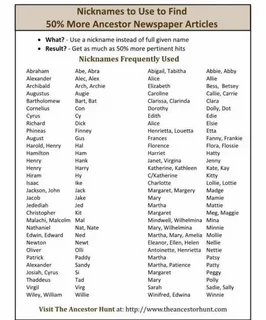
Start with the exact surname and then explore plausible alternatives suggested by actual documents or reliable surname references. Search engines and archival databases sometimes allow approximate matching, which can help identify records containing spelling differences.
Do not create a large list of speculative alternatives without a reason. Excessively broad searches can produce unrelated people and waste time.
Instead, consider the historical language, the location of the record, and the handwriting used in the document. These factors may help identify which spelling differences are realistic.
A possible match should be evaluated using more than the surname. Compare dates, locations, family relationships, occupations, and other identifying details.
If a record contains the surname Ruschek but the person’s age and location are inconsistent with the known family history, further investigation is necessary before connecting the two records.
Similar Names Do Not Automatically Indicate Shared Ancestry
Two surnames may look or sound similar without having the same origin. Even names that are linguistically related do not necessarily identify people from the same family.
A shared surname can reflect a common ancestor, but that conclusion must be supported by evidence. Conversely, different spellings do not necessarily mean that two family branches are unrelated.
The strongest approach is to trace individuals through documented relationships. Names provide useful clues, while records establish whether the proposed connections are credible.
Where Can the Ruschek Surname Be Found?
The geographical distribution of a surname can provide clues about migration and family history. However, understanding where a surname occurs requires careful attention to the type of information being examined.
A historical record, a modern telephone directory, a public profile, and a genealogy database each represent different kinds of evidence. None should automatically be interpreted as a complete count of everyone who carries the name.
Historical Records and Regional Connections
Researchers investigating Ruschek may begin with German-language and Central European historical sources because of the surname’s reported linguistic associations.
This does not mean that the surname belongs exclusively to one country. Family names can travel with people as they move, and descendants may become established in countries far from the places where their ancestors lived.
A family may have remained in one region for centuries, while another branch moved elsewhere within a few generations. Over time, these branches may develop very different histories despite retaining the same surname.
Historical records can help establish these movements. A series of birth, marriage, residence, and immigration documents may reveal when a family first appeared in a particular location.
The absence of a record, however, does not prove that a family was never present in that region. Records may have been lost, destroyed, overlooked, or filed under an unexpected spelling.
Migration and Family Settlement
Migration can occur for many reasons. People have moved for employment, education, marriage, family reunification, political circumstances, and personal opportunities.
When an individual migrated, relatives might have followed later, or different family members might have settled in separate countries. Descendants could then develop new cultural and linguistic connections.
These possibilities are relevant to surname research, but a general migration pattern should not be presented as the documented history of a particular Ruschek family.
To investigate a specific branch, researchers should look for direct evidence, such as passenger records, naturalisation documents, census entries, and family correspondence.
A timeline can be useful. List the earliest verified appearance of the family in each location, then compare the dates with available migration documents. This makes it easier to distinguish a confirmed movement from a theory based only on geographical distance.
Modern Surname Searches
Modern online searches may reveal individuals, professional profiles, public records, or organisations associated with the surname Ruschek. These results can help identify possible research leads, especially when the search includes a first name or another specific detail.
However, the number of search results is not a reliable measurement of how many people currently have the surname. Search engines may count repeated pages, old records, duplicated content, and references to the same person.
Likewise, the absence of numerous results does not mean that a surname has no meaningful history. Many family histories remain largely undocumented online.
A responsible account of surname distribution should distinguish between verified statistics and general observations. If reliable population data is unavailable, it is better to acknowledge the limitation than to invent a ranking or numerical estimate.
How to Evaluate Information About Ruschek Online
The internet has made it easier to investigate unfamiliar names, but it has also made it easier for inaccurate information to spread. When several websites repeat the same claim, readers may assume it has been independently confirmed.
In reality, multiple pages may rely on a single source or copy information from one another. The number of search results does not establish the reliability of a statement.
For anyone researching Ruschek, source evaluation is an essential part of the process.
Prefer Original and Authoritative Sources
Original records generally provide stronger evidence for specific historical events than unsourced summaries. A birth register, marriage certificate, immigration document, or archival record may directly identify the person and event being investigated.
Specialist surname dictionaries can be useful for understanding possible linguistic origins. Academic studies and reputable historical publications may offer broader context about regional naming traditions.
These sources serve different purposes. A surname dictionary might suggest a possible meaning, but it cannot necessarily establish where an individual ancestor was born. A birth certificate may identify a birthplace, but it may not explain the linguistic development of the surname.
The best research combines sources appropriate to the question being asked.
Check Dates and Geographic Details
Dates and locations help distinguish people with similar names. A record referring to a person in one country during a particular year should be compared with other known information about that individual.
If two documents seem to conflict, investigate the reason before choosing one over the other. The difference may result from a transcription error, a change in place names, a calendar convention, or an inaccurate detail supplied by a family member.
Historical maps can be useful when geographical boundaries have changed. They may help explain why records from the same area refer to different countries or administrative regions.
Researchers should also avoid treating an approximate date as an exact fact. If the evidence supports only a range of years, record the uncertainty.
Be Careful With Unsourced Biographies
A search for Ruschek may sometimes lead to a page presenting information about a particular person. Before accepting the information, check whether the page identifies reliable sources for its claims.
A useful biography should distinguish verified information from speculation. Claims about a person’s occupation, family relationships, achievements, or personal history should not be accepted simply because they appear in polished writing.
Where possible, compare the biography with official institutional pages, reputable publications, public records, or statements from credible sources.
Privacy should also be considered. Information about living individuals should be handled responsibly, particularly when it involves family relationships or details that are not clearly public.
The objective of research is to understand the name and its documented context, not to turn an uncertain online claim into a statement of fact.
Common Misunderstandings About the Ruschek Surname
Uncommon surnames often attract assumptions because relatively little information may be available in one place. Understanding the limitations of surname research helps prevent those assumptions from becoming misleading conclusions.
Misunderstanding 1: Everyone With the Same Surname Is Related
A shared surname does not automatically establish a shared ancestor. Even when a surname has a distinctive spelling, different families may have acquired similar names independently.
Some families may indeed share a common ancestor, but demonstrating that relationship requires evidence connecting individuals across generations.
A reliable family tree should therefore show the records supporting each parent-child relationship instead of relying solely on matching surnames.
Misunderstanding 2: A Surname Reveals Someone’s Nationality
A surname may preserve evidence of a linguistic or geographical tradition, but it does not establish a person’s current nationality.
An individual named Ruschek might have been born in one country, raised in another, and hold citizenship in a third. Their ancestors may have migrated several times.
Nationality, citizenship, cultural identity, and family ancestry are distinct concepts. They should not be treated as interchangeable.
Misunderstanding 3: A Proposed Meaning Explains Every Family’s History
A surname interpretation can provide a useful clue, but it does not tell the complete story of every person who carries the name.
Even when an etymology is well supported, an individual family may have a complicated history involving migration, marriage, spelling changes, and adoption.
The proposed reed-bed connection associated with Ruschek should therefore be understood as a possible linguistic explanation rather than a complete account of every family’s past.
Misunderstanding 4: Every Search Result Is About the Same Subject
Search engines may return several pages that mention the same surname for different reasons. Some may discuss its meaning, others may refer to particular people, and still others may contain unrelated references.
Without additional identifying information, it can be difficult to determine which result answers the original question.
Adding a first name, geographical location, occupation, or historical period can make a search much more precise.
Misunderstanding 5: A Large Number of Online Mentions Proves a Claim
A surname may appear on numerous websites because information has been repeated or automatically reproduced. This does not mean that every page offers independent confirmation.
Reliable research depends on the quality of evidence, not simply the number of pages that repeat a statement.
When a claim matters, look for its original source and determine whether independent evidence supports it.
Ruschek and the Importance of Genealogy
Genealogy is the study of family relationships and ancestry. It combines documentary research, historical context, and the careful organisation of information to reconstruct relationships across generations.
For someone investigating Ruschek, genealogy offers a practical way to move beyond general surname explanations and explore the history of a particular family.
Building a Reliable Family Tree
A family tree should begin with information that can be verified. Start with the closest known generations and work backwards, documenting each relationship as evidence becomes available.
For each person, record the full name, approximate or confirmed dates, locations, and sources. If two possible records could refer to the same individual, explain why one is considered a better match.
It is helpful to keep a research log showing which sources have been consulted and which questions remain unanswered. This prevents repeated work and makes it easier to review earlier conclusions.
Family trees are not simply collections of names. Their value comes from the documented connections between people.
The Role of DNA Testing
DNA testing can provide additional information for people investigating their ancestry. Depending on the test and database, results may identify genetic matches who share portions of inherited DNA.
These matches can suggest relationships that may be worth exploring through traditional records. A genetic connection may help researchers identify an unfamiliar family branch or investigate a possible relationship between distant relatives.
However, DNA results do not automatically establish a particular surname origin. Genetic ancestry and surname history are related but different subjects.
A DNA match does not prove that two individuals named Ruschek share a specific historical ancestor. The relationship must be interpreted using genetic evidence, family trees, and documentary records.
Testing also involves privacy considerations. Before using a service, researchers should understand how their genetic information may be stored, shared, or used under the provider’s policies.
Preserving the Results of Research
A completed research project should clearly identify what has been established and what remains uncertain.
Researchers can preserve copies of important documents, maintain a written family history, and create a digital tree with source references. Dates and place names should be recorded consistently, while historical spellings should be preserved when they are relevant to the evidence.
It is also helpful to include explanations for important conclusions. Rather than merely stating that two people were parent and child, explain which record supports the relationship.
This approach makes the research easier for other family members to review and continue.
Frequently Asked Questions About Ruschek
What is Ruschek?
Ruschek is primarily encountered as a family surname associated with German and Central European naming traditions. It may appear in historical records, genealogy databases, and searches for individuals who carry the name.
What does the surname Ruschek mean?
One published interpretation associates Ruschek with a geographical feature involving a reed bed. This is a possible surname explanation, not a verified description of every family’s origin. More specialised historical evidence may be needed to establish the precise etymology.
Is Ruschek a German surname?
Ruschek is associated with German surname traditions. However, the surname alone cannot establish the nationality, citizenship, or ancestry of a particular person.
Is there a single origin for every Ruschek family?
That cannot be assumed without evidence. Different families may have acquired similar surnames independently, while other branches may share a documented ancestor. Historical records are needed to determine which relationships can be established.
How can I find my Ruschek ancestors?
Begin with the names, dates, and locations of relatives you already know. Search civil registration records, church registers, census documents, immigration records, and relevant historical archives. Verify relationships before adding them to a family tree.
Are spelling variations important when researching Ruschek?
Yes. Historical records may contain spelling differences caused by pronunciation, handwriting, migration, or changes in administrative language. Possible variations can be useful research clues, but each record should be evaluated using dates, locations, and family relationships.
Can I determine where my Ruschek ancestors lived?
Potentially, if suitable records survive. Birth and marriage registers, property documents, census entries, and migration records may help identify where particular family members lived during different periods.
Does the surname Ruschek establish a person’s nationality?
No. A surname may suggest a linguistic or historical association, but nationality and citizenship must be established through appropriate evidence. A person may carry a surname associated with one region while having been born and raised somewhere else.
Is online information about Ruschek always accurate?
No. Websites may contain incomplete information, unsupported claims, or duplicated material. Whenever possible, check original documents and compare independent sources before accepting a historical claim.
Can DNA testing help with Ruschek family research?
DNA testing can identify potential genetic relatives and provide clues about family connections. However, genetic matches do not independently prove a specific surname origin or establish a complete family tree. Results should be considered alongside historical records.
Why are there different explanations of the Ruschek surname?
Different websites may rely on different references, repeat earlier interpretations, or discuss different people with the same name. Some explanations may be more strongly supported than others. Comparing sources and examining the evidence behind each claim is the most reliable way to assess them.
How can I distinguish two people with the same surname?
Use additional information such as full names, birth dates, locations, occupations, and known relatives. A surname alone is rarely sufficient to identify a particular individual confidently.
Why might Ruschek be difficult to research?
Uncommon surnames may have fewer accessible records, and historical documents can contain spelling variations or incomplete information. Migration and changing geographical boundaries can introduce further complications. A structured research process helps address these challenges.
Conclusion
Ruschek is an uncommon surname that offers an opportunity to explore the relationship between language, family history, and historical records. Its association with German and Central European naming traditions provides a useful starting point, while a published interpretation connects it with a geographical feature involving reeds. The precise history of any individual family, however, must be established through evidence rather than assumptions.
For anyone researching the name, the most effective approach is to begin with known relatives, collect reliable documents, and gradually trace family relationships across generations. Civil registration records, church registers, immigration documents, and historical archives can reveal information that a general surname definition cannot provide.
It is equally important to recognise the limits of online information. Similar names do not automatically indicate shared ancestry, and repeated claims do not become reliable simply because they appear on several websites. Every meaningful conclusion should be supported by appropriate evidence.
Whether Ruschek is a surname you encountered in a historical document, a family tree, or an online search, careful investigation can help clarify what is known and what remains uncertain. By combining linguistic context with documented family relationships, researchers can develop a more accurate understanding of the name and preserve their findings for future generations.