
Messonde Explained: What a Measuring Probe Is, How It Works, and the Other Meaning
Type “messonde” into a search box and you get a strange mix. Some pages talk about scientific instruments. Others talk about exploring the unknown and finding yourself. A few sound like they are selling something, though it is never clear what.
That confusion makes sense. The word is not a standard English word you will find in a normal dictionary. For the most part it is a misspelling, and once you know what it is a misspelling of, the scientific pages start to make sense. The other meaning, about personal growth, is one people use online — but it is a much newer, invented use.
Here is the short version: a messonde is a measuring probe. More precisely, “messonde” is how people often write the German technical word Messsonde, with one of its three s’s dropped. A Messsonde measures something — temperature, pressure, acidity, depth, gas levels. It is not one gadget, but a family of tools with the same job: go where the thing is, sense it, and report back a number.
So What Is a Messonde, Really?
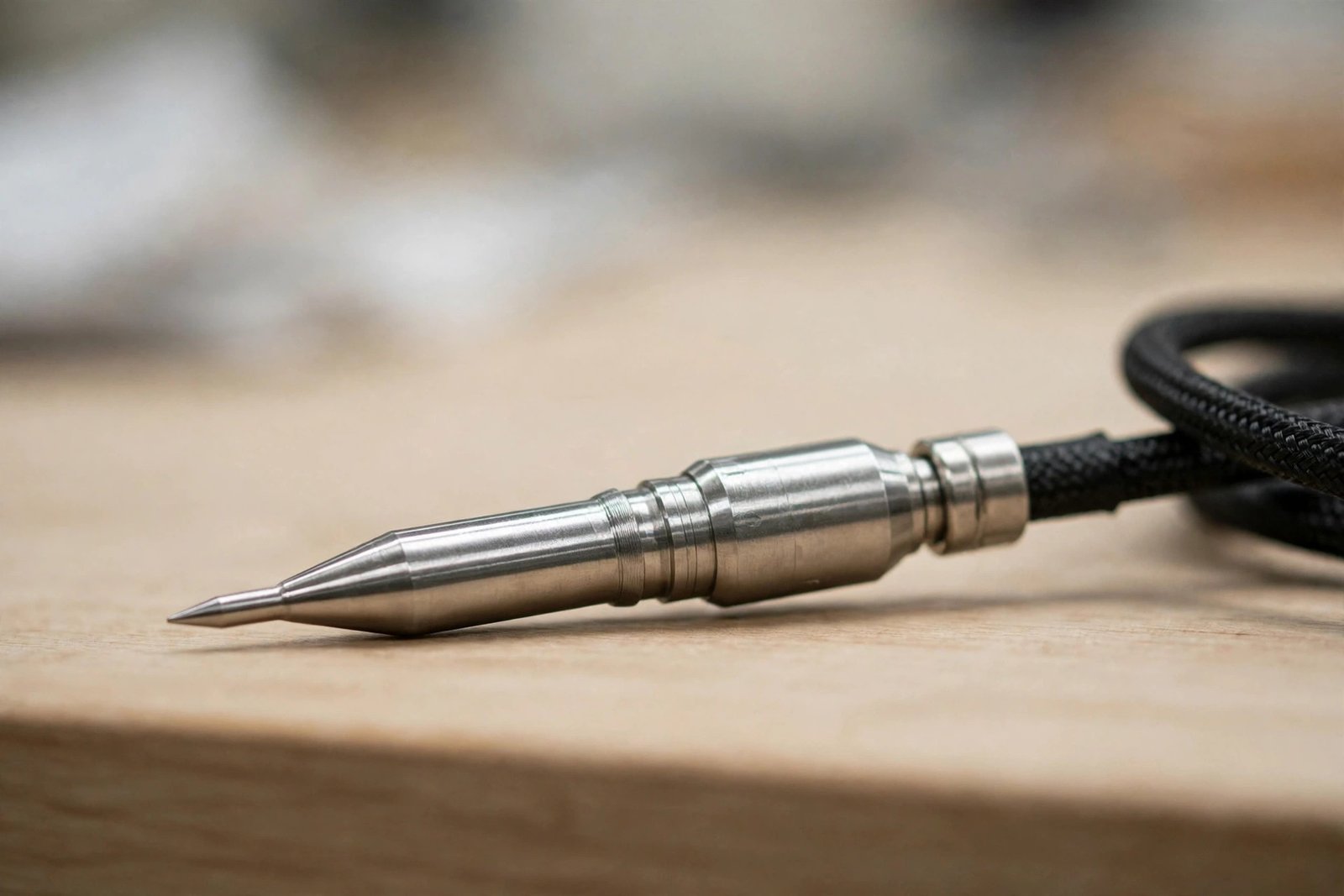
Think of the last time you cooked a roast and stuck a thermometer into the middle of it. That thin metal spike was a probe. It sat inside the meat, felt the heat, and turned what it felt into a temperature on a little screen. That is the whole idea, just in its simplest form.
Now scale that idea up and out. A probe lowered into a water tank can tell you how deep the water is. One pushed into soil can tell you how damp it is. One flown up under a weather balloon can tell you how cold and thin the air gets ten kilometres above your head. The setting changes, but the job stays the same. A kitchen thermometer probe, a pool pH probe, and a probe hanging off a research ship are all measuring probes.
Where the Word Comes From — and Why It Loses an S
The spelling is the giveaway. German builds long words by gluing whole words together, and Messsonde is a neat example. Take Messen, “to measure”, and join it to Sonde, “probe”. Put them together and you get Messsonde: a measuring probe. Count the s’s in the middle and you will find three — one finishing Mess, and two starting Sonde. Three s’s in a row look wrong, so one s quietly disappears when someone copies it from a datasheet or types it from memory.
German–English references back this up. The LEO dictionary translates Messsonde as probe, measuring probe, test probe, measuring head, and measuring sensor. The German Federal Agency for Nature Conservation uses the same term, listing it as a measuring probe or device, with narrower terms underneath it including CTD measuring probes, pH meters, and oxygen probes. The word has a solid home in German technical language.

What a Measuring Probe Actually Does
Every probe, from a ten-dollar kitchen one to a research-grade ocean instrument, works in three steps. First, a sensing element reacts to whatever it is measuring. Second, that reaction becomes a small electrical signal. Third, the instrument turns the signal into a number you can read. The sensing element changes with the job: a temperature probe uses metal whose resistance shifts with heat, a pH probe uses a glass bulb that builds up a tiny voltage, and a pressure probe has a thin diaphragm that flexes under pressure.
That signal is usually too small and messy to read directly, so the probe’s electronics clean it up and convert it into a value — degrees, pH units, bars, metres, parts per million. On a simple probe the value shows up on a built-in display. On a fancier one it travels up a cable, or by radio, to a logger. A probe goes into places hands cannot go — inside a hot oven, down a deep well, up into freezing thin air — and comes back with a plain number instead of a guess. That matters when safe and spoiled food are a few degrees apart.
The Main Types of Probes You Will Run Into
Probes are named after what they measure. These are the types that show up most often.
| Probe type | What it measures | Where you will find it |
|---|---|---|
| Temperature probe | How hot or cold something is | Kitchens, ovens, fridges, HVAC systems, factories |
| pH probe | How acidic or alkaline a liquid is | Water treatment, pools, aquariums, labs, food production |
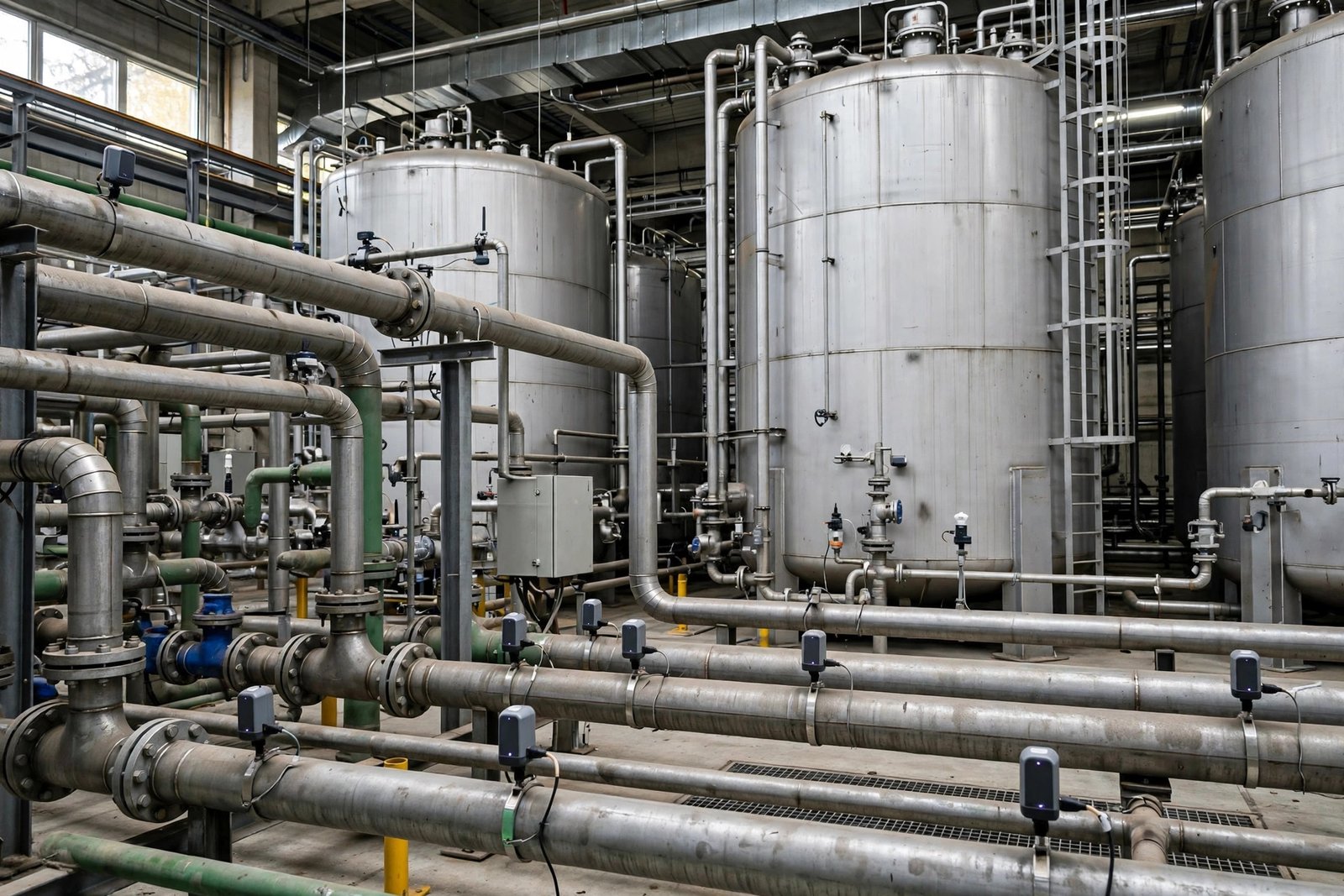
| Pressure probe | Pressure in a gas or liquid | Pipes, tanks, boilers, engines |
| Level probe | How full a tank or well is | Water tanks, fuel tanks, wells, sumps |
| Gas probe | Concentration of a gas | Air-quality monitors, mines, factories, safety alarms |
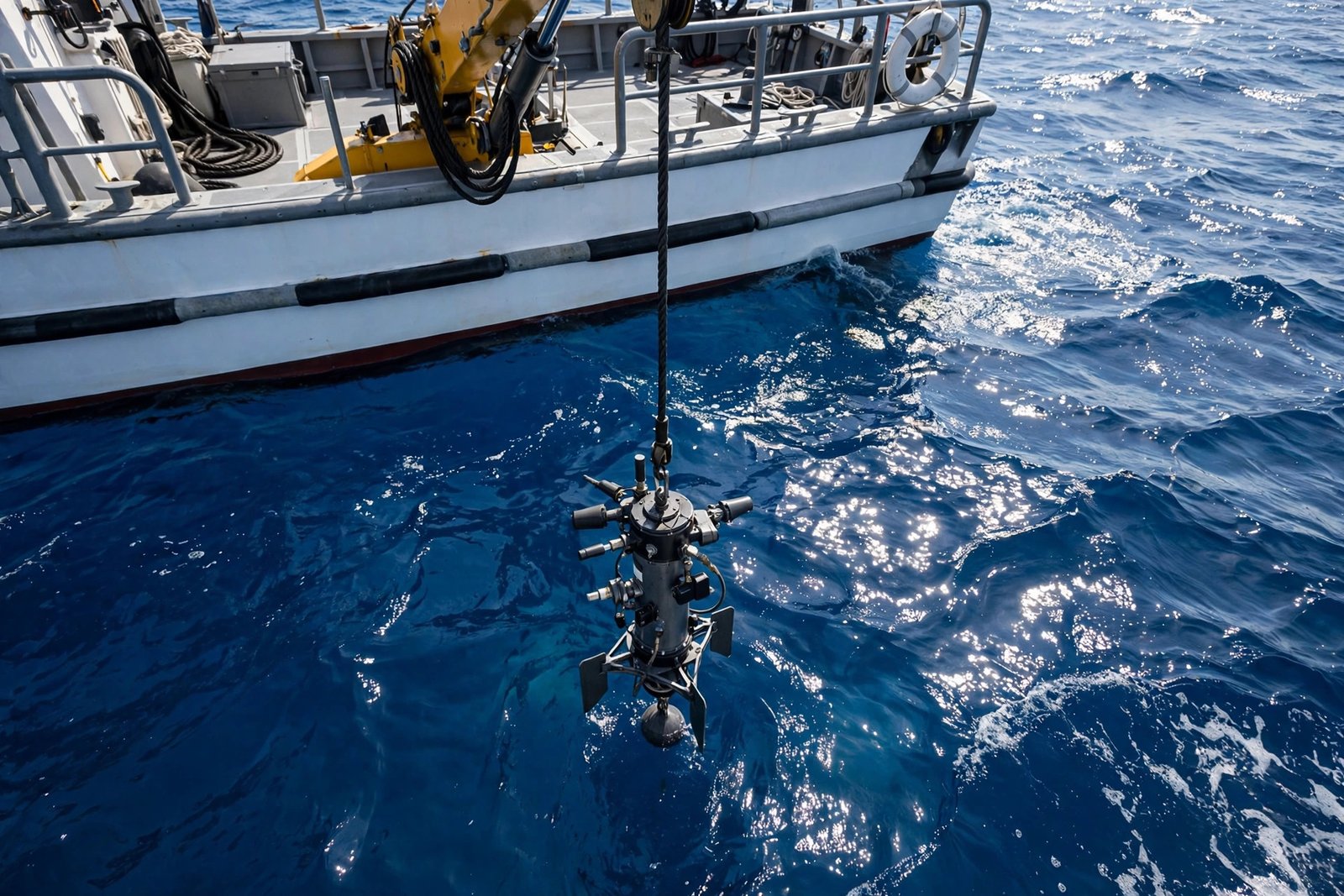
| CTD probe | Conductivity, temperature, and depth | Oceanography, lakes, coastal research |
A temperature probe is probably the one you have already used — the meat thermometer is the classic example, but the same idea sits inside your fridge and car engine. A pH probe looks unremarkable, yet water-treatment plants lean on it all day. Pressure probes watch for spikes and drops inside pipes and tanks, level probes do the same for depth, and gas probes pick up leaks long before a person would smell them. CTD probes belong to the sea, measuring salt, warmth, and depth.
Probe vs Sensor vs Sonde — Are They the Same Thing?
People use probe, sensor, and sonde almost interchangeably, and in casual conversation that is fine. They do have slightly different flavours, though, and knowing the difference helps when you are reading product pages.
| Word | What it usually means | Typical example |
|---|---|---|
| Probe | The whole device that goes into the medium and reports a measurement | A meat thermometer probe, a pH probe |
| Sensor | The sensing element itself, or any device that detects a change | A temperature sensor inside a thermostat |
| Sonde | A probe that travels and sends data back remotely | A radiosonde under a weather balloon |
A sensor is the broadest of the three. Strictly speaking, the sensor is the part that does the sensing. A probe is the whole package built around that part — housing, cable or transmitter, and often a display. So every probe contains a sensor, but not every sensor is a probe. The temperature sensor inside your phone is a sensor, not a probe. A sonde is a particular kind of probe: the word comes from an old word meaning “to send”, and a sonde gets sent somewhere and radios its findings back. The best-known example is the radiosonde, a small battery-powered package carried up by a weather balloon, measuring temperature, humidity, pressure, and wind. Their data feeds straight into forecasts. Some blogs call this family a “messonde”, but radiosonde is the standard term. Relatives include dropsondes and ozonesondes.
Picking the Right Probe — and Keeping It Honest
If you ever need to buy or use a probe, the choice is less about the brand and more about the match. First, what are you putting it into? A probe built for clean water will not last in a corrosive chemical. Match it to the medium it will touch, and check what its housing and tip are made of. Second, what range must it handle? A kitchen probe that tops out at 200 degrees is useless in a furnace. Check the limits before you buy, not after.
Third, how accurate must the answer be? A home cook can live with a degree or two of error. A laboratory or a water plant cannot. Fourth, how will you read the result? A display is fine for a quick check, but for a record over hours or days, look for one that logs data or connects to a phone. Then look after it: probes drift, so calibrate on schedule, keep the tip clean, and replace a worn tip. A probe is only as honest as its last calibration.
The Other “Messonde” You Will See Online
So far this has all been about hardware — metal, glass, cables, balloons. But keep reading and you will meet a second, quite different “messonde”. Some blogs use the word as a coined concept about intentional exploration and personal growth, built from French mes, meaning “my”, plus sonde, meaning “probe” — “my own probe” into the unknown. In that telling, a messonde is a mindset: sending a probe into your own life and seeing what comes back.
It is an appealing image, and you can see why writers like it. But be straight about what this usage is: a modern invented usage with no dictionary standing. You will not find it in a French dictionary, an English dictionary, or a psychology textbook. It lives mostly in blog posts and social media, not in any established field. That does not make it wrong to use — new words get coined all the time. It just means the two meanings are not equally established. One is a technical term with a documented history; the other is a recent metaphor. If one page talks about “your messonde journey” and another about “a messonde for measuring pH”, context tells you which one you are reading.
No App, No Brand, No Product Called Messonde
One more thing worth clearing up. As of now, there is no app, software, or brand named Messonde with any verifiable public documentation — no vendor site, no app-store listing, no company record you can point to. If a page implies you can download “the Messonde app” or buy “a Messonde device”, treat that claim with care. What you can buy is a measuring probe, under plenty of real brand names, from makers who have sold them for decades. But a product actually called Messonde has no public footprint you can check.
It starts as a typo of a German engineering term, opens out into instruments that quietly measure the world around us — the food we eat, the water we drink, the air we breathe, the ocean below us, the sky above us — and then becomes a metaphor for poking curiously into your own life.
FAQs
What does messonde mean?
In its best-documented sense, “messonde” is a shortened spelling of the German technical word Messsonde, meaning a measuring probe — a device that touches a gas, liquid, or solid and reports back a property such as temperature, pressure, or pH.
Is messonde a real word?
Not in standard English, no. You will not find “messonde” in most English dictionaries. The German word is Messsonde, with three s’s, and English already has its own words: probe, measuring probe, test probe, and sensor.
What is the difference between a probe, a sensor, and a sonde?
A sensor is the part that does the sensing. A probe is the whole device built around that sensor, including its housing. A sonde is a probe that travels — flown under a balloon, dropped from a plane — and sends its data back remotely.
What is a radiosonde?
A radiosonde is a small battery-powered instrument package carried up by a weather balloon. As it rises, it measures temperature, humidity, pressure, and wind, and radios the data back down.
Is there a Messonde app or product I can buy?
No. There is no app, software, or brand named Messonde with any verifiable public documentation, vendor site, or store listing. Measuring probes from real instrument makers exist, but none is called Messonde.
Useful links: ClockToday | Wikipedia | Google | MSN