
Julianna Farrait: The Life, Family, and True Story of Frank Lucas’s Wife
Julianna Farrait, also known as Julie Farrait, is best known for her relationship with Frank Lucas, the notorious American drug trafficker whose life inspired the 2007 crime film American Gangster. Her story has attracted public attention for decades because it combines romance, wealth, criminal activity, imprisonment, and the complicated consequences of choices made within a family.
Although many people first hear her name while watching the film, the real Julianna Farrait had a life that was more complicated than a Hollywood storyline. She was associated with Puerto Rico before becoming connected to Lucas’s criminal world in New York. She later faced criminal charges herself, served prison time, and remained a subject of public curiosity even as she kept much of her personal life private.
Understanding her biography requires distinguishing documented events from stories repeated online. Details about her childhood, exact birth date, personal finances, and later years are not all firmly established. Her legal history and relationship with Lucas, however, provide a clearer picture of why her name continues to attract attention.
Who Is Julianna Farrait?
Julianna Farrait is a Puerto Rican woman widely known as the wife of Frank Lucas. Her name became associated with one of the most notorious drug-trafficking operations in American criminal history during the late 1960s and early 1970s.
Unlike many people who become known through entertainment or business, Farrait did not build a conventional public career. Most of the information available about her comes from reporting on Lucas, the couple’s criminal cases, and the movie that later brought their story to a worldwide audience.
Farrait is sometimes described as a former beauty queen or homecoming queen. The distinction matters because popular accounts of her life have occasionally confused her real background with the more dramatic version presented in American Gangster. Reports associated with Lucas’s own comments indicate that she was a homecoming queen rather than the winner of the Miss Puerto Rico pageant.
Her public identity was shaped by more than marriage. Farrait faced legal consequences connected to drug trafficking, including a later federal case that resulted in another prison sentence. Her experiences illustrate how involvement in an illegal enterprise can affect an individual’s future long after the original organization has collapsed.
At the same time, the limited information available about her private life means that not every detail found in online biographies should be accepted as fact. A careful account focuses on established events rather than inventing a complete personal history from scattered reports.
Early Life and Background
Public information about Julianna Farrait’s early years is limited. Many biographies place her origins in Puerto Rico and report that she was born around 1940 or 1941. However, her exact birth date, childhood address, parents’ names, and educational background are not consistently documented in reliable sources.
The description of Farrait as a homecoming queen appears in accounts of her life, but it is important not to confuse that claim with winning a national beauty pageant. The distinction became especially noticeable after the release of American Gangster, which changed certain details to create a more dramatic film narrative.
Her life became publicly visible primarily through her relationship with Lucas. Before that relationship attracted attention, there was little widely available reporting about her personal circumstances.
It is tempting for biography websites to fill gaps with detailed stories about a person’s upbringing, personality, and ambitions. Without dependable evidence, however, those details can turn into repeated internet myths. The most responsible account acknowledges that much of Farrait’s early life remains unknown.
How Julianna Farrait Met Frank Lucas
Julianna Farrait and Frank Lucas reportedly met while travelling from Puerto Rico to New York. Their relationship developed during a period when Lucas was becoming increasingly involved in the illegal drug trade.
Lucas operated primarily in Harlem, where he eventually built a major heroin distribution network. His criminal activities brought him money and influence, but they also placed him at the centre of law-enforcement investigations and caused serious harm to communities affected by heroin addiction.
Farrait became closely associated with Lucas during this period. Their relationship was shaped by the contrast between the wealth they displayed and the criminal activity behind much of that lifestyle.
The couple reportedly married in 1967. Their marriage continued through arrests, imprisonment, periods of separation, and later reconciliation. The exact details of their relationship were not always consistently reported, but their long association is well established.
Their story is often described as a dramatic romance, yet that description can overlook the consequences of the environment in which they lived. Criminal organizations can bring sudden wealth, but they also create uncertainty, legal exposure, and risks for relatives.
For Farrait, the relationship became an important part of her public identity. It also connected her to a criminal case history that would continue long after Lucas’s original operation was dismantled.
Life With Frank Lucas During His Rise to Power
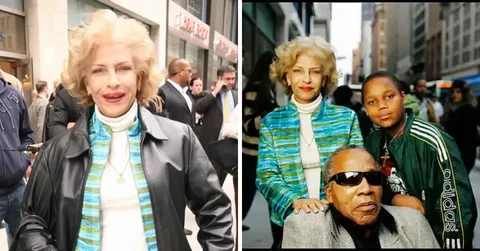
Frank Lucas became one of the best-known drug traffickers associated with Harlem during the late 1960s and early 1970s. His reputation grew because of the scale of his operation, his extravagant lifestyle, and stories about how he obtained and distributed heroin.
Lucas claimed that he developed direct supply arrangements that allowed him to bypass some traditional intermediaries. His product became associated with the name “Blue Magic,” a label that helped build the mythology surrounding his criminal enterprise.
The money generated by illegal drug trafficking supported an expensive lifestyle. Lucas and people around him became associated with designer clothing, jewellery, cars, and other visible signs of wealth.
Farrait’s name became part of that story. One frequently repeated account concerns an expensive chinchilla coat and matching hat associated with Lucas’s appearance at the 1971 Muhammad Ali–Joe Frazier boxing match in New York. Stories about the outfit became a symbol of the couple’s conspicuous lifestyle.
The precise price and circumstances surrounding the clothing vary across accounts, so exact figures should not be treated as established without stronger evidence.
The broader point is more important than the clothing itself. Visible wealth attracted attention, while the criminal enterprise behind it created legal risks that could not be removed by money or social status.
The same lifestyle that seemed glamorous to some observers was connected to an illegal market that caused serious harm. Heroin distribution contributed to addiction, family disruption, and community suffering. The story therefore cannot be understood only through expensive clothing, celebrity encounters, and dramatic headlines.
Julianna Farrait’s Role in the Criminal Enterprise
Farrait’s public history includes criminal proceedings connected to Lucas’s drug activities. It would be inaccurate to describe her as someone whose entire legal history resulted simply from being married to a criminal. She faced consequences in cases involving her own alleged and established conduct.
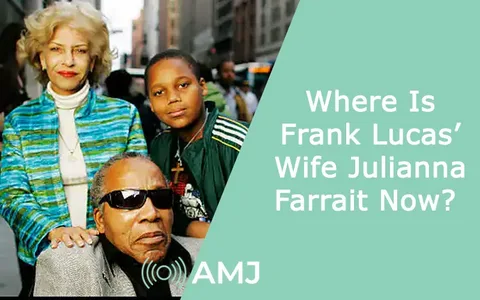
In 1975, law-enforcement officers raided the Lucas home in New Jersey. The investigation brought the couple’s lifestyle and criminal connections into greater public view. Farrait subsequently served prison time in connection with the earlier criminal enterprise.
The raid marked a major turning point. A household that had been associated with money and luxury became linked with criminal prosecution, imprisonment, and family disruption.
Drug trafficking is sometimes portrayed in popular culture as an enterprise built around clever planning and personal ambition. Such portrayals can overlook the instability involved. Participants may face imprisonment, financial loss, damaged relationships, and long-term consequences that extend beyond their own lives.
The legal history also demonstrates why it is important to separate individual events. Farrait’s earlier imprisonment and her later Puerto Rico case occurred in different periods and involved separate proceedings. Combining them into one continuous event can create a misleading account of what happened.
The 2010 Arrest in Puerto Rico
One of the most widely reported events in Farrait’s later life occurred in May 2010, when she was arrested in Puerto Rico in connection with an alleged cocaine sale.
According to contemporary reporting by CBS News and the Associated Press, authorities alleged that she arranged to sell two kilograms of cocaine to an informant at a hotel in the Isla Verde area. The investigation had reportedly been underway for some time before the arrest.
The arrest attracted considerable attention because Farrait was older than most people associated with the stereotypical image of a drug trafficker. It also occurred decades after the original investigations into Lucas’s criminal organization.
At her initial court appearance, reports said that she requested that proceedings be conducted in Spanish. The early reporting described the allegations and charges at that stage, rather than presenting the arrest itself as proof of a final conviction.
This distinction matters in any responsible account of criminal proceedings. An arrest records an accusation; later court proceedings determine the legal outcome.
Farrait’s case eventually proceeded through the federal court system. The events brought her name back into news coverage and renewed interest in the history of her relationship with Lucas.
Prison Sentence and Its Consequences
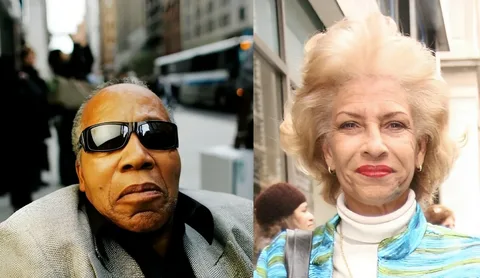
In February 2012, Farrait received a reported five-year federal prison sentence connected to the Puerto Rico drug case. Contemporary coverage described her request for leniency and her desire to spend more time with her aging husband.
By that point, the couple had experienced decades of legal difficulties and periods apart. The sentence represented another major disruption in their family life.
Prison affects more than the person serving a sentence. Children and other relatives may experience separation, uncertainty, financial pressures, and emotional difficulties. These effects can continue long after the legal case itself has ended.
Farrait’s later imprisonment also illustrates how an individual’s choices can have consequences beyond the immediate criminal proceeding. A request for compassion may communicate personal regret or concern about family circumstances, but it does not erase the broader impact of illegal activity.
Public reporting provides only a partial view of her experiences during imprisonment. There is not enough reliable information to reconstruct every detail of her daily life, relationships with other prisoners, or personal reflections during that period.
It is therefore better to focus on the established legal events and their broader implications than to invent dramatic scenes that cannot be substantiated.
Julianna Farrait and Her Family
Family life is one of the most sensitive parts of Farrait’s biography because online sources do not always agree about the number of children she had or the precise relationships among members of the Lucas family.
Frank Lucas had children with more than one partner. His family history is therefore more complicated than some short celebrity profiles suggest. Farrait is particularly associated with their daughter, Francine Lucas-Sinclair, who later spoke publicly about the effects of growing up with parents involved in criminal activity.
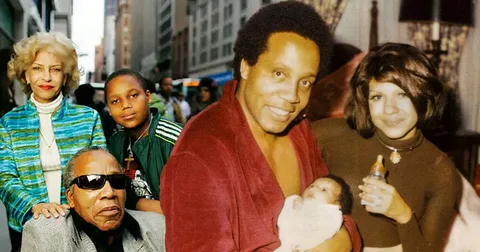
A parent’s imprisonment can reshape a child’s experience of home, education, and relationships. Children may struggle with stigma, uncertainty, and the absence of a parent during important stages of development.
Francine’s later public work brought attention to this issue. Her experiences became part of a wider discussion about the children of incarcerated parents and the importance of support systems for families affected by the justice system.
The family’s story offers a perspective that is often missing from crime films. Popular entertainment may concentrate on money, danger, and the personalities of major figures, while giving less attention to the long-term experiences of their children.
It is important, however, not to assume that every family member experienced the same events in the same way. Each person’s experience is individual, and public information about private family relationships remains limited.
Francine Lucas-Sinclair and the Impact of Her Parents’ Criminal History
Francine Lucas-Sinclair is among the best-known members of the Lucas family because she has discussed the effects of her parents’ legal troubles and developed an interest in helping children facing similar circumstances.
Her experiences illustrate how a parent’s criminal case can influence a child’s sense of security and identity. Children may have little control over the decisions that lead to imprisonment, yet they can face social judgment because of their family circumstances.
Support organizations can help address these challenges by providing information, practical assistance, and a place where children can speak openly about their experiences.
Francine has been associated with Yellow Brick Road, an initiative intended to support children with incarcerated parents. Her work shifts attention away from the mythology surrounding criminal wealth and toward the real consequences experienced by families.
This part of the family’s history is important because it demonstrates that a difficult background does not determine every person’s future. People can use personal experiences to develop greater understanding and contribute to efforts that help others.
Francine’s work should be understood as her own achievement. Although her parents’ history influenced her life, her later choices and advocacy represent a separate chapter in the family’s story.
Julianna Farrait and the Film American Gangster

The 2007 film American Gangster, directed by Ridley Scott, brought renewed attention to Frank Lucas and the people connected to his life. Denzel Washington played Lucas, while Puerto Rican actress Lymari Nadal portrayed his wife in the film.
The wife’s character is named Eva rather than Julianna Farrait. Although the character draws on aspects of Farrait’s life, the film is a dramatization rather than a complete historical record.
This distinction is important because films often simplify events to create a clear narrative. Real lives involve contradictions, incomplete information, and details that do not fit neatly into a two-hour story.
The portrayal of Lucas’s wife contributed to public interest in Farrait, but it also helped spread confusion about her background. The claim that she was Miss Puerto Rico is one example of a detail that should not be repeated as fact without qualification.
Farrait herself reportedly preferred to remain out of the spotlight. In accounts of her comments around the film’s release, she described discomfort with public attention and explained that she did not want people to know who she was.
Her reluctance to become a public personality provides a useful contrast with the film’s dramatic presentation. The character on screen serves a storytelling purpose, while the real person had a private life that cannot be fully reconstructed from cinematic scenes.
What American Gangster Gets Wrong or Simplifies
Crime films often combine documented events with fictional dialogue, condensed timelines, and invented scenes. These techniques can make a story more engaging, but they can also lead viewers to assume that every scene represents historical fact.
In Farrait’s case, the distinction between a homecoming queen and a national beauty-pageant winner is particularly important. Repeated online descriptions sometimes present the film’s version as a literal account of her past, even though reliable accounts do not establish that she won the Miss Puerto Rico title.
The film also cannot provide a complete explanation of her criminal cases, the legal process, or the family’s later experiences.
Viewers should remember that acting performances, costumes, dialogue, and dramatic confrontations are elements of a production. Even when a movie is based on real events, those elements may be altered to fit the story.
A useful way to approach American Gangster is to treat it as an introduction to the Lucas story, not as a substitute for historical reporting. Comparing the film with contemporary news coverage can help readers understand where documented events end and dramatization begins.
Frank Lucas’s Later Years and Death
Frank Lucas’s criminal career eventually gave way to imprisonment, later legal difficulties, and a quieter period of life. He died on May 30, 2019, at the age of 88 in New Jersey. His death prompted renewed interest in his criminal history and his family.
By then, the story of Lucas’s rise and fall had become part of American popular culture. The release of American Gangster had introduced his name to audiences who might otherwise have known little about the history of drug trafficking in Harlem.
His final years were not the same as the period in which he operated his criminal enterprise. His health had declined, and the public attention surrounding his earlier life continued to shape how people remembered him.
For Farrait, Lucas’s death marked another significant point in a relationship that had lasted through decades of legal trouble, separation, and reconciliation.
The available information about their later private life remains incomplete. It is possible to describe the major public events without assuming that every aspect of their relationship or final years is known.
Is Julianna Farrait Still Alive?
Julianna Farrait’s current status is not firmly established by reliable, recent public information.
There is conflicting information online about her later life. Some articles have stated that she died before Frank Lucas, while other reporting and dated funeral photographs identify her attending his funeral in Newark, New Jersey, on June 11, 2019. That documented appearance shows that claims of her having died before Lucas are incorrect.
However, a public appearance in 2019 does not establish her circumstances in 2026. Without reliable later reporting or an official family statement, it would be inappropriate to claim certainty about whether she is alive today or where she currently lives.
This is a good example of why biography websites should be read critically. One article may repeat another article’s claim without checking the original evidence. Once repeated often enough, an unsupported statement can begin to look like an established fact.
The most accurate conclusion is that Farrait was publicly documented at Lucas’s funeral in 2019, while her current status and whereabouts remain unverified in the sources reviewed.
Julianna Farrait’s Net Worth
There is no reliable, publicly verified figure for Julianna Farrait’s individual net worth.
Some websites publish estimates based on the wealth associated with Frank Lucas, but those estimates do not necessarily reflect Farrait’s personal assets, debts, or financial circumstances.
Net worth is calculated by comparing assets with liabilities. Establishing a person’s financial position would require dependable information about property ownership, savings, investments, outstanding debts, and other relevant financial interests.
The criminal enterprise associated with Lucas generated substantial money, but the existence of wealth at one point in time does not establish how much remained after arrests, legal proceedings, imprisonment, or other financial changes.
For that reason, assigning Farrait a specific dollar amount without reliable documentation would be misleading.
It is more accurate to acknowledge that her individual net worth has not been publicly verified than to repeat speculative estimates. This approach also avoids confusing the financial history of the Lucas organization with the personal finances of a particular family member.
Where Is Julianna Farrait Now?
Farrait has largely remained outside sustained public attention. Reliable information about her current residence, employment, daily routine, and personal relationships is limited.
Some online articles claim that she returned to Puerto Rico, while others suggest connections to New Jersey. Without dependable recent evidence, neither claim should be presented as a confirmed description of her current residence.
After decades of public attention surrounding criminal investigations and the film inspired by Lucas’s life, a private existence is entirely possible. However, the lack of public information should not be treated as proof of any particular explanation for her absence from the media.
Her current circumstances are best left open unless new, reliable information becomes available.
Lessons From Julianna Farrait’s Story
Farrait’s biography offers several important lessons about crime, family, public image, and the reliability of online information.
Wealth Does Not Guarantee Security
The Lucas family’s public image included expensive clothing and a luxurious lifestyle. Yet their criminal activities brought investigations, imprisonment, and significant disruption.
Money obtained through illegal activity cannot remove the risks created by criminal conduct. The apparent benefits may be temporary, while legal and personal consequences can last for years.
Family Members Can Experience Long-Term Consequences
Imprisonment affects children, spouses, and other relatives as well as the person sentenced. The experience of Francine Lucas-Sinclair demonstrates how these effects can shape a person’s outlook long after childhood.
Support for affected families is important because children should not have to carry the burden of decisions made by adults.
Popular Films Are Not Complete Historical Records
American Gangster introduced the Lucas story to a wide audience, but its dramatic presentation differs from a full biography. Viewers benefit from comparing cinematic portrayals with contemporary reporting and reliable historical accounts.
Privacy Should Be Respected
Farrait’s limited public presence means that many details of her later life remain unknown. That absence of information does not justify speculation about her location, health, finances, or personal relationships.
A responsible biography can be informative without claiming access to facts that have not been established.
Frequently Asked Questions About Julianna Farrait
Who was Julianna Farrait?
Julianna Farrait, also known as Julie Farrait, was the wife of Frank Lucas, the American drug trafficker whose life inspired American Gangster. She also had her own documented criminal history.
Where was Julianna Farrait born?
She is widely reported to have come from Puerto Rico. Detailed information about her exact birthplace and childhood is limited.
Was Julianna Farrait Miss Puerto Rico?
Reliable accounts do not establish that she won the Miss Puerto Rico pageant. She has been described as a homecoming queen, and the film’s version should not be treated as definitive historical evidence.
When did Julianna Farrait marry Frank Lucas?
Their marriage is commonly dated to 1967, according to biographical accounts of Lucas’s life.
Did Julianna Farrait go to prison?
Yes. She served prison time connected to the earlier Lucas criminal enterprise and later received a five-year federal sentence following a separate drug case reported in 2012.
Why was Julianna Farrait arrested in 2010?
Authorities alleged that she attempted to sell two kilograms of cocaine to an informant at a hotel in Puerto Rico. The case later proceeded through federal court.
Who played Julianna Farrait in American Gangster?
Lymari Nadal portrayed the character Eva, who was based on Farrait, in the 2007 film. Denzel Washington played Frank Lucas.
How many children did Julianna Farrait have?
She is particularly associated with her daughter Francine Lucas-Sinclair. Public accounts of the wider Lucas family vary in how they describe biological children and stepchildren, so claims about the exact number of children Farrait had should be treated carefully.
What was Julianna Farrait’s net worth?
Her individual net worth is not publicly verified. Online estimates should not be treated as confirmed financial information.
Did Julianna Farrait attend Frank Lucas’s funeral?
Dated photographic reporting identifies her at Lucas’s funeral in Newark on June 11, 2019. This also contradicts claims that she died before him.
Is Julianna Farrait alive in 2026?
Her current status has not been reliably confirmed by the public sources reviewed. Her attendance at Lucas’s funeral establishes that she was alive in June 2019, but it does not establish her present circumstances.
Conclusion
Julianna Farrait remains a subject of public interest because her life intersected with Frank Lucas’s criminal career and the film American Gangster. Yet her real biography extends beyond the image presented on screen. It includes her relationship with Lucas, her own criminal cases, periods of imprisonment, and the lasting consequences that their circumstances had for their family.
The most useful account of her life separates documented events from speculation. Her connection to Puerto Rico, marriage to Lucas, 2010 arrest, later federal sentence, and presence at his 2019 funeral provide important reference points. Other details, including her exact birth date, individual net worth, and current circumstances, remain uncertain.
Her story is also a reminder that crime-related wealth can carry serious consequences and that families often experience those consequences long after a public case has ended. Rather than treating her life as a glamorous crime story, it is more meaningful to understand the personal and social effects behind the headlines.