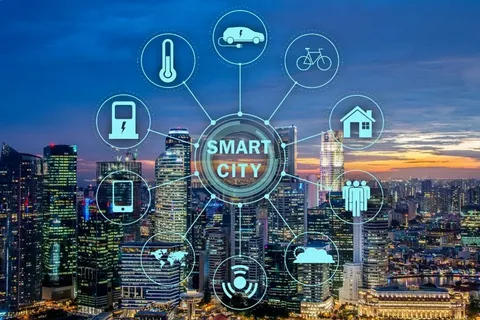
Acceleration City: Exploring the Idea of Faster, Smarter and More Connected Urban Life
Cities have always been places of movement. People wake up, travel to work, attend classes, meet friends, run businesses, shop, deliver products, and return home, often within the same day. But modern cities are moving at a different pace. Technology has changed how people travel, communicate, work, and manage everyday responsibilities. This growing speed of urban life can be described through the idea of an Acceleration City.
The phrase Acceleration City can be understood in several ways. It may describe a city designed around faster transportation and digital services, a community focused on innovation and economic growth, or a broader idea about how modern urban environments continue to become quicker and more connected. Rather than thinking about acceleration only in terms of vehicles or roads, it is useful to look at the entire city as a living system.
A modern city is made up of many connected parts. Roads affect transportation. Transportation affects employment. Internet access affects education and business. Public services affect quality of life. New technology changes how residents interact with businesses and government. When these systems become faster and more efficient, the experience of living in a city changes as well.
This article explores the meaning of Acceleration City, why speed matters in modern urban life, how technology influences cities, the relationship between transportation and development, and what people can expect from increasingly connected urban environments.
What Does Acceleration City Mean?
Acceleration City is not necessarily the official name of one particular city. As a concept, the phrase can describe an urban environment where change, movement, technology, and economic activity happen at a rapid pace.
The word “acceleration” suggests movement from one stage to another at increasing speed. In a city, that movement can appear in many forms. A new transportation system may reduce travel time. A digital government platform may allow residents to complete a task online instead of visiting an office. A business may use automation to process orders faster. A startup district may attract new companies and create jobs.
The city therefore becomes more than a collection of buildings and streets. It becomes a network of systems that continuously interact with each other.
Acceleration City can also represent a lifestyle. People today often expect quick communication, fast deliveries, instant information, flexible work arrangements, and convenient digital services. Businesses operate across borders, while employees may work with colleagues in completely different countries.
This does not mean that every aspect of city life should become faster. In fact, one of the most important questions surrounding the idea of acceleration is whether greater speed always produces a better urban experience. A successful city must balance efficiency with comfort, safety, accessibility, environmental responsibility, and human well-being.
Why Modern Cities Are Becoming Faster
There are many reasons cities are experiencing faster rates of change. Population growth is one factor. As more people move toward urban areas, cities need to provide housing, transportation, healthcare, education, employment, and public services to larger populations.
Technology is another major factor. Smartphones, cloud computing, artificial intelligence, digital payments, online shopping, and connected devices have changed daily routines.
A person can now order food without making a phone call, book transportation without standing on a street corner, attend a meeting without traveling to an office, and transfer money without visiting a bank.
These small changes add up.
When millions of people use faster systems at the same time, the character of a city begins to change. Businesses adjust their services. Government departments adopt digital tools. Transportation networks become more data-driven. Customers begin expecting greater convenience.
This creates a cycle of urban acceleration.
Transportation at the Heart of an Acceleration City
Transportation is one of the clearest examples of acceleration in urban environments.
For centuries, cities developed around walking routes, rivers, ports, and later roads and railways. The introduction of cars changed urban planning dramatically. Rail systems connected distant neighborhoods. Airports expanded the relationship between cities and international markets.
Today, transportation is becoming increasingly connected.
Navigation applications can provide real-time route information. Public transportation systems can use digital ticketing. Ride-sharing platforms connect passengers with drivers. Electric vehicles are changing the automotive landscape. Cycling infrastructure is expanding in some cities, while pedestrian-friendly planning is receiving greater attention.
The goal is not simply to make vehicles move faster. A truly efficient transportation system is one that helps people reach important destinations safely and predictably.
Sometimes the best solution is not a faster road. It may be better public transportation, improved pedestrian access, smarter traffic management, or a combination of several systems.
The Role of Smart Traffic Management
Traffic congestion is one of the biggest challenges facing growing cities.
A road can be physically large and still become inefficient if too many vehicles use it at the same time. Traditional traffic management often relied on fixed signals and historical assumptions. Modern systems can use sensors, cameras, traffic data, and connected infrastructure to understand current conditions.
Smart traffic systems can potentially adjust signals according to traffic patterns. Navigation platforms can identify congestion and suggest alternative routes. Transportation authorities can use collected data to understand where improvements are needed.
The broader idea is simple: information can help cities make better decisions.
Instead of treating every road as an isolated piece of infrastructure, smart planning looks at the entire transportation network.
Digital Technology and the Acceleration of City Life
Technology has become part of everyday urban infrastructure.
Residents interact with digital services throughout the day. They may use mobile applications to check bus schedules, pay bills, communicate with colleagues, order groceries, book appointments, or access educational resources.
Businesses have also become increasingly digital.
A small company in a city can sell products to customers around the world. A local restaurant can receive orders through online platforms. A freelancer can work with international clients from a home office.
This creates a city economy that is no longer limited by physical boundaries.
The internet has effectively connected local communities to global markets.
Acceleration City and the Future of Work
The traditional idea of working in one building for eight hours every day is changing.
Remote work, hybrid work, freelancing, coworking spaces, and digital businesses have created new possibilities. A person may live in one neighborhood, work for a company based in another city, and communicate with customers on another continent.
This affects urban planning.
If fewer people need to travel to a central office every day, demand for transportation can change. Businesses may move away from traditional office districts. Neighborhood cafés and coworking spaces may become more important.
At the same time, cities still depend heavily on physical workplaces. Hospitals, schools, construction companies, factories, shops, restaurants, transportation services, and many other industries require people to be physically present.
The future is therefore likely to involve a mixture of traditional and flexible work models.
How Acceleration Affects Businesses
Speed can be extremely important for modern businesses.
Customers often expect quick responses. Online shoppers want convenient ordering and delivery. Companies need to react to changing market conditions. Competitors can launch new products rapidly.
A business operating in an Acceleration City may have access to several advantages, including skilled workers, transportation networks, technology infrastructure, financial services, universities, and international connections.
But competition can also become stronger.
When communication and commerce become faster, customers have more choices. A company can no longer assume that geographical distance will protect it from competitors.
A local business may compete with another local business, a national brand, and an international online company at the same time.
This makes innovation and customer experience increasingly important.
The Importance of Connectivity
Connectivity is one of the defining features of modern urban environments.
Physical connectivity includes roads, railways, airports, bridges, and public transportation.
Digital connectivity includes broadband internet, mobile networks, cloud services, and online platforms.
Economic connectivity includes relationships between businesses, workers, investors, suppliers, and customers.
Social connectivity includes communities, schools, cultural organizations, public spaces, and local events.
A strong city needs all of these forms of connection.
A city with excellent roads but poor internet access may struggle to attract digital businesses. A city with strong technology but weak transportation may face congestion and accessibility problems.
Urban development works best when different systems support one another.
Acceleration Does Not Mean Everything Must Be Fast
It is easy to misunderstand the idea of acceleration.
A faster city is not automatically a better city.
People need places where they can slow down. Parks, libraries, community centers, walking areas, public squares, cafés, and residential neighborhoods all provide spaces away from constant activity.
A city designed entirely around speed could become stressful.
The goal should be balance.
People should be able to travel efficiently when necessary while also having opportunities to relax, socialize, exercise, and spend time with family.
This is why modern urban planning increasingly considers the quality of experience rather than transportation speed alone.
Walkability and the Human Side of Urban Design
Walking is one of the simplest forms of transportation, but it is often overlooked in discussions about modern cities.
A walkable neighborhood can make daily life easier. If residents can reach shops, schools, parks, restaurants, and public transportation without needing a car for every trip, the neighborhood can become more convenient and socially active.
Good sidewalks, safe crossings, shade, lighting, seating, and accessible public spaces can make a major difference.
Acceleration City should therefore not be understood only through high-speed vehicles and advanced technology.
Sometimes the most efficient urban improvement is surprisingly simple: making it easier for people to walk from one place to another.
Public Transportation and Urban Efficiency
Public transportation can move large numbers of people while reducing dependence on individual vehicles.
Buses, trains, trams, and metro systems can become essential parts of a rapidly growing city.
The quality of public transportation depends on more than the number of vehicles. Frequency, reliability, affordability, accessibility, cleanliness, safety, and connectivity between routes all matter.
A well-designed transportation network can save people time every day.
When commuters know that a bus or train will arrive consistently, they can plan their schedules with greater confidence.
Reliability is therefore just as important as speed.
Technology in Public Services
Governments are also becoming more digital.
Residents may be able to apply for permits, submit forms, pay fees, access records, or communicate with public departments online.
Digital services can reduce unnecessary waiting and make some government processes easier.
However, digital transformation should not leave behind people who lack reliable internet access or digital skills.
An effective Acceleration City needs inclusive technology.
Older residents, people with disabilities, low-income households, and individuals with limited digital literacy should still have practical ways to access essential services.
Acceleration and Education
Education is another area where cities are changing rapidly.
Universities and schools increasingly use digital platforms for communication, assignments, research, and learning resources. Students can access information from around the world without physically visiting a library.
Cities with strong educational institutions can also become centers of innovation.
Students, researchers, entrepreneurs, and technology companies can interact with one another, creating opportunities for new ideas.
A city that invests in education is not simply preparing people for current jobs. It is preparing them for industries that may not yet exist.
Innovation Districts and Startup Communities
Many modern cities create areas designed to encourage entrepreneurship and innovation.
These areas may contain universities, technology companies, coworking spaces, research centers, investment firms, restaurants, housing, and public spaces.
The objective is to bring different groups closer together.
When entrepreneurs can meet developers, designers, investors, researchers, and potential employees, new ideas can spread more quickly.
This is another form of acceleration.
Innovation does not happen only because technology exists. It often happens because people have opportunities to interact.
The Connection Between Speed and Economic Growth
Economic activity depends heavily on time.
A company that can receive supplies quickly may operate more efficiently. A worker who spends less time commuting may have more time for family or additional activities. A customer who can complete a purchase easily may be more likely to return.
At a larger level, efficient transportation and communication infrastructure can make a city more attractive to businesses.
But growth also creates pressure.
As more companies arrive and populations increase, housing costs, traffic, demand for services, and competition for land may rise.
This is why acceleration must be managed carefully.
Housing in a Fast-Growing City
Housing is one of the most important challenges for rapidly developing urban areas.
If jobs grow faster than housing supply, workers may face longer commutes or higher housing costs.
Urban planners therefore need to consider where people will live in relation to employment centers, schools, transportation, healthcare, and other services.
Mixed-use neighborhoods can be part of the solution. In such areas, residential buildings may exist near shops, offices, restaurants, and public facilities.
The result can be a neighborhood where residents do not need to travel long distances for every daily need.
Acceleration City and Sustainability
Speed and sustainability do not have to be opposites.
A city can become more efficient while also reducing unnecessary waste.
Electric public transportation, renewable energy, efficient buildings, recycling systems, smart energy management, urban trees, cycling infrastructure, and walkable neighborhoods can all contribute to a more sustainable urban environment.
The important point is that technology should support environmental goals rather than simply increase consumption.
For example, a smart energy system can help buildings use electricity more efficiently. Better public transportation can reduce dependence on individual cars. Digital services can reduce some paper-based processes.
Urban sustainability is therefore not only about large environmental projects. It also involves thousands of smaller decisions.
Green Spaces in an Accelerated Environment
Parks and green spaces are essential in busy cities.
They provide areas for exercise, relaxation, social interaction, and recreation. Trees can also provide shade and contribute to more comfortable urban environments.
A city that focuses exclusively on buildings and transportation can become difficult to live in.
Green spaces create breathing room.
They remind us that cities are designed for people, not simply for economic activity.
The Role of Data in Modern Cities
Data is becoming increasingly important in urban management.
City authorities can analyze information about traffic, public transportation, energy use, waste collection, population changes, and infrastructure.
The purpose of collecting data should be to understand problems and improve services.
For example, if transportation data shows that a particular route experiences heavy demand every morning, planners may investigate whether additional service is needed.
Data can help replace assumptions with evidence.
However, the use of data also raises questions about privacy, security, transparency, and responsible governance.
Privacy in a Connected City
A highly connected city can collect large amounts of information.
Cameras, mobile applications, transportation cards, smart devices, and online platforms can generate data about how people interact with urban systems.
This creates potential benefits, but it also creates responsibilities.
Residents need to understand how information is collected and used. Organizations should protect sensitive data and follow applicable privacy laws.
A technologically advanced city should not measure success only by how much information it can collect.
Trust is equally important.
Artificial Intelligence and Urban Development
Artificial intelligence is becoming part of many industries, and cities are no exception.
AI systems can potentially help analyze traffic patterns, predict infrastructure maintenance needs, improve customer service, support public transportation planning, and process large amounts of information.
However, AI should be treated as a tool rather than a replacement for human judgment.
Urban decisions can affect millions of people. Important decisions require transparency, accountability, and consideration of local circumstances.
Technology can support planners, but communities still need a voice in how their cities develop.
The Human Experience of an Acceleration City
Behind every road, building, application, train, and digital service is a person.
This is easy to forget when discussing smart cities and advanced infrastructure.
The real purpose of urban development is to improve people’s lives.
A commuter wants a reliable way to reach work. A parent wants a safe route for children. A business owner wants customers and dependable services. A student wants access to education. An older resident wants accessible healthcare and transportation.
These needs should remain central.
A city can have impressive technology and still fail to provide a good everyday experience if basic human needs are ignored.
How Acceleration Changes Social Life
Modern communication has changed the way people maintain relationships.
Friends can stay connected through messaging applications even when they live far apart. Communities can organize events online. Local businesses can communicate directly with customers.
At the same time, digital connection does not completely replace physical interaction.
People still need real communities.
Neighborhood events, sports clubs, cultural activities, restaurants, parks, libraries, and community organizations help create a sense of belonging.
A successful city combines digital connectivity with physical community.
The Importance of Local Culture
Rapid development can sometimes create concerns about identity.
As cities become more global, international brands, architecture, technology, and lifestyles may become more visible.
But local culture remains important.
Food traditions, languages, festivals, historic buildings, local businesses, art, music, and community customs give a city its personality.
Urban development should not mean removing everything old.
A strong city can combine modern infrastructure with historical and cultural identity.
Acceleration City and Tourism
Tourism can benefit from improved transportation and digital services.
Visitors can research destinations online, reserve accommodation, navigate streets using mobile applications, and make digital payments.
Cities can also use technology to provide multilingual information and improve visitor services.
However, tourism needs careful management.
Large numbers of visitors can create pressure on transportation, housing, public spaces, and local communities.
The goal should be to develop tourism without damaging the qualities that made the city attractive in the first place.
Challenges Created by Rapid Urban Growth
Acceleration brings opportunities, but it also creates challenges.
Traffic congestion can increase as populations grow. Housing can become expensive. Infrastructure may become overloaded. Public services may struggle to keep pace with demand.
There can also be inequality.
Some residents may have access to fast internet, modern transportation, private vehicles, and high-quality services, while others may not.
This creates a digital and economic divide.
Urban acceleration therefore needs to be inclusive.
The Digital Divide
Not everyone has the same access to technology.
Some people have modern smartphones, reliable broadband, and strong digital skills. Others may depend on older devices or limited connectivity.
If essential services become exclusively digital, disadvantaged residents may face additional barriers.
Cities should therefore provide multiple ways to access important services.
Digital transformation works best when it expands access rather than narrowing it.
Accessibility for People With Disabilities
An Acceleration City must also consider accessibility.
Public transportation, sidewalks, buildings, digital services, and public information should be designed with different abilities in mind.
Accessibility is not an optional feature.
It is part of creating a city where people can participate fully in everyday life.
Ramps, elevators, accessible crossings, clear signs, audio information, digital accessibility, and suitable public transportation can all improve urban independence.
Safety in a Fast-Moving City
As cities become more connected, safety remains essential.
Road design, pedestrian crossings, lighting, emergency services, building standards, public transportation, and digital security all contribute to urban safety.
Technology can assist with some safety functions, but good planning and responsible management remain necessary.
The safest system is rarely based on one technology alone. It usually combines infrastructure, education, enforcement, community awareness, and reliable public services.
What Makes an Acceleration City Successful?
There is no single formula.
Different cities have different populations, cultures, economies, geography, and infrastructure.
However, several qualities can contribute to successful urban development:
Reliable transportation is important because people need to move around efficiently.
Strong digital infrastructure supports modern businesses, education, communication, and public services.
Affordable and accessible housing helps workers and families remain connected to opportunities.
Green spaces and public areas improve the quality of everyday life.
Education and innovation support long-term economic development.
Inclusive planning ensures that technological progress benefits a broad population.
Good governance builds trust and helps coordinate complex urban systems.
These elements work together rather than separately.
The Future of Acceleration City
The cities of the future are likely to become more connected.
Transportation systems may communicate with infrastructure. Buildings may manage energy more intelligently. Public services may become more personalized. Digital platforms may make everyday tasks easier.
Electric vehicles and other low-emission transportation technologies may become more common.
Remote and hybrid work may continue influencing how people use office districts.
Artificial intelligence may support planning, logistics, customer service, and infrastructure management.
But the future will not be defined by technology alone.
The most important question will remain: does the city work well for the people who live there?
A More Balanced Definition of Urban Progress
Urban progress should not be measured only by how quickly a city grows.
A better approach considers several dimensions.
Can people afford to live there?
Can they travel safely?
Can children access good education?
Can older residents remain independent?
Can businesses grow?
Can public spaces support community life?
Can technology be used responsibly?
Can the environment remain healthy?
Can residents participate in decisions affecting their neighborhoods?
These questions provide a broader understanding of progress.
Acceleration is valuable when it removes unnecessary obstacles. It becomes problematic when speed itself becomes the goal.
Why the Concept Matters
The idea behind Acceleration City is useful because it encourages people to think about how different parts of urban life are connected.
A new highway is not just a transportation project. It can change where businesses locate, where people live, and how neighborhoods develop.
A new internet network is not simply a technology project. It can affect education, employment, entrepreneurship, and access to services.
A new park is not just a recreational space. It can influence health, community interaction, property development, and neighborhood identity.
Cities are complex systems.
Every major change can create effects far beyond its original purpose.
Everyday Examples of Urban Acceleration
Consider a normal weekday.
A person wakes up and checks the weather and transportation conditions on a smartphone. They use digital navigation to select a route. They pay for transportation electronically. During the journey, they respond to work messages.
At work, cloud-based software allows them to collaborate with colleagues in another country.
During lunch, they order food through an application.
After work, they may use online banking to pay a bill, book a fitness class, or order household products.
None of these actions individually seems revolutionary.
Together, however, they demonstrate how deeply technology has entered urban life.
The city is no longer only the physical environment outside the home. It is also the digital network connecting residents to services, information, businesses, and other people.
Acceleration and Personal Time
One of the biggest benefits of efficient systems is potentially saving time.
If a digital service eliminates a long administrative process, people gain time.
If reliable transportation reduces commuting uncertainty, people gain time.
If online shopping eliminates unnecessary travel, people gain time.
But modern technology can also create the opposite effect.
People may receive messages at all hours. Notifications can interrupt personal activities. Faster communication can create expectations for immediate responses.
Therefore, acceleration should include the ability to disconnect.
A healthy city gives residents access to convenience without requiring them to remain permanently connected.
Building Cities Around People
The best urban systems are often the ones people barely notice.
A reliable bus arrives when expected. A pedestrian crossing works safely. A website loads quickly when someone needs a public service. A neighborhood has a nearby grocery store. A park provides a quiet place to sit.
These systems may not appear dramatic, but they have a powerful effect on daily life.
Urban success is often found in ordinary moments.
Acceleration City as a Broader Urban Idea
Ultimately, Acceleration City can be understood as a way of thinking about modern urban transformation.
It represents faster communication, evolving transportation, digital services, economic activity, innovation, and changing lifestyles.
But acceleration should not be confused with rushing.
A successful city needs direction as well as speed.
It needs to know where it is going and why.
Technology can make processes faster, but thoughtful planning determines whether those processes actually improve people’s lives.
Final Thoughts on Acceleration City
Acceleration City is a useful concept for understanding the modern urban experience. Cities are becoming increasingly connected through transportation, technology, business, education, and communication. As these systems develop, the pace of urban life continues to change.
Yet the future of cities should not be measured simply by speed.
A truly successful urban environment needs efficiency, accessibility, sustainability, safety, culture, community, and human comfort. It should help people save time without making life feel constantly rushed. It should use technology without ignoring privacy. It should support economic growth without leaving communities behind.
The most meaningful form of acceleration is not simply getting from one place to another faster. It is removing unnecessary barriers so people can spend more time doing the things that matter.
That is what makes the idea of an Acceleration City worth exploring. It is ultimately a story about how cities adapt to changing technology, changing expectations, and changing ways of living.
As urban environments continue to evolve, the challenge will be finding the right balance between movement and stability, innovation and tradition, convenience and privacy, growth and sustainability.
The city of the future will likely be faster in many ways. The real measure of its success, however, will be whether that speed creates a better everyday experience for the people who call it home.