MataRecycler Explained: What It Really Is and the Smart Recycling Tech Behind It
If you typed “matarecycler” into a search box expecting a product to buy, an app to download, or a company with a price list, here’s the honest answer: there isn’t one. No registered company by that name shows up in business directories, no app store lists a MataRecycler app, and there’s no official website for it. What you’ll find instead is a cluster of blog articles from 2025 and 2026, all describing roughly the same thing: smart, technology-driven recycling, with sensor-filled bins, AI cameras, and robots sorting your trash.
So what is matarecycler? In those articles, it’s talked about as if it’s a system: smart bins that know what you’ve thrown in, machines that tell a plastic bottle from a tin can, software tracking everything. Some go further, describing plastic waste turned into fuel through pyrolysis, or organic waste fermented into ethanol. But the word itself seems more an idea than a thing — a label a handful of blogs stuck onto real recycling technology.
Where the Word Comes From
The articles mentioning matarecycler follow a familiar pattern. They open with a big claim about the waste crisis, introduce the term as a solution, then walk through its supposed features: smart bins, AI sorting, data dashboards, and sometimes waste-to-energy conversion. But try to trace any of it back — a registration, a patent, a press release, a customer — and there’s nothing there. The articles mostly reference each other, or nothing at all.
This happens a lot online: a catchy word gets coined, a few sites build articles around it, and soon it looks established. It isn’t a scam — nobody asks you to pay — but it’s not a real product either. Think of it as a nickname for smart recycling, and that technology is very real.
What the Articles Claim vs. What Checks Out
The articles mix real technology with unverifiable claims, so let’s sort the two apart.
| What the articles describe | What can actually be verified |
|---|---|
| A company called MataRecycler | No company, app, or official website by this name is on record |
| Smart bins with sensors | Real — sensor bins reporting fill levels are used in cities |
| AI cameras and optical sorters | Real — optical sorters and AI vision run in modern plants |
| Robotic arms picking items off belts | Real — recycling robots are installed in sorting facilities |
| Data dashboards tracking waste | Real — waste companies use dashboards, just not under this name |
| Waste turned into fuel | Real processes — but no MataRecycler facility runs them |
| Specific recovery rates and market-size figures | Not verifiable — unsourced numbers that vary between articles |
The Real Technology Behind the Word
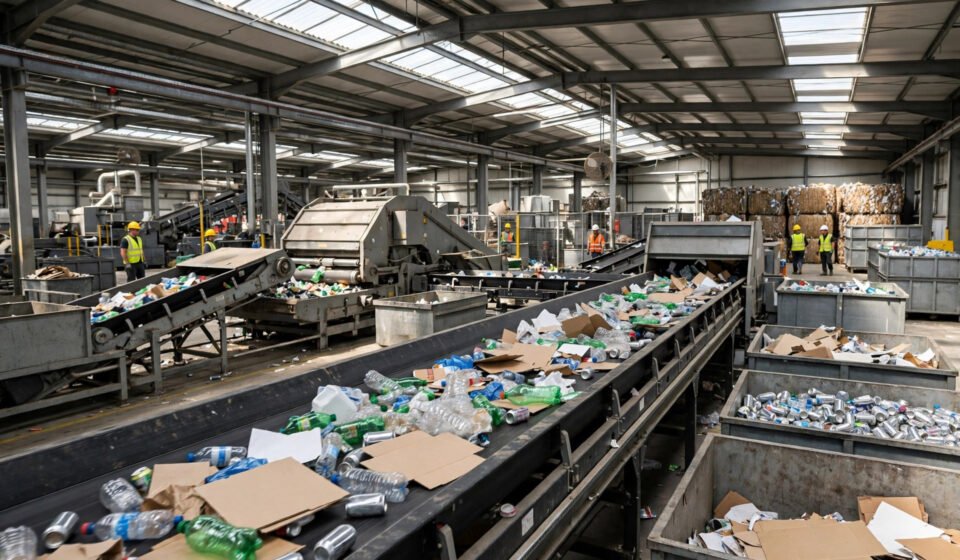
Modern recycling has quietly become a high-tech industry. A materials recovery facility (an MRF) is where mixed recycling from homes and businesses gets separated into saleable streams: paper, cardboard, glass, steel, aluminium, and different kinds of plastic. Twenty years ago this was mostly done by hand, workers standing along a fast-moving belt. The newer plants look very different.
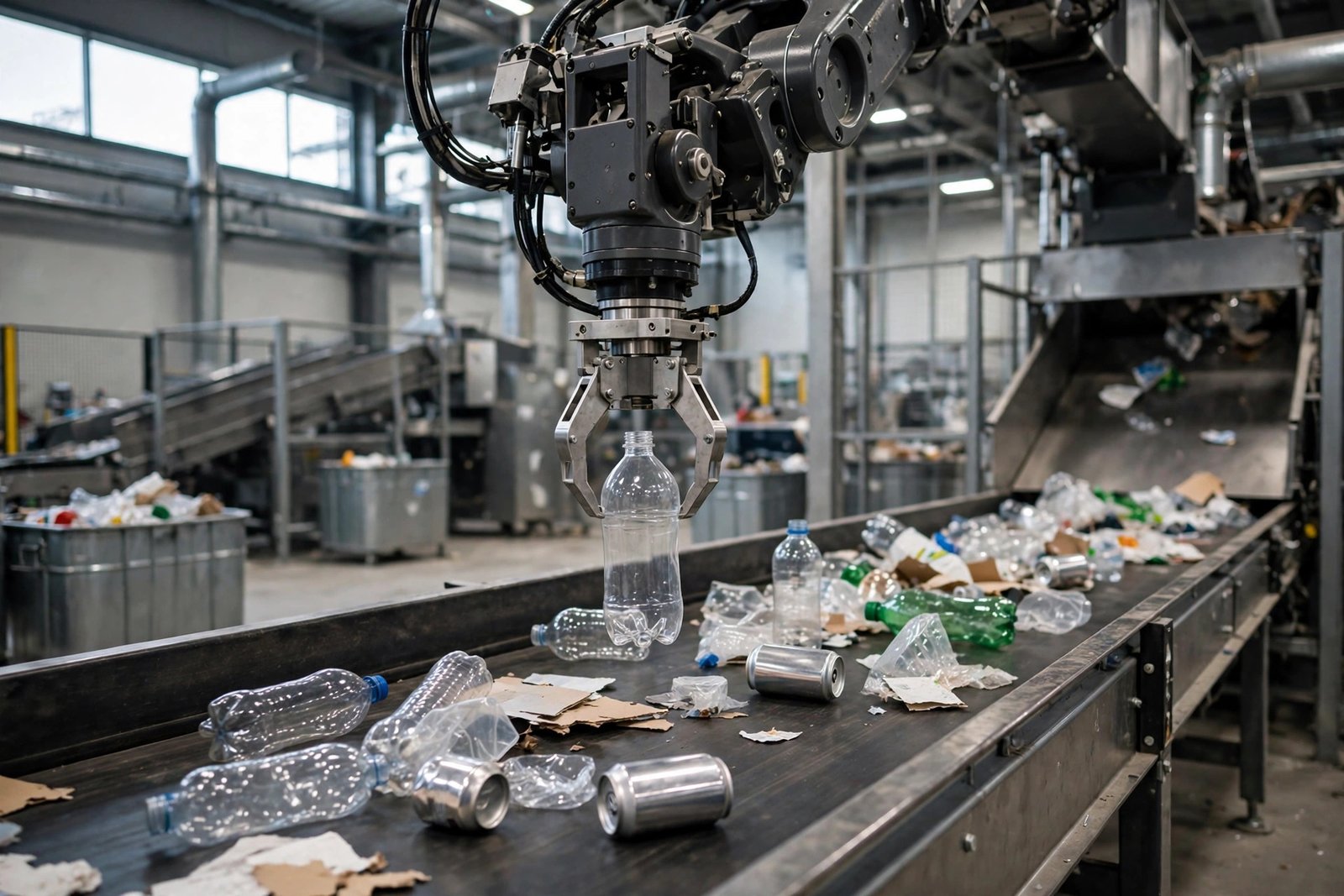
The first clever bit is the optical sorter. As items travel down the belt, a scanner shines near-infrared light on them. Different plastics reflect that light differently, so the scanner can tell a PET bottle from a HDPE container in a split second. A puff of compressed air knocks the item into the right chute — even when it looks identical to a human eye.
The second is AI vision. Cameras watch the belt and a trained model recognises shapes and materials — a coffee cup, a food tray, a battery that shouldn’t be there at all. Some systems direct a robotic arm to pick the item off the belt and drop it in the right bin. The arm works around the clock. Batteries are a good example of why this matters: a lithium battery in the wrong stream can start a fire in a sorting plant.
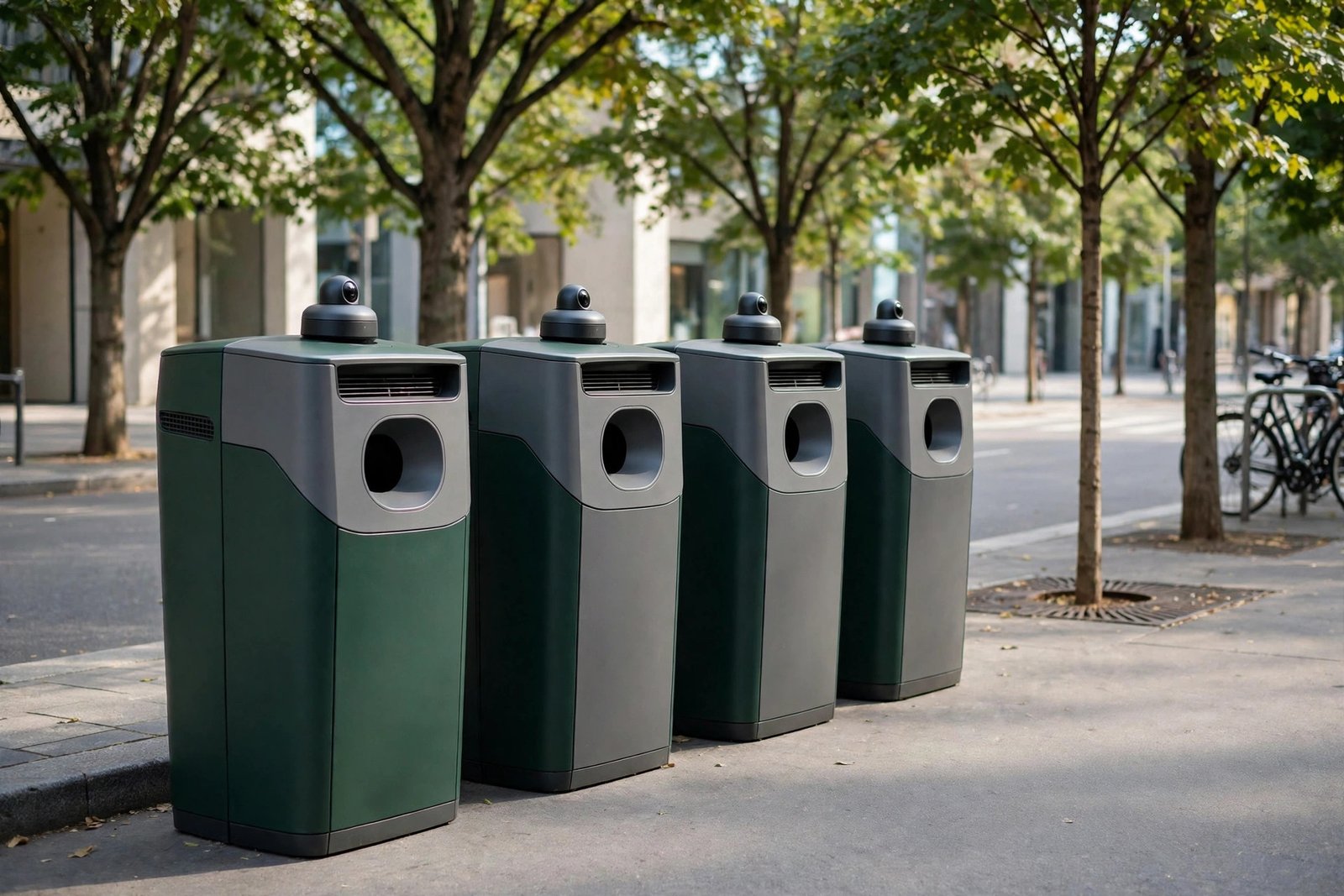
Then there are the smart bins. The city version is simpler than the articles suggest. A sensor in the lid measures how full the bin is and reports it over a mobile network, so the truck only comes when the bin needs emptying. That saves fuel and cuts overflowing bins. Councils in Europe, North America, and parts of Asia have used them for years.
How a Smart Sorting Line Actually Works, Step by Step
The articles describe each piece of technology in isolation, as if a single magic machine does everything. In practice it’s a chain of machines, each doing one job.
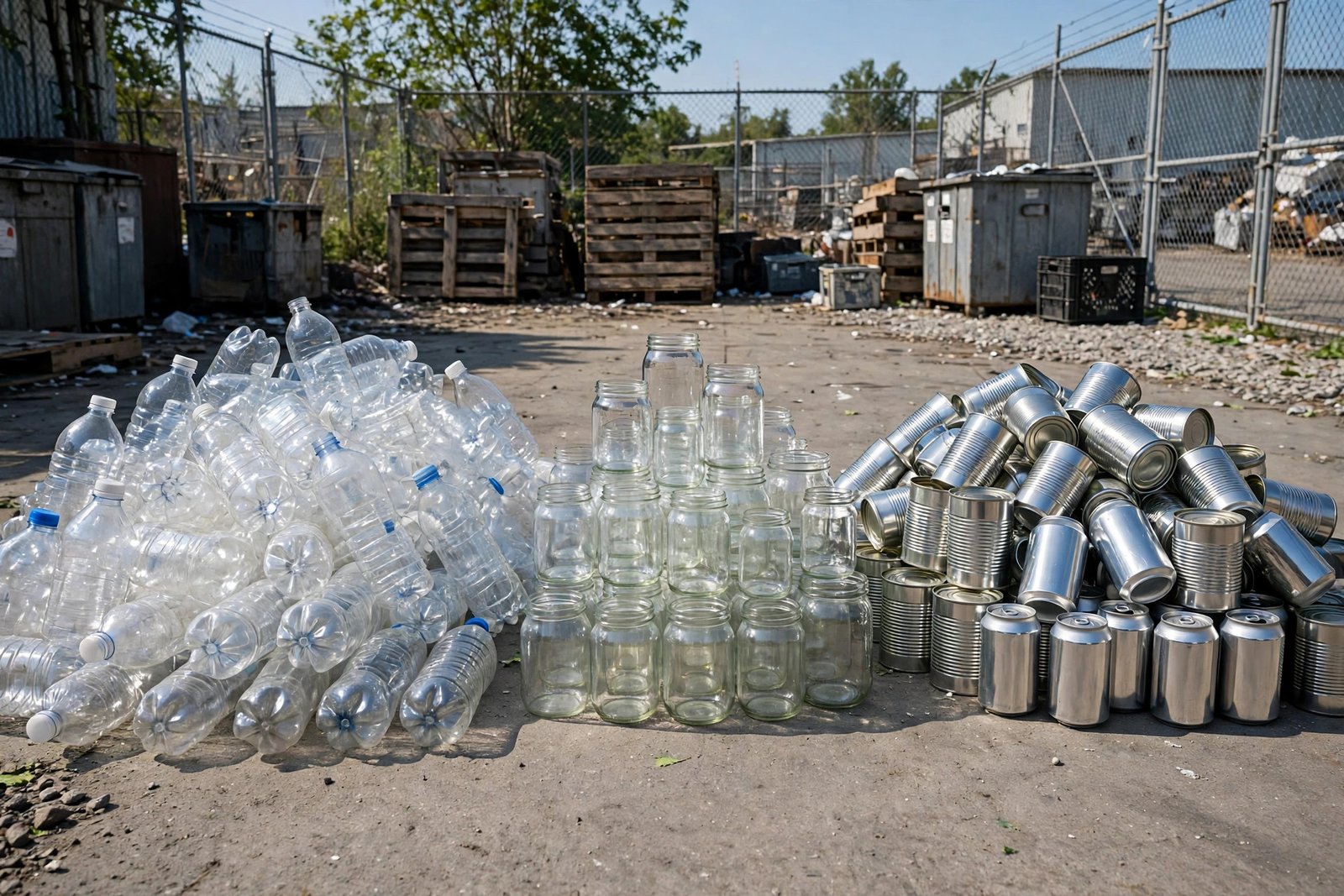
First, the truck tips its load onto the sorting plant floor, and a loader pushes the mixed recycling onto a wide conveyor. It usually meets a trommel first — a rotating drum with holes — letting small items and broken glass fall through. Magnets pull out the steel cans, and an eddy current separator flicks aluminium cans off the belt. Cardboard is often pulled off early too.
What’s left is mostly plastic containers, paper, and the odd bit of wrong stuff. This is where the optical sorters and AI cameras earn their keep, splitting plastics into types and pulling out anything that could damage equipment or contaminate a load. Film plastic — carrier bags and wrappers — tangles in machinery, so many plants pull it out by hand. At the end of the line, each material drops into its own bay, where it’s baled into tight blocks for transport.
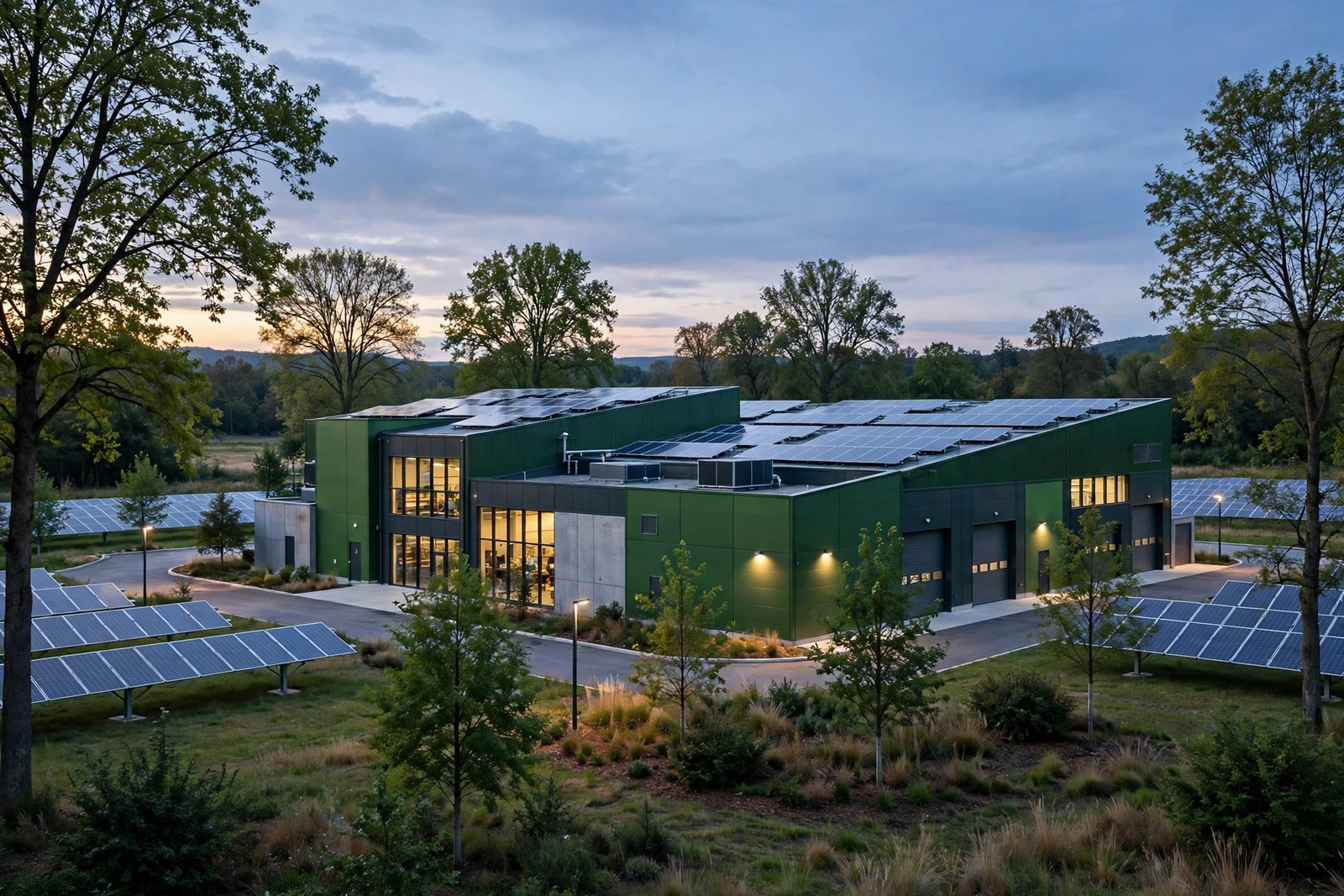
Waste-to-Energy: Pyrolysis and Fermentation Explained Simply
Some matarecycler articles talk about turning waste into fuel. The underlying processes are real, even if the articles’ claims about them aren’t.
Pyrolysis means heating plastic to several hundred degrees in a chamber with no oxygen. Without oxygen, the plastic can’t burn, so it breaks down into liquid oil, gas, and a bit of char. The oil can be refined into fuel or new plastic. It’s genuine technology with commercial plants running it, but it’s expensive, energy-hungry, and fussy about its feedstock. It’s a niche tool for hard-to-recycle plastic, not a replacement for ordinary recycling.
Fermentation and anaerobic digestion handle organics. Food waste and other wet organics are broken down by microbes into biogas (mostly methane, which can generate electricity or heat) and a residue usable as fertiliser. Many cities run anaerobic digestion plants for food waste. The articles blur these into one seamless system, as if a single machine takes in mixed rubbish and spits out clean fuel and sorted recyclables. That’s not how it works: each process handles one specific kind of waste, in a specific facility.
Real Smart-Recycling Technology You Can Look Up
These technologies are all real and widely used.
| Technology | What it does | Where you’ll find it |
|---|---|---|
| Near-infrared (NIR) optical sorters | Identify plastic types by infrared reflection, then sort with air jets | Materials recovery facilities worldwide |
| AI vision and robotic picking | Cameras recognise items; robotic arms pick and sort them | Modern MRFs in Europe, North America |
| Sensor-equipped smart bins | Measure fill levels so collections happen only when needed | City streets, campuses, and parks |
| Eddy current separators | Use a spinning magnetic rotor to repel aluminium cans | Most large sorting plants |
| Anaerobic digestion | Microbes break down food waste into biogas and fertiliser | Food-waste plants in many countries |
| Pyrolysis | Heat plastic without oxygen to produce oil and gas | Specialist chemical-recycling plants |
What You Can Actually Do Today
The most effective recycling technology in your life is you, and the rules are simpler than any dashboard.
First, follow your local recycling rules, not a generic list from the internet. What’s accepted varies by council — some take food trays, some don’t. Your local authority’s website or your bin’s label is the authority, not a blog post. Putting the wrong thing in the recycling is worse than general waste, because one contaminated item can spoil a whole load.
Second, keep it clean and dry. Rinse food containers quickly — spotless isn’t needed, just free of leftover food. Wet paper and cardboard can’t be recycled, so keep them dry and don’t put greasy pizza boxes in with clean cardboard. Keep carrier bags and plastic film out of your bin unless your area collects them; they jam sorting machinery.
Third, reduce before you recycle. A reusable bottle beats a recycled bottle, because recycling still takes energy, water, and transport. Buy less packaging, choose refills, and repair things before replacing them.
Where This Kind of Tech Is Actually Heading
Smart recycling will keep growing, just not in the shape the articles describe. The realistic direction is incremental: better sensors, cheaper cameras, and models that improve as they see more waste. Some plants are testing chemical markers — tiny tracers in packaging that let sorters identify a product’s exact material, including food-grade plastic. Digital watermarks on packaging are being trialled for the same reason.
Extended producer responsibility pushes the same way. In more and more countries, packaging makers must pay for its collection and recycling, giving them an incentive to design packaging that’s easier to sort and recycle. That matters more than any sorting robot: the easiest item to sort is one designed to be sorted.
The Bottom Line
Matarecycler isn’t a company you can call, an app you can install, or a machine you can buy. It’s a word blog articles have attached to real technologies — optical sorters, AI cameras, robotic arms, smart bins, waste-to-energy — that are genuinely reshaping recycling. The technology is worth knowing about. The name isn’t worth taking at face value.
If you came here looking for a MataRecycler product, the honest answer is there isn’t one to review. But if you came here curious about where recycling is going, the answer is encouraging: today’s sorting plants are already far smarter than most people realise, and your part — sorting properly, keeping things clean, and buying less packaging — matters more than any gadget.
FAQs
What is matarecycler?
Matarecycler is a term in online blog articles for a technology-driven approach to recycling, involving smart bins, AI sorting, and waste-to-energy. There is no verifiable company, product, or app by that name — the word is best understood as a label for real smart-recycling technology, not a thing you can buy.
Is MataRecycler a real company?
There is no evidence of a registered company, official website, or app listing under the name MataRecycler. The technology in the articles — optical sorters, AI vision, robotic arms, sensor bins — is real and used in recycling plants, but not tied to any documented company by that name.
Can I buy or download MataRecycler?
No. Since no official product or app exists under that name, there’s nothing legitimate to buy or download. Be cautious of any site claiming to sell it or asking you to install software under that name.
How do AI and robots actually sort recycling?
In a modern sorting plant, cameras and near-infrared scanners identify materials on a conveyor belt, and robotic arms or jets of air move each item into the right stream. Magnets remove steel, eddy current separators remove aluminium, optical sorters split plastics apart. It’s a chain of machines, each doing one job.
What can I do to recycle better at home?
Follow your local council’s rules, rinse food containers, keep paper and cardboard dry, keep plastic bags and film out of your bin unless your area collects them separately. Reducing packaging and reusing items matters even more than sorting, because the easiest waste to handle is the waste you never create.
Useful links: ClockToday | Wikipedia | Google | MSN