National Grid Explained: The Network, the Company, and Why They’re Not the Same Thing
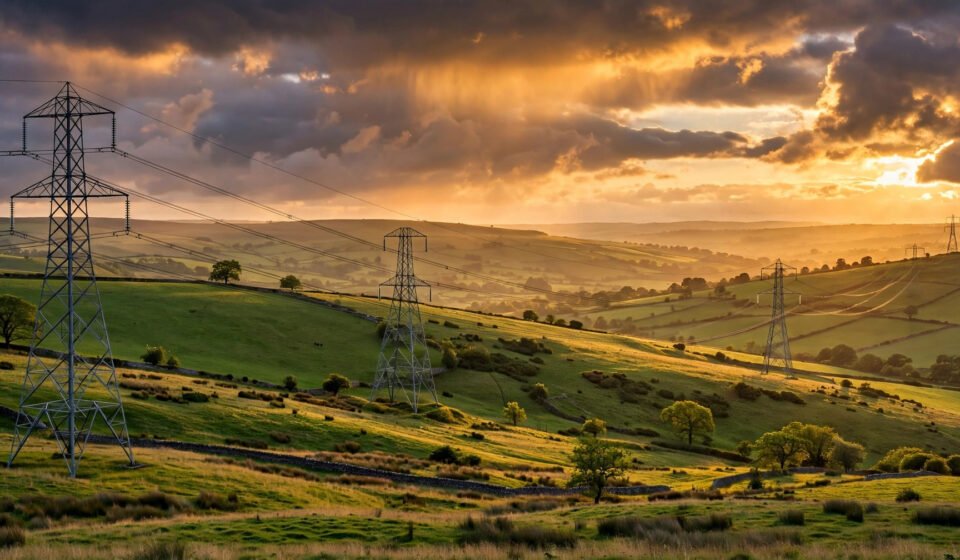
Say the words “national grid” in a room full of people and you’ll probably get two different pictures in their heads. One person thinks of the tall steel pylons marching across fields, carrying electricity from one end of the country to the other. Another thinks of a big company, the one whose name shows up on share prices and in the business news. Here’s the thing: they’re both right. The phrase means two different things, and mixing them up is how a lot of confusion starts — especially since something important changed in 2024. Let’s sort it out, starting with the bit that actually keeps your lights on.
The Network: How Electricity Gets From a Wind Farm to Your Kettle
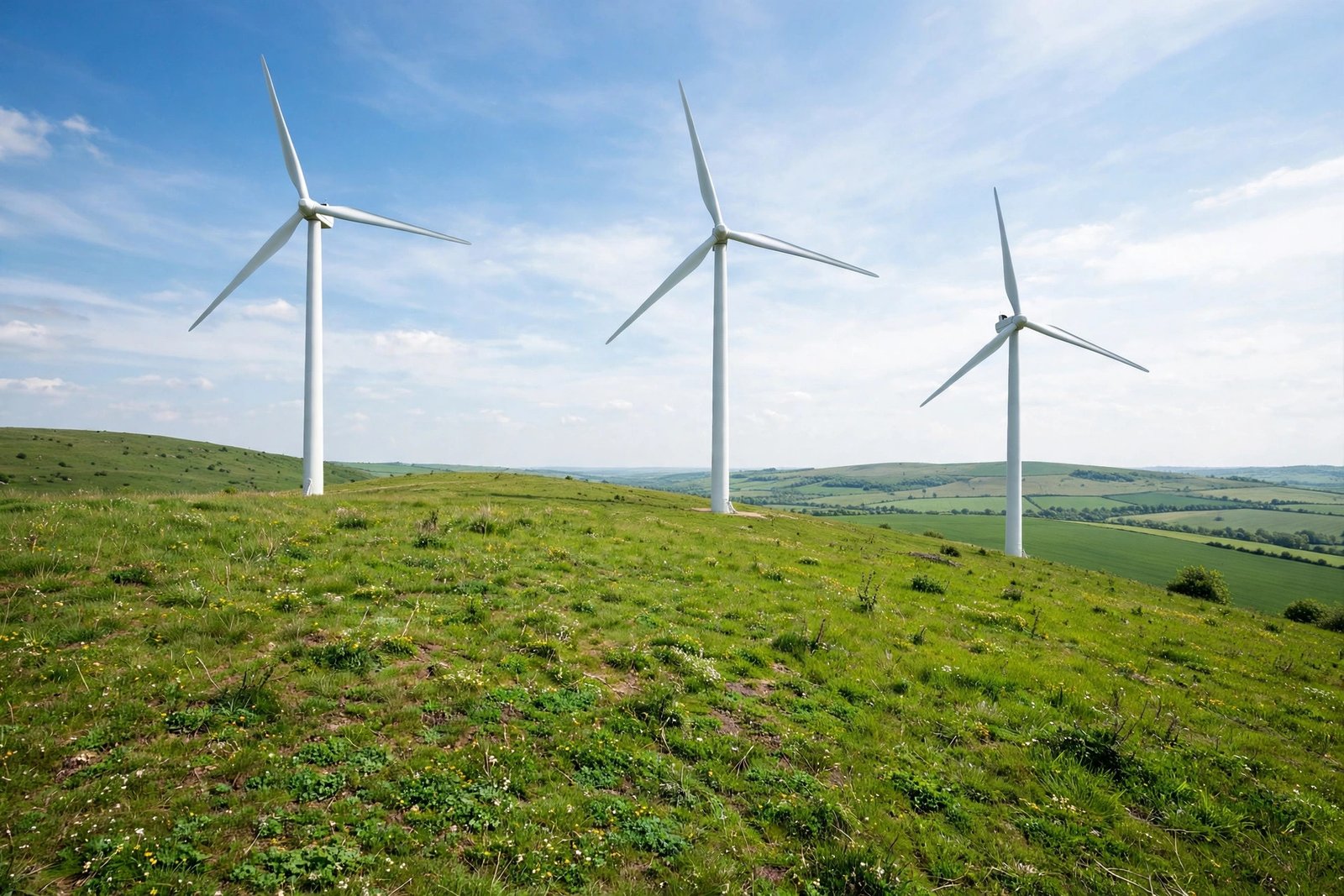
Picture a windy day off the coast of East Anglia. The turbines are spinning hard, churning out far more electricity than the nearby towns could ever use. That power has to go somewhere — to London, to Birmingham, to wherever people are switching kettles and heaters on. It can’t just hop onto the wires outside your house. Your home runs on low-voltage electricity, and the stuff coming off a wind farm or a power station travels at far higher voltages, because high voltage is how you move a lot of power over long distances without losing most of it on the way.
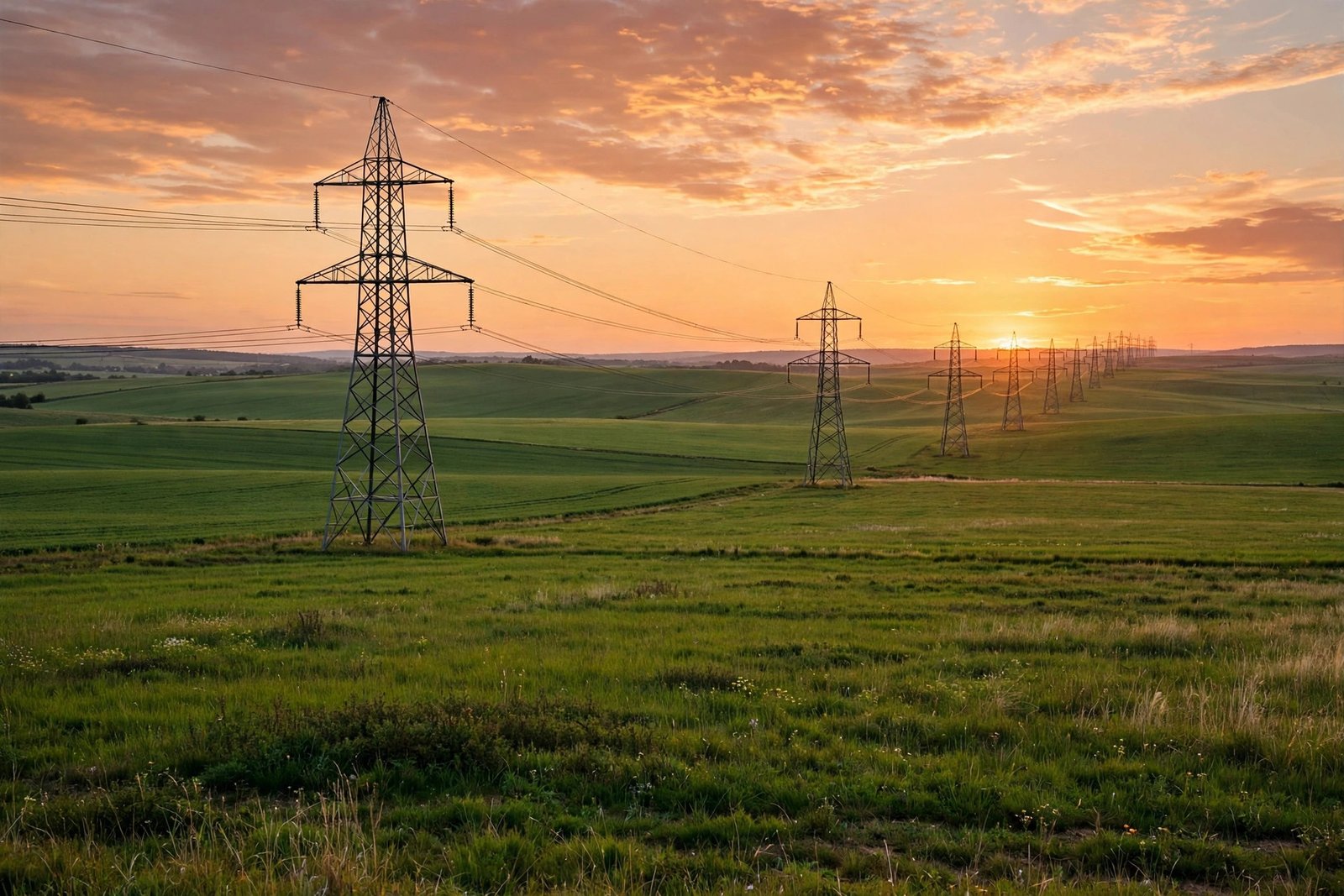
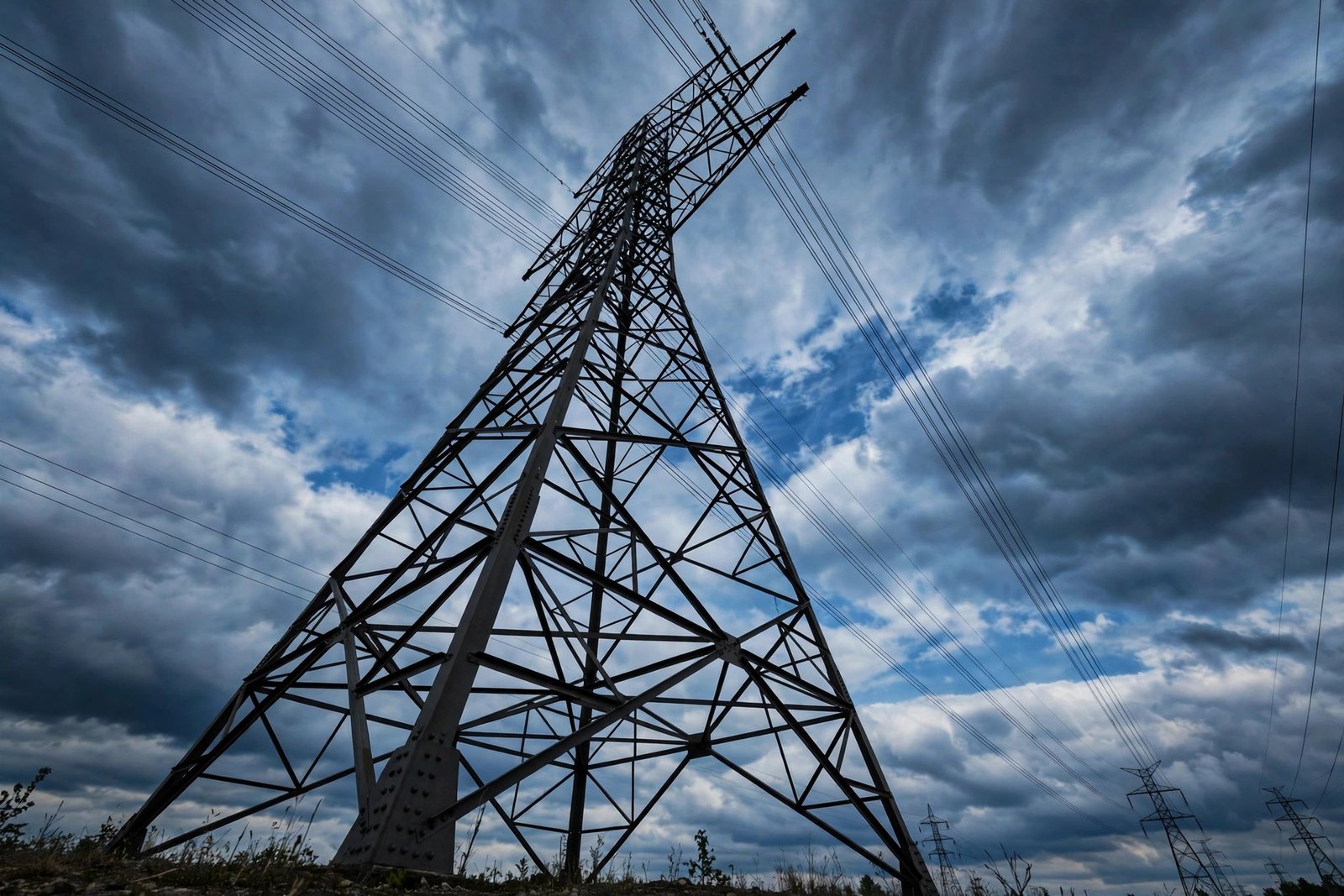
That’s what the transmission network is for. It’s the motorway of the electricity system: a web of high-voltage lines, mostly at 400,000 volts (400kV) and 275,000 volts (275kV), strung between steel pylons across England and Wales, with undersea cables linking to Scotland and to other countries. Power stations, wind farms and solar parks feed electricity into it, and at the other end it hands that power down to the local distribution networks — the regional companies that run the smaller lines and cables into streets, homes and businesses.
The network itself is owned and maintained by National Grid Electricity Transmission plc. Its engineers look after the pylons, the cables, the substations where voltage gets stepped up and down, and all the kit in between. When a storm brings a pylon down or a substation needs an upgrade, they’re the ones out in the field fixing it. It’s physical, unglamorous, essential work, and most of us never think about it until something goes wrong.
Balancing supply and demand, second by second
Here’s the part that’s easy to miss: electricity can’t really be stored in bulk on the network. Every second of every day, the amount of power being generated has to match the amount being used, almost exactly. Too much and the system overloads; too little and the lights dim. And demand swings all the time — think of the famous surge when millions of people put the kettle on at half-time during a big football match, or the evening peak when everyone gets home, cooks dinner and turns the heating on.
For years, the job of keeping that balance was done by National Grid too, through its system-operator arm. That changed on 1 October 2024, when the system-operator role moved to the National Energy System Operator, or NESO — an independent public body. National Grid still owns the wires, but it no longer runs the system. NESO is now the one deciding which power stations to call on, how to handle a sudden drop in wind, and how to keep the whole thing stable. It’s a bigger shift than it sounds, because it separates the company that owns the network from the body that decides how electricity flows across it — a bit like separating the owner of the motorway from the traffic controllers.
Why does that matter to you? Mostly, it shouldn’t change anything you notice day to day. Your lights still come on. But it matters if you follow energy news, because headlines about “the grid” might be about the wires, or about NESO’s decisions, or about the company — and they’re three different things now.
The Company: National Grid plc
Then there’s the other meaning of the phrase: National Grid plc, the company. It’s a British multinational electricity and gas utility, founded in 1990 and based in London. If you own shares, you’ll know it as a FTSE 100 constituent — one of the biggest companies listed on the London Stock Exchange — with a secondary listing of American depositary receipts on the New York Stock Exchange.
So what does the company actually own and run? In Great Britain, it owns the electricity transmission network we just talked about. Across the Atlantic, it operates electricity and gas networks in the northeastern United States, in New York and Massachusetts — the pipes and wires that serve millions of homes and businesses there. It’s a big, sprawling business, and its reported revenue was about £17.7 billion for 2026.
The company is led by Chair Paula Rosput Reynolds and Chief Executive Zoë Yujnovich, according to the latest records. But a company like this doesn’t appear overnight. Its story is really the story of how Britain’s energy industry was broken up, sold off and stitched back together over thirty-odd years.
A short history
| Year | What happened |
|---|---|
| 1990 | National Grid is created as the successor to the Central Electricity Generating Board, taking over the transmission network as Britain’s electricity industry is privatised. |
| 2002 | It merges with Lattice Group, owner of the Transco gas distribution business, and becomes National Grid Transco. |
| 2005 | The company is renamed National Grid plc. |
| 2021 | It buys Western Power Distribution, the UK’s largest electricity distribution network operator, for £7.8 billion — a big move back into the local networks it had once been separated from. |
| January 2023 | The sale of a majority stake in its UK gas transmission business is completed. The business is now called National Gas, and National Grid no longer controls it. |
| October 2024 | The system-operator role moves to the independent National Energy System Operator (NESO). National Grid keeps the wires; NESO runs the system. |
Look at that timeline and a pattern shows up. National Grid has spent three decades growing, merging and then shedding bits of itself, as governments and regulators kept redrawing the lines of who should own what. The 2021 purchase of Western Power Distribution was a big swing in one direction — buying back into distribution — while the 2023 gas sale and the 2024 NESO handover were swings the other way, narrowing the company down toward what it does best: owning and maintaining big energy networks.
Network vs Company: The Quick Comparison
If the two meanings still feel tangled, this table should pin them down:
| The network | The company | |
|---|---|---|
| What it is | The high-voltage transmission system in England and Wales | National Grid plc, a listed multinational utility |
| Main job | Moving electricity from generators to local networks | Owning and running energy networks in the UK and the US |
| Where | England and Wales (plus links to Scotland and abroad) | Great Britain, plus New York and Massachusetts in the US |
| Voltage | Mostly 400kV and 275kV lines | Not applicable — it’s a business, not a set of wires |
| Who runs the system? | NESO, since 1 October 2024 | National Grid owns the wires; it no longer operates the system |
| Led by | Engineers and operators keeping the network stable | Chair Paula Rosput Reynolds and CEO Zoë Yujnovich |
Why the Distinction Actually Matters
Fair question: does any of this change your life? Not when you flick a switch. But it matters in a few real ways.
First, when the news says “the national grid is under strain” during a cold snap, it usually means the network — demand is high, wind is low, and the system is tight. When the news says “National Grid shares rose today,” that’s the company, and it might have nothing to do with how much electricity anyone used. Same two words, completely different stories.
Second, the 2024 NESO change matters for how Britain handles the shift to clean energy. The country is building wind farms and solar parks far faster than the old system was designed for, and connecting them all to the network is one of the biggest engineering jobs of the decade. NESO now plans that system as an independent body, while National Grid builds and maintains the wires. If that split works, connections should get faster and the system should be planned with the whole country’s needs in mind rather than one company’s interests. If it doesn’t, expect plenty of arguments about who was too slow.
Third, there’s your bill. The cost of maintaining and upgrading the transmission network is part of what you pay for electricity — it’s a slice of the bill, passed through by your supplier. When National Grid invests billions in new lines to carry wind power from the north to the south, that investment eventually shows up in what households pay. Knowing which organisation is doing what helps you make sense of where the money goes.
So the next time someone says “national grid,” it’s worth a half-second pause. Do they mean the pylons and cables humming away in the fields — the physical network that gets power from a wind farm to your kettle? Or do they mean the FTSE 100 company in London, with its American networks and its £17.7 billion of reported revenue? Most of the time, the context gives it away. And now you know the difference — including the 2024 change that even a lot of energy watchers are still getting used to.
FAQs
What is the national grid?
The phrase has two meanings. It can mean the high-voltage electricity transmission network in England and Wales — the 275kV and 400kV lines that carry power from generators to local distribution networks. It can also mean National Grid plc, the British multinational electricity and gas utility that owns that network. Which one is meant depends on the context.
Who runs the national grid now?
Since 1 October 2024, the system is operated by the National Energy System Operator (NESO), an independent public body. National Grid owns and maintains the transmission wires, but it no longer operates the system — that balancing role moved to NESO.
What does National Grid plc own?
In Great Britain it owns the electricity transmission network, and it also owns the former Western Power Distribution networks it bought in 2021. In the United States it operates electricity and gas networks in New York and Massachusetts. It sold a majority stake in its UK gas transmission business (now National Gas) in a deal completed in January 2023.
Is National Grid a public company?
Yes. National Grid plc is listed on the London Stock Exchange, where it is a FTSE 100 constituent, and it has a secondary listing of American depositary receipts on the New York Stock Exchange. Its reported revenue was about £17.7 billion for 2026.
How does electricity get from a wind farm to my home?
The wind farm feeds power into the national grid at high voltage — usually 400kV or 275kV — so it can travel long distances efficiently. At a substation the voltage is stepped down and handed to your local distribution network, which carries it through smaller lines and cables to your street and into your home at the low voltage your appliances use.
Useful links: ClockToday | Wikipedia | Google | MSN