
Assimilasjon: One Norwegian Word, Four Meanings — and Norway’s Own History
If you have spent any time reading Norwegian news, history books, or a linguistics textbook, you have probably come across the word assimilasjon. It looks unfamiliar at first, but its meaning is closer than you might think. In English, it is “assimilation” — and like its English cousin, it carries more than one meaning.
The word comes from the Latin assimilare, which means “to make similar”. That root is a good clue, because almost every use of assimilasjon is about something becoming like something else: a sound like the sound next to it, a new idea fitted into what you already know, a nutrient turned into part of your body, a minority culture slowly taking on the ways of the majority around it.
Same word, four very different worlds. Once you see how they connect, the word starts to make a lot more sense — especially in Norway, where it carries real history.
Assimilasjon at a glance: one word, four meanings
| Field | What becomes similar to what? | Everyday example |
|---|---|---|
| Culture and society | A minority group takes on the language and customs of the majority | A family stops speaking its mother tongue at home |
| Linguistics | One speech sound becomes like a neighbouring sound | Old Norse vatn becoming modern vann |
| Psychology | New information is fitted into an existing mental framework | A child calls every four-legged animal a “dog” at first |
| Biology | Absorbed nutrients are turned into the body’s own tissue | Food becoming muscle, bone, and energy |
The meaning most people think of first: culture
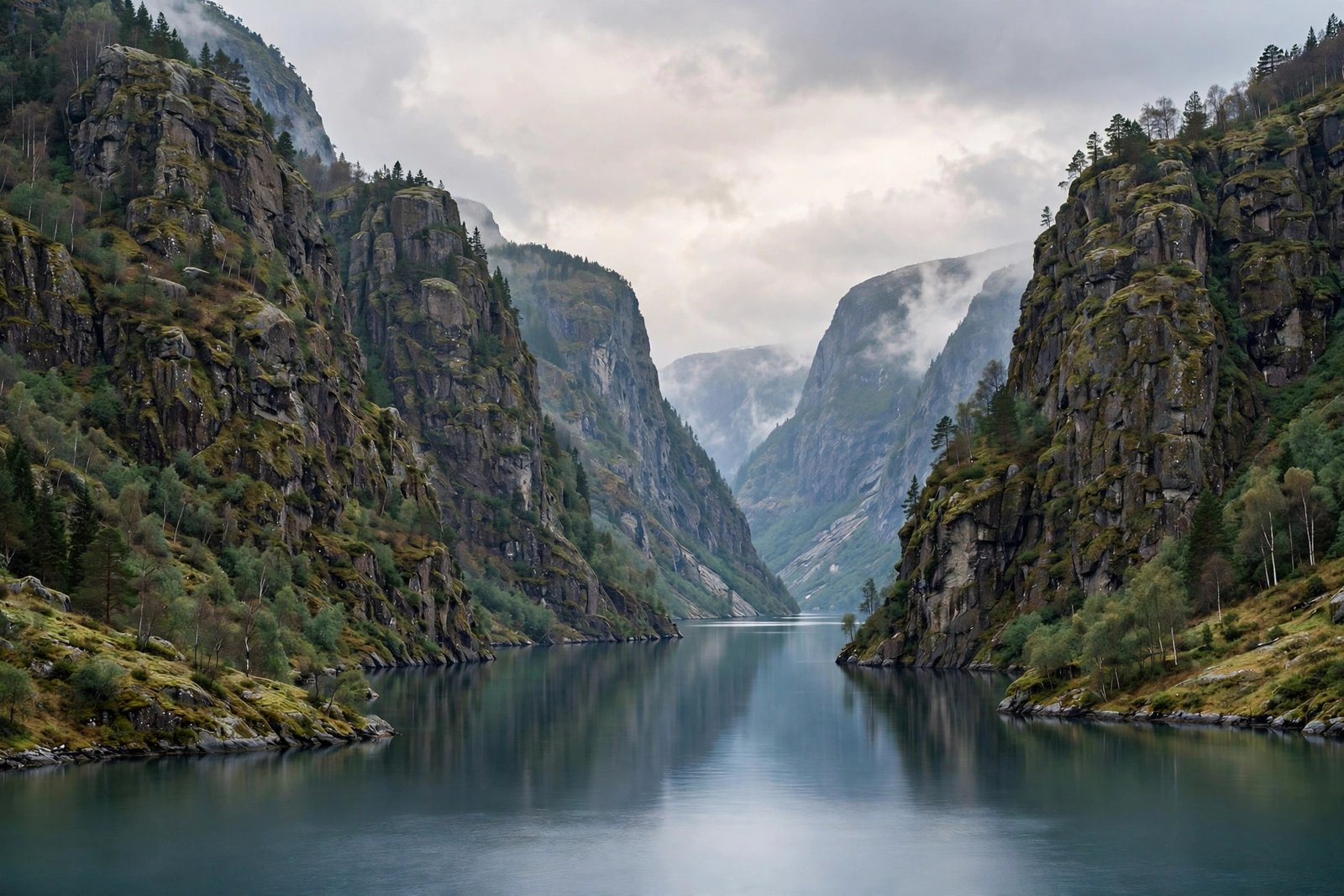
When Norwegians use the word assimilasjon in everyday conversation, they usually mean the cultural kind. Picture a minority group living inside a larger, dominant culture. Over time — sometimes over generations — that group starts to adopt the majority’s language, values, customs, and sense of identity. The old ways fade gradually: a language spoken less at home, a tradition kept only at holidays, a name changed to sound more familiar to neighbours.
The important thing is that the change runs mostly one way. The minority moves toward the majority; the majority does not really move back. That is why the word can feel loaded. For some, assimilation sounds like a practical way to belong. For others, it sounds like losing something precious — a language, a history, a way of seeing the world. And in Norway, that tension is tied to a specific chapter of the country’s past, which we will come to below.
Assimilasjon in language: when sounds copy each other
Linguists use the same word for something much smaller and much less political: sounds that copy their neighbours.
When we speak quickly, our mouths take shortcuts. A sound changes slightly so it matches the sound right before or after it, and speech flows more easily. That is assimilasjon in linguistics, and Norwegian is full of it.
Take the word for water. In Old Norse it was vatn, with the t and the n as two separate sounds. Over time the t gave way and became like the n beside it, and the word settled into modern Norwegian as vann. The same happened with lamb, which became lam — the b simply melted into the m.
You can hear it in everyday speech today, too. Many Norwegians pronounce tannbørste (toothbrush) in a way that sounds closer to tambørste, because the n shifts toward the b that follows it. And kronprins (crown prince) often drifts toward kromprins for the same reason. None of this is lazy speaking — it is how living languages work. Sounds rub off on each other.
Assimilasjon in psychology: how we learn
The Swiss psychologist Jean Piaget gave the word yet another job. In his theory of how children learn, assimilasjon is what happens when we fit new information into a mental framework we already have — what Piaget called a schema.
A small child who knows what a dog is might point at a cow in a field and shout “dog!” She is not being silly — she is taking something new and squeezing it into the box she already has for four-legged animals. As she learns more, that box gets adjusted (that adjusting has its own name, accommodation), but the first step, the fitting-in, is assimilasjon.
Adults do the same thing all the time. You meet a new colleague and, within minutes, you have quietly sorted them into categories you already know. Sometimes the fit is wrong, and you have to rethink — but that first instinct, making the new thing match what you already understand, is assimilasjon at work in your head.

Assimilasjon in biology: food becomes you
The fourth meaning is the most literal. In biology and physiology, assimilasjon describes how absorbed nutrients are turned into the body’s own tissue — or, in a plant, into its own substance.
You eat a meal, your body breaks it down, and the useful parts do not stay as “food”. They become you: muscle, bone, blood, energy. A plant does the same with water, minerals, and sunlight, building leaves and stems out of things that were never part of it before. In every field, assimilation is the process of making something similar — similar enough to belong.
Norway’s own history with assimilasjon: fornorsking
So far, assimilasjon has sounded fairly neutral — a quirk of speech, a learning process, a fact of biology. But in Norway, the cultural meaning carries a heavy history, and it is worth understanding properly.
From roughly the mid-1800s and well into the late 1900s, the Norwegian state pursued a policy known as fornorsking — Norwegianization. It was a deliberate effort to linguistically and culturally assimilate the Sámi people, who are Norway’s Indigenous people, as well as the Kven and Norwegian Finnish communities and the Forest Finns.
In practice, this meant pressure to speak Norwegian instead of Sámi, Kven, or Finnish. Sámi children in boarding schools were often punished for speaking their own language. Place names were changed. Traditional ways of life were treated as something to be left behind. The idea, as the authorities of the time saw it, was to make everyone Norwegian in the same way — one language, one culture, one identity.
The cost was enormous, and it lasted for generations. Languages spoken for centuries were pushed to the edge. Families stopped passing them on, sometimes out of shame, sometimes because they believed it would give their children a better life. That is what cultural assimilasjon looks like when it is driven by state policy rather than free choice: not a slow, natural blending, but a push from above.
Norway has spent recent years facing up to that history. The Truth and Reconciliation Commission — in Norwegian, Sannhets- og forsoningskommisjonen — delivered its report in 2023, documenting the assimilation policies and their lasting effects on Sámi, Kven, and Forest Finnish communities. Then, in 2024, the Storting, Norway’s parliament, formally apologized for the state’s role.
An apology does not undo what happened — languages are still being revived, and the work of repair is ongoing. But it matters, because it changed the official story: fornorsking is now named for what it was.
Assimilasjon vs integrasjon: a distinction that still matters
If you follow Norwegian public debate today, you will hear another word almost as often: integrasjon, integration. The two words are sometimes used as if they mean the same thing. They do not — and the difference is at the heart of how Norway talks about newcomers, minorities, and belonging.
Assimilasjon expects one-sided change: the minority adapts to the majority, and the majority stays as it is. Integrasjon, by contrast, is meant to be mutual — people take full part in society, learning the language, working, voting, joining in, while keeping their cultural and linguistic roots.
That is why integration is now the official policy vocabulary in Norway — the word used in laws and government plans. Assimilation, meanwhile, is more often used to describe what happened in the past, or to criticize a policy that asks too much of one side.
| Assimilasjon | Integrasjon | |
|---|---|---|
| Who changes? | Mainly the minority group | Both the individual and society |
| Culture and language | Original culture fades or is given up | Original culture is kept alongside participation |
| Goal | Becoming like the majority | Full participation while staying yourself |
| Direction | One-sided | Mutual |
| Today’s status in Norway | Associated with past policy (fornorsking) | Official policy vocabulary |
Of course, real life is messier than any table. A person can learn Norwegian, love Norwegian winters, and still speak Sámi, Kven, Finnish, Urdu, or Somali at home. The table is a guide to the ideas, not a box to put people in.
Why one word is worth knowing
Assimilasjon is a useful word precisely because it refuses to stay in one place. Say it to a linguist and they will think of vatn turning into vann. Say it to a teacher and they will think of Piaget and a child learning what a dog is. Say it to a biologist and they will think of nutrients becoming tissue. Say it to a historian in Norway and they will think of fornorsking, of languages nearly lost, and of an apology delivered in 2024.
All four meanings share that Latin root — to make similar. The difference is in who is doing the making, and whether anyone gets a choice. A sound copying its neighbour is harmless, a child fitting a cow into her “dog” box is learning, and a body turning food into muscle is life itself. But a state deciding that a whole people should become like the majority — that is where a small Latin word turns into a big human question, and it is one Norway is still answering.
FAQs
What does assimilasjon mean in Norwegian?
Assimilasjon is the Norwegian word for assimilation, from the Latin assimilare, meaning “to make similar”. It most often describes a minority group gradually adopting the language, values, and customs of the majority culture, but it is also used in linguistics, psychology, and biology with related meanings.
What is the difference between assimilasjon and integrasjon?
Assimilasjon is one-sided change: the minority adapts to the majority, often giving up its original culture and language. Integrasjon is mutual: people participate fully in society while keeping their cultural and linguistic roots, and society itself adapts too. Integration is now the official policy term in Norway.
What was fornorsking?
Fornorsking, or Norwegianization, was the Norwegian state’s policy from roughly the mid-1800s into the late 1900s of linguistically and culturally assimilating the Sámi people and the Kven, Norwegian Finnish, and Forest Finnish communities, including pressure to abandon their own languages. The Truth and Reconciliation Commission reported on it in 2023, and the Storting formally apologized in 2024.
What does assimilasjon mean in linguistics?
In linguistics, assimilasjon is when one speech sound becomes more like a neighbouring sound so speech flows more easily. In Norwegian, Old Norse vatn became vann and lamb became lam, and in everyday speech tannbørste can sound like tambørste and kronprins like kromprins.
What did Piaget mean by assimilasjon?
For Jean Piaget, assimilasjon is the process of fitting new information into an existing mental framework, or schema. A child who calls a cow a “dog” is assimilating the new animal into what she already knows. It is one of the two basic ways we learn, alongside accommodation, where the framework itself is adjusted.
Useful links: ClockToday | Wikipedia | Google | MSN