
Stich: Understanding the Word, Its Meaning, Uses, and Connection to Stitch
The English language is full of words that look familiar but carry meanings we may not expect. Stich is one of those words. At first glance, many people see “stich” and immediately think it is simply a misspelling of “stitch.” Sometimes that is true, but there is more to the word than a spelling mistake. Stich has its own history and is used as a literary term, particularly when discussing poetry and individual lines of verse.
Because the word is uncommon in everyday conversation, it can create confusion. Someone searching for stich might be looking for its dictionary meaning, checking a spelling, studying poetry, or trying to understand something they have seen online. The easiest way to understand it is to look at both sides of the word: its legitimate literary meaning and its close relationship with the much more common word “stitch.”
In modern English, context is extremely important. If a sentence is about poetry, literature, or verse, stich may be the intended word. If the subject is clothing, sewing, medicine, knitting, or exercise, the writer probably means stitch. Knowing this small difference can prevent misunderstandings and also gives us an interesting look into how English vocabulary develops over time.
What Does Stich Mean?
Stich is a literary word associated with a line of verse or poetry. It is not a word that most people use during ordinary conversation, but it can appear in literary studies and discussions about the structure of older poetry.
Poetry is often divided into lines, stanzas, verses, and other structural elements. When scholars discuss individual lines in certain poetic traditions, the word stich may be useful.
The word has an old linguistic background and is connected with a Greek term associated with a line, row, or verse. Over time, related forms entered different languages and became part of literary vocabulary.
This historical background helps explain why the word looks unusual to modern readers. English contains many words that are no longer common in everyday speech but continue to exist because they are useful in specialized subjects.
Stich and Stitch Are Different Words
The most important thing to understand about stich is that it should not automatically be treated as identical to “stitch.”
The word stitch is much more common. It is normally used when talking about sewing, fabric, knitting, medical wound closures, or a sharp pain in the side during physical activity.
For example, someone might say that they need to repair a shirt with another stitch. A doctor might use stitches to close a wound. A runner might stop because they have developed a stitch in their side.
Stich has a different standard literary meaning.
This difference may seem small because the words are almost identical in appearance, but one extra letter can completely change the context.
Why Do People Confuse Stich With Stitch?
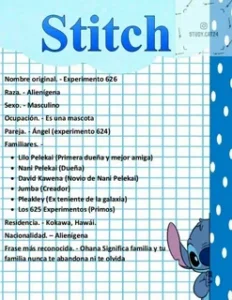
The confusion is easy to understand.
When people hear the two words spoken, the difference may not always be obvious, especially to someone who has never encountered the literary term. When they see the words written, the spelling is also very similar.
There is another reason for the confusion: stitch is extremely common while stich is relatively rare.
Most people learn the word stitch at an early age. They see it in clothing instructions, craft projects, medical discussions, books, and everyday conversation. Stich, on the other hand, may not appear until someone reads about poetry or encounters an older literary text.
As a result, when people see stich for the first time, they often assume someone simply forgot the letter “t.”
Sometimes that assumption is correct. Sometimes it is not.
When Stich Is a Correct Word
Stich is correct when it is being used as a literary term referring to a line of verse.
For example, someone studying the structure of an old poem might discuss individual lines and refer to them as stichs.
A literary sentence could be written like this:
“The poet carefully organized each stich to maintain the rhythm of the passage.”
Here, the word makes sense because the discussion is about poetry.
Another example might be:
“The translation attempts to preserve the rhythm and structure of each stich.”
Again, the literary context makes the meaning clear.
When Stich Is Probably a Mistake
If the subject is sewing, clothing, or medicine, stich is usually not the correct spelling.
For example:
“She added another stich to the dress.”
In this sentence, the intended word is almost certainly “stitch.”
The correct sentence would be:
“She added another stitch to the dress.”
Likewise:
“The doctor removed the stich.”
would normally be written:
“The doctor removed the stitch.”
Understanding the subject of the sentence makes the difference easy to identify.
The Meaning of Stitch
To fully understand stich, it helps to look at its more familiar relative.
A stitch can describe one movement of a needle and thread through fabric. It can also refer to the small section of thread produced by that action.
In knitting, stitch can describe one of the loops or units created with yarn.
In medicine, stitches are used to close wounds after an injury or surgical procedure.
The word also has another familiar meaning. A person who is running or exercising may experience a sudden sharp pain in the side, often called a stitch.
These meanings are completely normal parts of modern English.
Stich as a Literary Term
The literary use of stich is connected with the basic idea of a line.
Poetry is not simply a collection of words. Lines can have rhythm, length, stress patterns, repetition, and other structural characteristics. In some forms of poetry, the individual line plays a particularly important role.
The word stich provides a way of talking about such a line in a more specialized manner.
For everyday readers, saying “line of poetry” is usually enough. In academic or historical discussions, however, more specific vocabulary can be useful.
This is one reason unusual literary terms continue to survive even when they are rarely heard in casual conversation.
The History Behind Stich
The history of stich goes back much further than modern English.
The word is connected with an ancient Greek term meaning a line, row, or verse. This connection is important because many English literary terms have roots in Greek and Latin.
Ancient languages influenced the vocabulary used by later writers and scholars. As people studied classical literature, they adopted and adapted terminology for describing poetic structures.
Over centuries, these terms became part of the vocabulary of literary criticism.
Stich is one example of how an ancient concept can survive inside modern English, even when the original everyday usage has changed.
Stich and Ancient Poetry
Ancient poetry often followed rules and structures that can be difficult for modern readers to recognize.
Poets worked with rhythm, repeated sounds, patterns of stress, line length, and other features. In oral cultures, these structures could also help people remember long passages of poetry.
A poetic line was therefore more than simply a sentence broken onto a new line. Its structure could be essential to the way the poem was performed and understood.
The concept represented by stich fits into this larger history of organized poetic expression.
Stich in Literary Studies
Students of literature sometimes encounter words that are unfamiliar outside academic environments.
These words can initially seem unnecessary, but specialized vocabulary exists because it allows researchers to describe ideas precisely.
For example, someone studying ancient poetry may need to distinguish between an individual poetic line and a larger group of lines. Terms such as verse, stanza, and stich can help make those distinctions.
Learning these terms can make literary analysis easier.
Instead of repeatedly explaining what a particular poetic structure means, a writer can use the established terminology.
Stich and Verse
The word verse can have several meanings depending on context.
It can refer to poetry in general, a line of poetry, or a larger section of a poetic work.
Stich is more specifically associated with a line.
The two words may appear together in literary discussions, but they should not automatically be treated as exact synonyms in every situation.
This is a common feature of academic vocabulary. Two words can be closely related while still having slightly different uses.
Stich and Stanza
Another word that people sometimes confuse with a poetic line is stanza.
A stanza is a group of lines that forms a unit within a poem. It is somewhat comparable to a paragraph in prose.
A stich, in its literary sense, is associated with the individual line.
Imagine a poem containing five stanzas, with each stanza made up of four lines. The poem would contain twenty lines in total, while the five larger groups would be the stanzas.
Understanding this difference can make discussions about poetry much clearer.
Why Uncommon Words Survive
Language constantly changes.
Some words become more popular, while others become less common. Some disappear completely. Others survive because they remain useful in specific areas such as science, law, literature, medicine, or history.
Stich belongs to this last group.
It may not be a word that people use while shopping, talking with friends, or writing casual messages, but it still has value when discussing poetry and language.
The survival of words like stich shows that vocabulary does not need to be popular to remain meaningful.
Stich in Historical Texts
Readers working with historical literature may come across spellings that look unusual.
Modern spelling rules were not always as standardized as they are today. Before modern dictionaries, publishing systems, formal education, and widespread literacy created stronger conventions, writers could use different spellings for the same word.
This means that historical examples need to be understood within their period.
A spelling that looks strange to a modern reader may have been acceptable at the time.
The relationship between stich and stitch is part of this broader story of changing English spelling and vocabulary.
Why Context Matters So Much
One of the best ways to understand an unfamiliar word is to examine the words around it.
Suppose you see:
“The poet repeated the pattern throughout each stich.”
The words “poet,” “pattern,” and the literary subject suggest that stich is being used in its poetic sense.
Now imagine:
“The tailor added a stich around the collar.”
The word “tailor” and the reference to a collar clearly suggest sewing. In this case, stitch is almost certainly the intended spelling.
Context can therefore solve the mystery without requiring complicated analysis.
Is Stich a Real English Word?
Yes, stich is a real English word.
It is simply less familiar than stitch.
Its recognized literary meaning relates to a line of verse or poetry. The word has a long history and is connected with older terminology for lines and verses.
Because it is uncommon, many people may never encounter it outside dictionaries, literature, or academic discussions.
That does not make it incorrect.
An uncommon word and an incorrect word are two different things.
Is Stich a Modern Word?
Stich exists in modern dictionaries, but its everyday usage is limited.
It is better described as an uncommon or specialized word rather than a common modern conversational term.
English has many such words. Some are used regularly by specialists while remaining unfamiliar to the general public.
The important point is that stich has not disappeared entirely. It continues to be useful in particular literary contexts.
Can You Use Stich in Everyday Conversation?
Technically, you can, but it may sound unusual.
If you are talking with someone about sewing, using stitch is clearly the natural choice.
If you are discussing poetry, you could use stich, especially if you are comfortable with literary terminology.
However, when communicating with a general audience, saying “line of poetry” may be easier for readers to understand.
Good writing is not only about using correct words. It is also about choosing words that suit the audience.
Stich in Poetry Analysis
When analyzing a poem, readers often pay attention to rhyme, rhythm, imagery, metaphor, symbolism, and line structure.
The individual line can have an important effect on how a poem sounds and feels.
A poet may use a short line to create tension or a long line to create a flowing effect. Line breaks can change emphasis. Repeated structures can create rhythm and expectation.
Thinking about individual lines is therefore an important part of poetry analysis.
The word stich belongs naturally within this kind of discussion.
The Role of Line Structure in Poetry
A poem’s lines influence how readers experience it.
Consider a sentence written as ordinary prose compared with the same words divided into several poetic lines. The meaning may remain similar, but the rhythm and emphasis can change.
Poets use line breaks intentionally.
A line may end before a thought is complete, encouraging the reader to continue. Another line may end on an important word, giving that word extra emphasis.
The structure of individual lines is therefore closely connected with the artistic effect of poetry.
Stich and Rhythm
Rhythm is one of the central features of poetry.
Different poetic traditions use different patterns of stressed and unstressed sounds. Some rely on strict meters, while others use more flexible rhythms.
When scholars discuss individual poetic lines, the concept of a stich can help describe the unit being examined.
This is particularly useful when studying older poetic forms where line structure is strongly connected to rhythm and performance.
Stich and Oral Tradition
Before books became widely available, poetry was often passed from one generation to another through speech and performance.
A strong structure made long poems easier to remember.
Rhythm, repetition, line length, and recurring patterns could all help a performer recall the text.
This is one reason poetic lines have historically been so important.
A line was not simply a visual feature on a page. It could be part of the basic structure used to preserve and perform a poem.
Why the Word May Appear in Old Literature
If you are reading an old literary study or historical discussion and encounter stich, do not immediately assume that the author made a spelling mistake.
Older literary terminology can be unfamiliar to modern readers.
The best approach is to consider the context.
If the text discusses verse, poetry, lines, meter, or literary structure, stich may be intentional.
If the text is about clothing or medical treatment, then stitch is more likely.
Common Search Intent Behind “Stich”
People search for short words for many different reasons.
Someone might search “stich meaning” because they saw the word in a book.
Another person might search it because they typed stitch incorrectly.
A student may be looking for a simple definition.
A writer may want to know whether the word is valid.
Someone else may have encountered it in a historical document.
A useful explanation should therefore cover the basic definition while also addressing the confusion with stitch.
Stich as a Keyword
Because stich is a short keyword, it can have ambiguous search intent.
A person who searches for it may not provide any additional context.
That makes clear writing especially important.
An article focused on the word should explain the literary meaning early, then discuss the distinction from stitch. This gives readers a quick answer while also providing enough information for those who want to learn more.
How to Remember Stich
A simple way to remember the difference is to connect stich with poetry.
Think:
Stich — a line of verse.
Then remember:
Stitch — sewing, knitting, wounds, or a side pain.
The extra “t” can act as a visual reminder.
This is not a formal language rule, but simple associations can make vocabulary easier to remember.
Examples of Stich in a Sentence
Here are several examples showing how stich can appear in a literary context:
“The researcher examined every stich in the ancient poem.”
“The rhythm changes slightly from one stich to the next.”
“The translator tried to preserve the structure of each stich.”
“The poem’s meaning becomes clearer when each stich is considered separately.”
These examples demonstrate the literary sense of the word.
Examples of Stitch in a Sentence
Now compare them with the common word stitch:
“She repaired the torn sleeve with a few stitches.”
“The nurse removed the stitches after the wound had healed.”
“The sweater has a loose stitch near the collar.”
“The runner stopped because of a painful stitch in his side.”
These sentences clearly belong to different contexts.
Why English Has Similar Words
English contains many words that look or sound similar but have different meanings.
Some developed independently.
Others are historically related.
Some changed meaning over centuries.
Others were borrowed from different languages.
Stich and stitch are particularly interesting because their histories overlap while their modern uses are different.
This is a good example of why vocabulary cannot always be understood simply by looking at spelling.
Learning Through Etymology
Etymology is the study of word origins.
Learning where a word comes from can make it easier to understand why it means what it means.
In the case of stich, the connection with an ancient word meaning line or verse explains its literary use.
The history also demonstrates how languages influence one another.
English has borrowed thousands of words from Greek, Latin, French, Germanic languages, and many others.
Literary terminology contains many examples of these historical influences.
Stich and the Beauty of Language
Unusual words can remind us that language is much larger than everyday conversation.
A person may know thousands of common words but still encounter unfamiliar terms when reading literature, history, science, or philosophy.
That is not a weakness.
It is simply evidence that language contains many specialized layers.
Stich is a good example because it looks almost familiar while opening the door to an older literary tradition.
What Should Writers Use?
The choice depends on the intended meaning.
If you mean a line of poetry in the literary sense, stich may be appropriate.
If you mean a thread sewn through fabric, use stitch.
If you mean medical wound closure, use stitch or stitches.
If you mean the sharp pain associated with running, use stitch.
When in doubt, look at the context rather than choosing based only on appearance.
Final Thoughts
Stich is a small word with a surprisingly long history. Although many people first assume that it is simply an incorrect spelling of “stitch,” it has a legitimate literary meaning connected with a line of verse or poetry.
Its uncommon status is one reason it creates confusion. Most people encounter stitch much more frequently, whether they are talking about sewing, clothing, knitting, medical treatment, or exercise. Stich belongs mainly to literary and historical discussions, where precise terminology can be useful.

Understanding the difference is simple once the context is clear. Stich is associated with a line of poetry, while stitch is the familiar word connected with sewing and several everyday meanings.
The next time you encounter the word stich, therefore, it is worth taking a second look before assuming it is a mistake. It may be an old literary term carrying a small piece of linguistic history into modern English.